Key takeaways
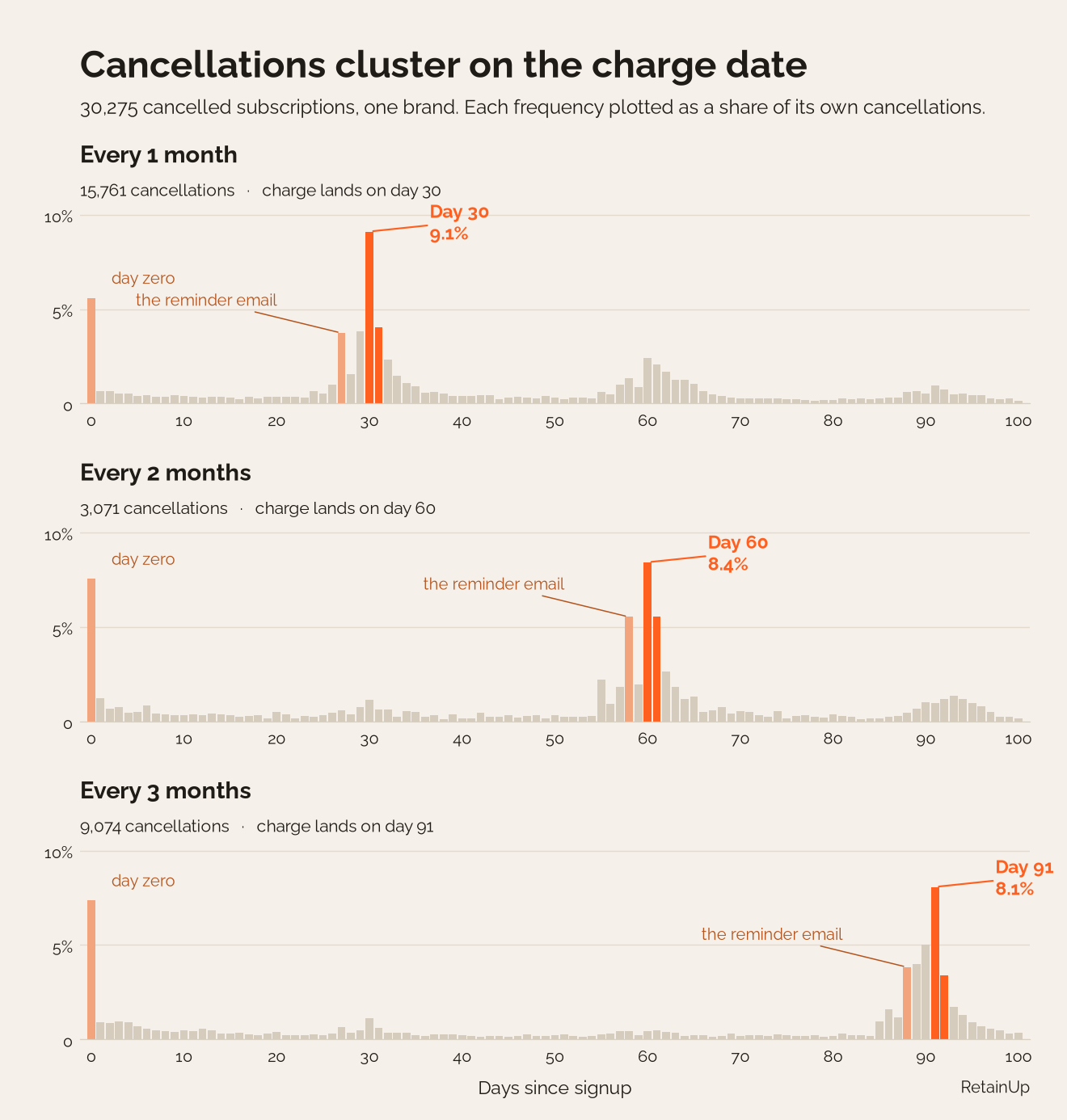
- Across 30,275 cancellations at one brand, most fell on three days: the signup day, the pre-charge reminder day, and the charge day.
- Same-day cancels make up 5.6% to 8.4% of cancellations at every billing frequency, because the first order is worth more on subscription than one-time.
- A pre-charge reminder created its own cancellation day at one brand, with 588 monthly subscribers cancelling on day 27, three days before the charge.
I pulled every cancelled subscription from one brand. 30,275 of them.
Instead of counting cancellations by month, I counted them by day. Cancelled date minus start date.
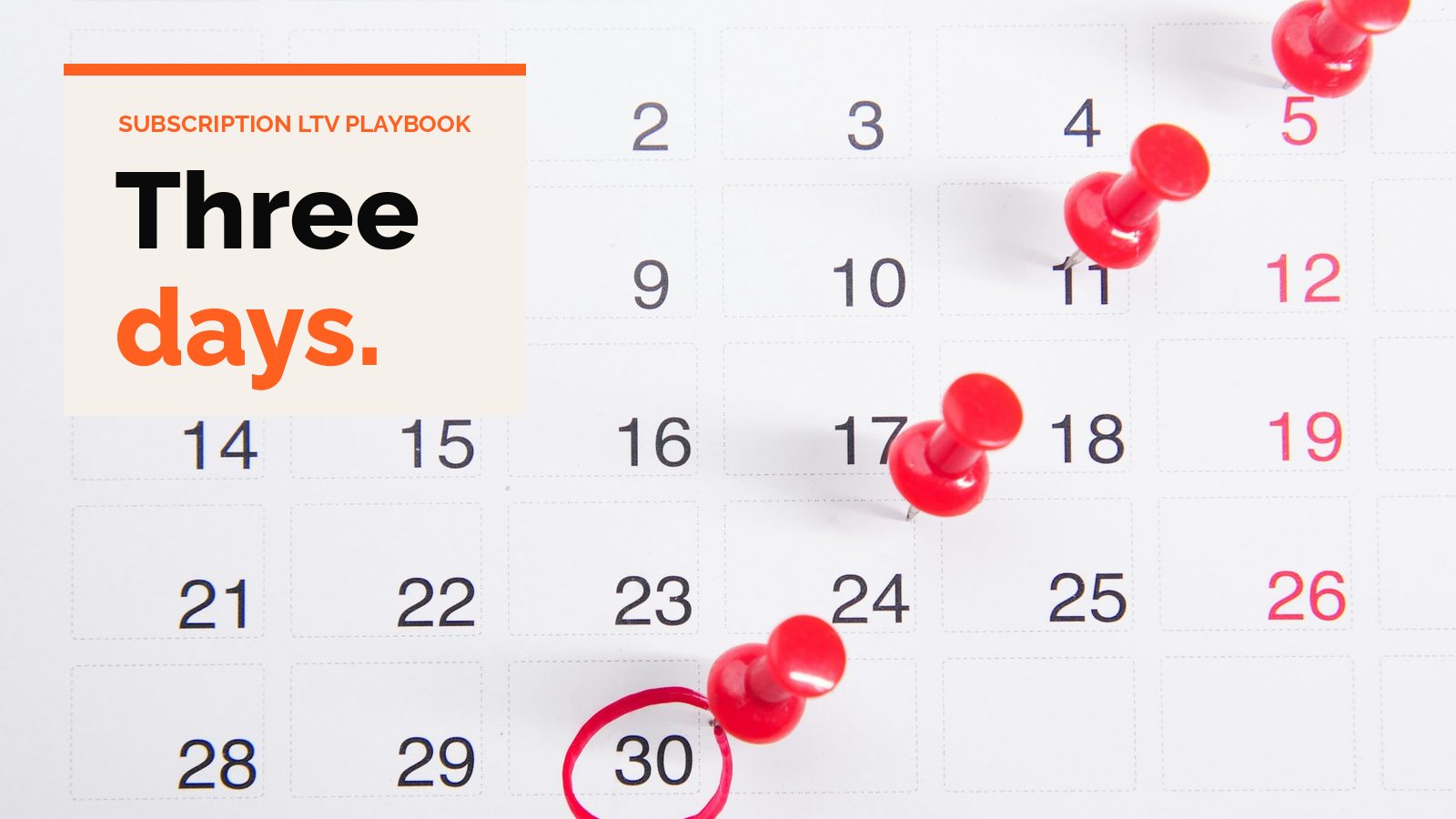
Most cancellations happen on three days.
- Day zero. They cancel the day they subscribe. 5.6% to 8.4%, at every frequency.
- The reminder. Three days before the charge, when the pre-charge email arrives. Day 27 for monthly subscribers. 588 cancellations.
- The charge. Day 30 for monthly. 1,436 cancellations, the biggest single day.
Where they actually cancel
For every cancelled subscription: cancellation timestamp minus creation timestamp, in days.
Bucket by day. Recharge, Skio and Stay all export created_at and cancelled_at on the subscription. One export, one pivot table.
Every 1 month, 15,761 cancellations. Charge lands on day 30.
| Day | Cancels | Share |
|---|---|---|
| 0 | 882 | 5.60% |
| 26 | 160 | 1.02% |
| 27 | 588 | 3.73% |
| 28 | 247 | 1.57% |
| 29 | 601 | 3.81% |
| 30 | 1,436 | 9.11% |
| 31 | 636 | 4.04% |
| 32 | 368 | 2.33% |
| 60 | 381 | 2.42% |
| 61 | 325 | 2.06% |
| 62 | 266 | 1.69% |
Every 3 months, 9,074 cancellations. Charge lands on day 91.
| Day | Cancels | Share |
|---|---|---|
| 0 | 668 | 7.36% |
| 86 | 143 | 1.58% |
| 88 | 347 | 3.82% |
| 89 | 362 | 3.99% |
| 90 | 457 | 5.04% |
| 91 | 733 | 8.08% |
| 92 | 309 | 3.41% |
| 93 | 156 | 1.72% |
| 94 | 118 | 1.30% |
| 123 | 130 | 1.43% |
Read down the chart and the shape repeats. A spike on day zero. A ramp starting three days before the charge. The peak on the charge day. A tail for two days after. Then it happens again at the second charge.
Day zero
Day zero barely moves across frequencies, so it has nothing to do with billing.
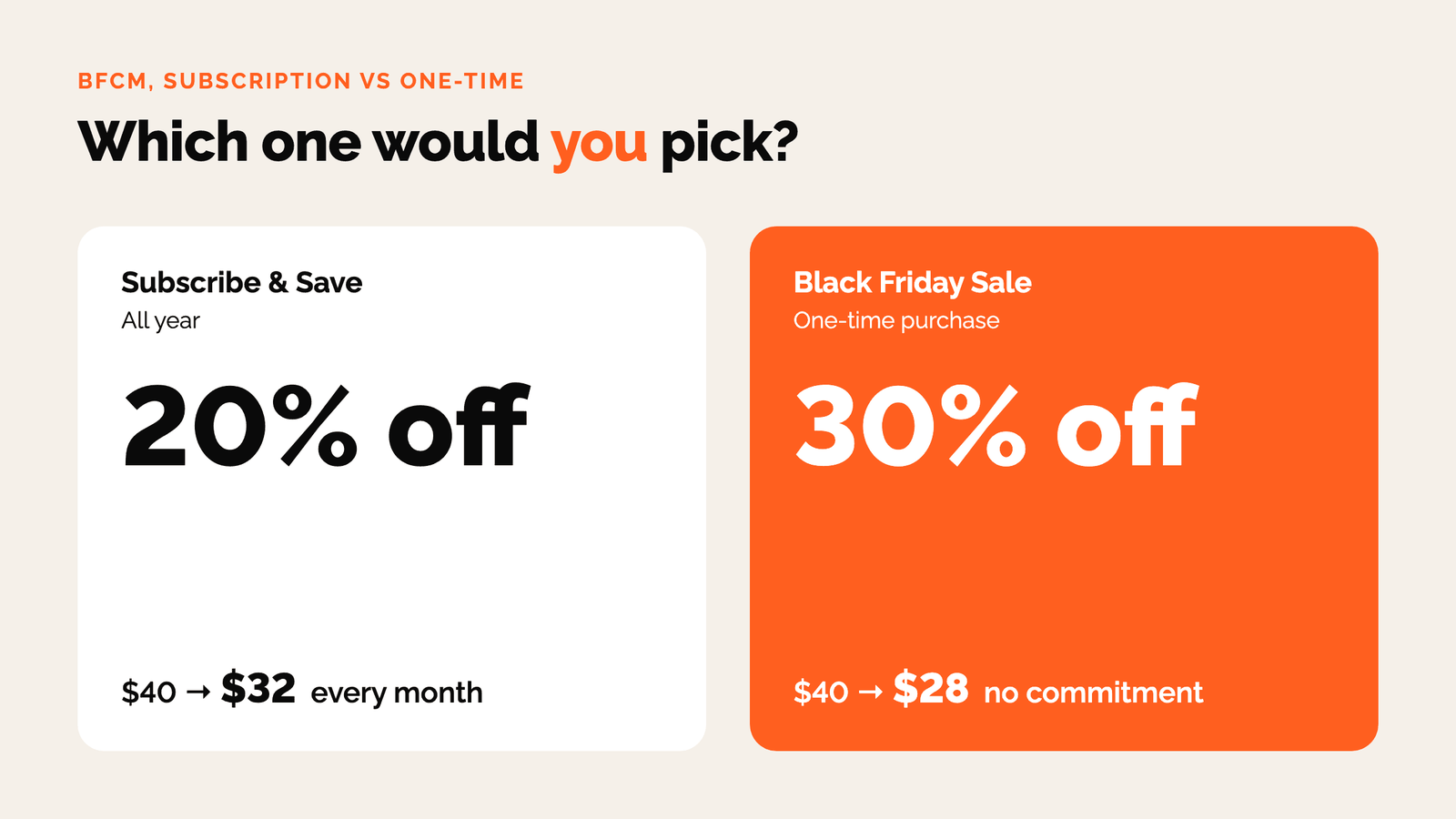
It is the offer. The first order is worth more on subscription than paying once, so people subscribe, take it, and leave the same day.
The reminder
Day 27 is the pre-charge email. Three days out.
Look at 26 and 28 on either side of it.
The brand added that email so nobody would be surprised by the charge. It worked. It also created a cancellation day.
The charge
Every frequency peaks on its own charge date.
Nobody woke up on day 91 and stopped liking the product.
2 things for analysis
- Plot mixed cadences together and the renewal spike smears across three days until it disappears. Run each frequency separately
- Leave passive churn in and failed payments resolving near the charge date will look like cancellations. Split dunning out first
What to fix
Day zero
- Narrow the gap between the subscription price and the one-time price
- Move gift value from order one to order two
- Gate the gift on the second order shipping
The reminder
- Lead with value. Billing fact at the bottom
- Make skip and reschedule the primary buttons
- Test five to seven days lead time instead of three
- Measure the full week around renewal, not the day your email fires
The charge
- Next charge date on the order confirmation
- Next charge date on the thank-you page
- Cadence in plain language at checkout, not in terms
All three are expectation problems.
Day zero is what you promised at checkout. Day 27 is what your email said. Day 30 is what they did not know was coming. Nothing on that list is about whether the product works.
Which is also the limit of it. These are tactics. If people do not like what they bought, fixing all three moves nothing. Onboarding, how the product gets used, gifting, and whether they felt the benefit are what carry someone past order three.
What these three days give you is timing. They are the trigger points. What you say around them counts for more than everything you say in the weeks between, and most brands have never looked at them.
To reduce your subscription cancellations, book your free subscription audit over here.