
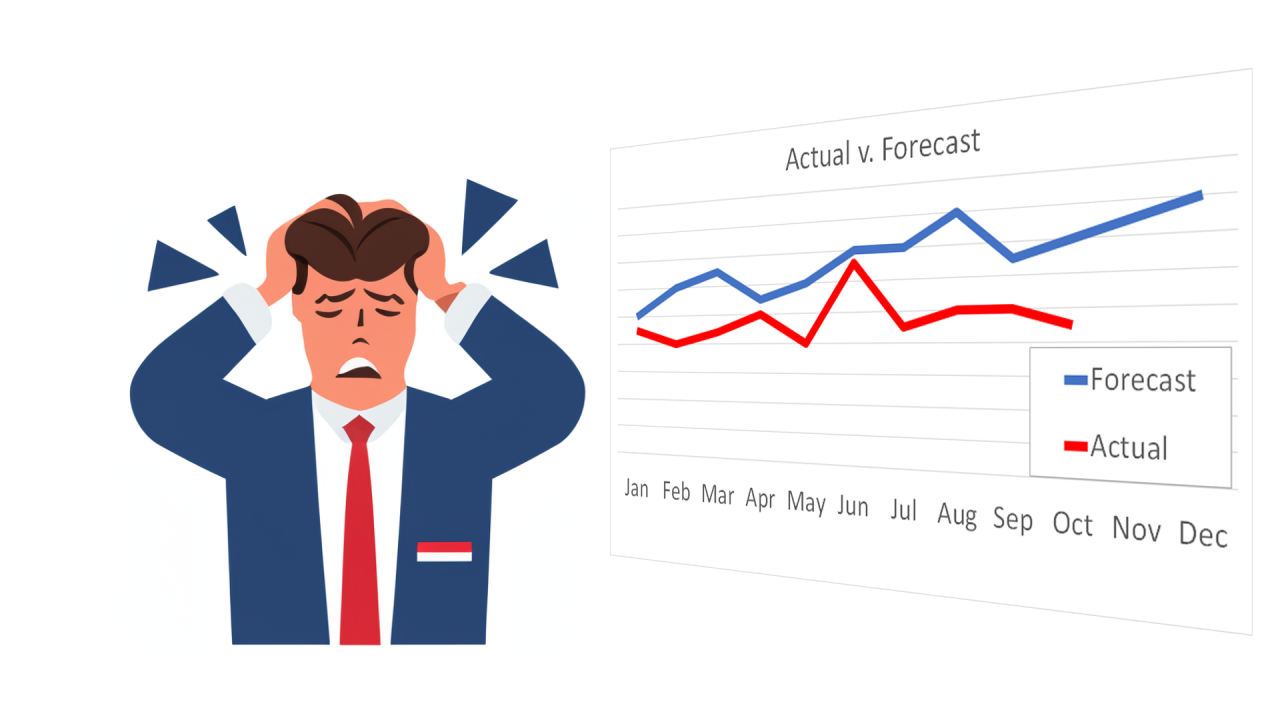

You’re not cash poor because of how much inventory you’re buying.
You’re cash poor because of how little each unit is actually leaving you and you’ve never calculated that number correctly.
The Question You’re Not Asking
When you decide how much inventory to buy, you’re asking the right question: how much do I need to meet demand without stocking out?
But there’s a question sitting right next to it that most founders at this stage never ask:
How much is each unit actually leaving behind?
Not the revenue per unit.
Not the gross margin your accountant shows you.
The real number – after returns, fulfillment fees, payment processing, storage, and the discounts you ran last month to move slow stock.
That number is called your “Contribution Margin.“
And it’s the number your inventory decisions should be based on.
For most DTC founders, it’s a number they’ve never calculated.
What You’re Tracking vs What You Should Be Tracking
Most founders track gross margin. Revenue minus the cost of the product.
That number looks acceptable – maybe 50%, maybe 55% – and so you conclude the unit economics are fine.
You’re not looking at the wrong metric on purpose.
You’re looking at the one that’s easiest to calculate, the one their accountant reports, the one that appears on every dashboard.
But gross margin only tells you what's left after you pay for the product.It doesn't tell you what's left after you sold it.
And selling it costs money too.
Returns eat into it.
Fulfillment fees eat into it.
Payment processing fees eat into it.
Storage fees eat into it.
The cost of the ads that drove the sale eats into it.
The discount you offered to move the last 40 units eats into it.
Here is the reality: only about 10% of ecommerce brands accurately track contribution margin. The other 90% are making inventory decisions – how much to buy, how often to reorder, which SKUs to scale – on a number that was never complete.
What It Actually Looks Like
Let’s make this concrete.
You sell a product for $65. Your COGS is $29. Gross margin: 55%. Looks healthy.
Now let’s apply the real costs:
| Cost | Amount |
|---|---|
| Sale price | $65.00 |
| COGS | $29.00 |
| Gross margin | $36.00 (55%) |
| Fulfilment + 3PL fee | $8.50 |
| Payment processing (3%) | $1.95 |
| Return allowance (9% rate) | $3.20 |
| Storage per unit per month | $1.80 |
| Blended ad cost per unit sold | $9.00 |
| Contribution margin | $11.55 (17.8%) |
You thought you were making $36 on every unit.
You’re making $11.55.
And that $11.55 still needs to cover your overheads, your salary, and your next inventory order.
Now ask yourself – at $11.55 contribution margin per unit, how many units do you need to sell before your cash position actually improves?
And when you order the next batch of inventory, are you ordering based on the $36 you thought you were making or the $11.55 you’re actually making?
For most founders, the answer is $36. Because they never ran this calculation.
Why This Matters For Every Inventory Decision You Make
When you don’t know your true per-unit margin, you can’t know whether buying more inventory is the right decision.
You might be scaling a product that is quietly losing money on every unit once the real costs are applied.
The inventory isn’t the villain.
The incomplete number that justified buying it is.
And this is where it connects directly to your cash flow problem.
You buy more because the unit economics look fine.
But the cash never adds up the way it should. Because the unit economics were never what you thought they were.
When your contribution margin is wrong, every inventory decision is built on a number that was never real.
The Four Margins Every DTC Founder Should Track
Most founders track one. They should track four.
- Gross Margin: revenue minus COGS. What’s left after paying for the product? This is the starting point, not the finish line.
- Contribution Margin: revenue minus COGS, fulfilment, fees, returns, and ads. What’s actually left after selling the product. This is the number your inventory decisions should be based on.
- Net Operating Margin: profitability before interest, taxes, and unusual expenses. This tells you whether the business itself is operationally sound.
- Net Profit Margin: the final bottom line. What actually stays in the business after everything.
Most founders know their gross margin. Very few know their contribution margin per SKU. Almost none track all four.
The Diagnostic
One question. Answer it honestly.
Do you know your contribution margin per SKU, not blended?
Not the gross margin.
Not the revenue per unit.
The number that’s left after every cost associated with selling that product is removed.
If the answer is no or if the number is lower than you expected, that is where your cash flow problem starts.
Not at the inventory decision. Before it.
Because you can negotiate better supplier terms, switch to smaller, more frequent orders, and look into inventory financing – all of which are reasonable suggestions.
But none of them fixes a unit economics problem.
You’ll just be buying the wrong amount of an underperforming product more efficiently.
The fix always starts with knowing the real number.
The Question Worth Sitting With
Every inventory order you have placed in the last 12 months was based on a margin calculation.
Was that calculation complete, or did it stop at gross margin and call it done?
Because if it stopped at gross margin, you haven’t been making inventory decisions.
You’ve been making guesses dressed up as plans.
Let’s find out if you’re buying inventory that’s not allowing you to pay your salary.
Book a free 30-minute Operations Maximizer session → calendly.com/arti-retainup-core5-os/operations-maximizer-strategy-session
Arti is a fractional COO and eCommerce operations consultant helping DTC founders in the $3-$8M range identify and fix the operational leaks quietly draining their cash: using the CORE5 OS framework.
Built from scaling and closing a $20M DTC brand.