
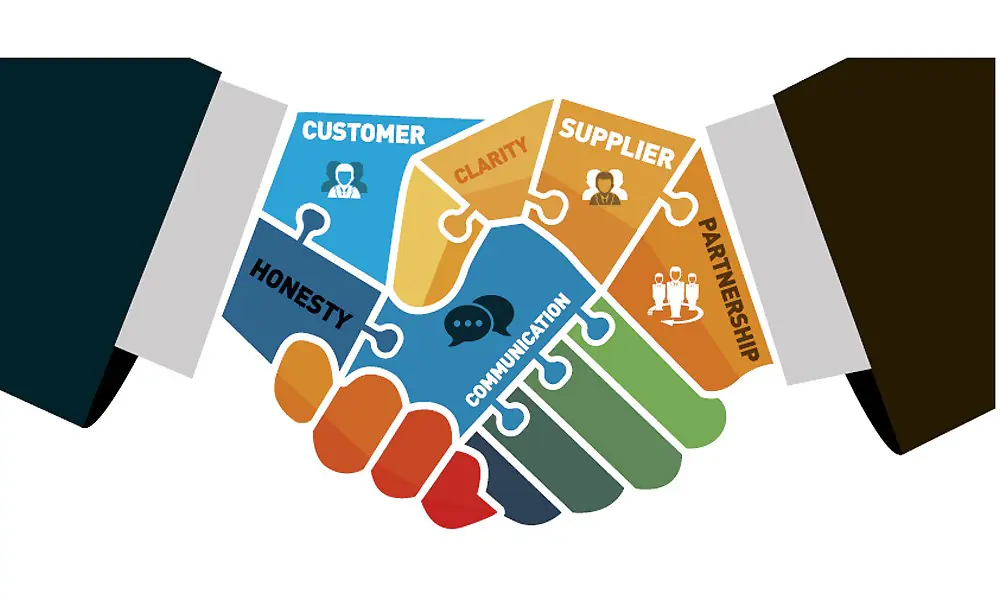

Your supplier has a favorite customer.
It’s probably not you. And that’s why your cash is always tight.
The Myth of the Transactional Supplier
Most DTC founders treat their supplier relationship the same way they treat their electricity bill.
Something to manage, not something to invest in.
You send the PO, they send the invoice, goods arrive, cycle repeats.
This feels efficient. It isn’t.
The founder who has built a genuine relationship with their supplier, who calls occasionally when there’s no problem, who pays reliably and early when possible, who shares demand forecasts in advance, who treats the supplier as a partner rather than a vendor, gets something the transactional founder never does.
Flexibility.
And at the $3-$8M stage, flexibility is often the difference between a cash-tight month and a manageable one.
What the Favorite Customer Gets That You Don’t
Let’s be specific about what a strong supplier relationship actually provides.
Lower MOQs: The supplier’s favorite customer can have a conversation about minimum order quantities that the transactional founder cannot.
When you have mutual trust and a track record of reliability, a supplier will often work with you on quantities that reflect your actual demand rather than their default production threshold.
The transactional founder pays the standard rate.
The favoured founder negotiates a rate that fits their cash position.
Extended payment terms: Net 30 is not a law. It’s a default.
Founders who have earned trust with their suppliers can access Net 45, Net 60, or partial payment on delivery – terms that extend the cash conversion cycle in their favor rather than the supplier’s.
For a brand spending $400,000 annually on inventory, the difference between Net 30 and Net 60 is roughly $33,000 of cash staying in your account for an additional month. Every month.
Production priority: When the supplier is busy and lead times are stretching, their favourite customer gets prioritised.
The transactional founder – the one who only reaches out when they’re placing a PO, waits.
And waiting, in a DTC business, means stockouts, lost revenue, and a customer experience problem that no amount of email flows can fix.
Early warning signals: Supply chain disruptions, material cost increases, production delays. The supplier’s trusted partners hear about these first. They get time to plan, adjust forecasts, or source alternatives. Everyone else finds out when the shipment doesn’t arrive.
None of this is formal.
None of it appears in a contract.
All of it is real and the founder who has invested in the relationship consistently gets it.
The one who hasn’t doesn’t.
What Transactional Behavior Actually Looks Like
Most founders don’t think they’re treating their suppliers transactionally. But the behaviour tells a different story.
You only contact them when you’re placing an order or chasing a shipment.
You negotiate hard on price at every renewal, without acknowledging the value of consistency and reliability you bring.
You’ve never shared a demand forecast or given them visibility into your business direction.
You’ve never asked what they need from you to work more effectively together.
You don’t know your contact’s name.
You’ve never had a conversation that wasn’t about a specific PO.
That’s transactional. And it closes doors you don’t know are closed.
The Investment That Returns More Than Marketing
Here is the counterintuitive truth about supplier relationships: at the $3-$8M stage, the return on investing in your supplier relationships often exceeds the return on investing in more marketing.
More marketing gets you more revenue.
Stronger supplier relationships improve the economics of every unit you sell. Lower effective cost through better terms, less capital tied up through lower MOQs, and lower stockout losses through production priority.
Revenue growth on poor unit economics and tight cash cycles creates more pressure, not less.
Better supplier terms create structural relief that compounds across every order cycle.
The investment required is not money. It’s time and intention.
How to Start Building the Relationship
You don’t rebuild a transactional relationship in one call. But you can start shifting it with consistent, deliberate behaviour over two or three order cycles.
Share a forecast, even an imperfect one.
Before your next PO, send your supplier a 90-day demand estimate – not a promise, a projection.
Most suppliers have never received one from a founder at your stage. It signals that you’re thinking about the relationship as a partnership, not a transaction.
And it gives them something they genuinely need: visibility.
Pay early when you can.
Even once. Even on a small invoice.
A payment that arrives ahead of terms is noticed. It’s remembered.
It creates a credit of goodwill that you can draw on when you need flexibility.
Ask what would make the relationship work better for them.
Most suppliers have never been asked this question by a DTC founder.
The answers are usually practical – earlier PO submission, more consistent order cadence, clearer SKU specifications.
These are small changes for you and meaningful improvements for them. And also gives them signals that you’re thinking about the relationship, not just the transaction.
Have one non-PO conversation per quarter.
A brief call or message to check in on their capacity, their production calendar, or their business in general. Not a long call. A human one.
The founder who is a person to their supplier, not just an account number, gets treated differently when things get tight.
The Trilogy
This piece connects directly to Supplier’s MOQs and the Net 30 blog in this series, because the three are structurally linked.
Your MOQ is negotiable, but only if the relationship exists to support that conversation.
Your payment terms are flexible, but only if you’ve earned the trust that makes a supplier willing to extend them.
All three – MOQs, payment terms, and relationship quality – feed each other.
Fix the relationship and the other two become problems you can solve.
Where This Lives in CORE5 OS
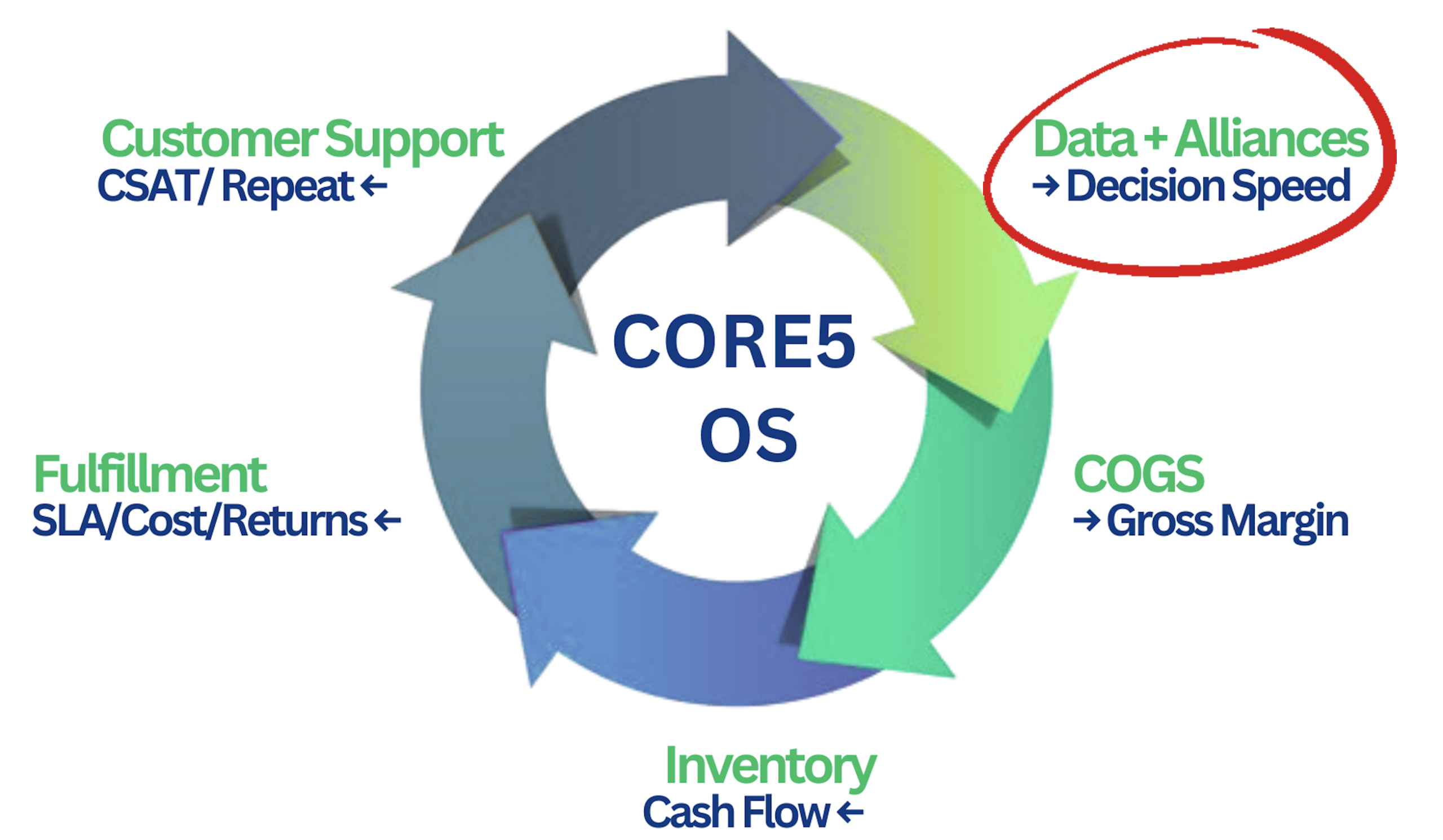
Supplier relationships sit in the Alliances pillar of CORE5 OS: the layer that governs every external partnership that affects your cash flow and operational resilience.
The CORE5 OS framework treats supplier terms as a variable to be actively managed, not a constraint to be accepted.
In the Detect phase, we map the current state of every key supplier relationship: payment terms, MOQ structure, lead time reliability, and the quality of the communication cadence.
In the Relief phase, we identify which relationships have enough foundation for a commercial renegotiation and which ones need to be rebuilt from the ground up first.
The goal is always the same: turn supplier relationships into a cash flow lever rather than a cash flow drag.
The Question Worth Sitting With
Think about your most important supplier.
When did you last speak to them about something other than a PO or a shipment problem?
If the answer is never or longer than you can remember, you haven’t built a relationship. You’ve built a dependency.
And a dependency, unlike a relationship, never gives you flexibility when you need it most.
Let’s check how much you are losing every month by neglecting supplier relationships: → calendly.com/arti-retainup-core5-os/operations-maximizer-strategy-session
Arti is a fractional COO and eCommerce operations consultant at RetainUP, helping DTC founders with $3-$8M annual revenue identify and fix the operational leaks quietly draining their cash, using the CORE5 OS framework.
Built from scaling and closing a $20M DTC brand.