Key takeaways
- At $100K a month in ads, a bump to $150K lifted CAC from $50 to $80 and wiped out profit.
- At the same $50 CAC, 10% repeat buyers leave $60 profit per customer. 50% repeat buyers leave $250.
- One brand’s repeat customers grew from 2,000 or 3,000 orders a month to 20,000, while new customers stayed near 4,000 to 5,000.
You raise the ad budget and watch your CAC jump. The sales you expected do not show up, and your margin shrinks.
Paid ads are built this way. I call it the acquisition trap, and I have seen it stall more brands than anything else.
I work with CPG and DTC brands, and I have helped 80+ of them, including Bioderma and Boka, grow repeat purchase rate.
What the acquisition trap looks like
Say you spend $100K a month on ads. Your CAC is fine and your MER looks healthy.
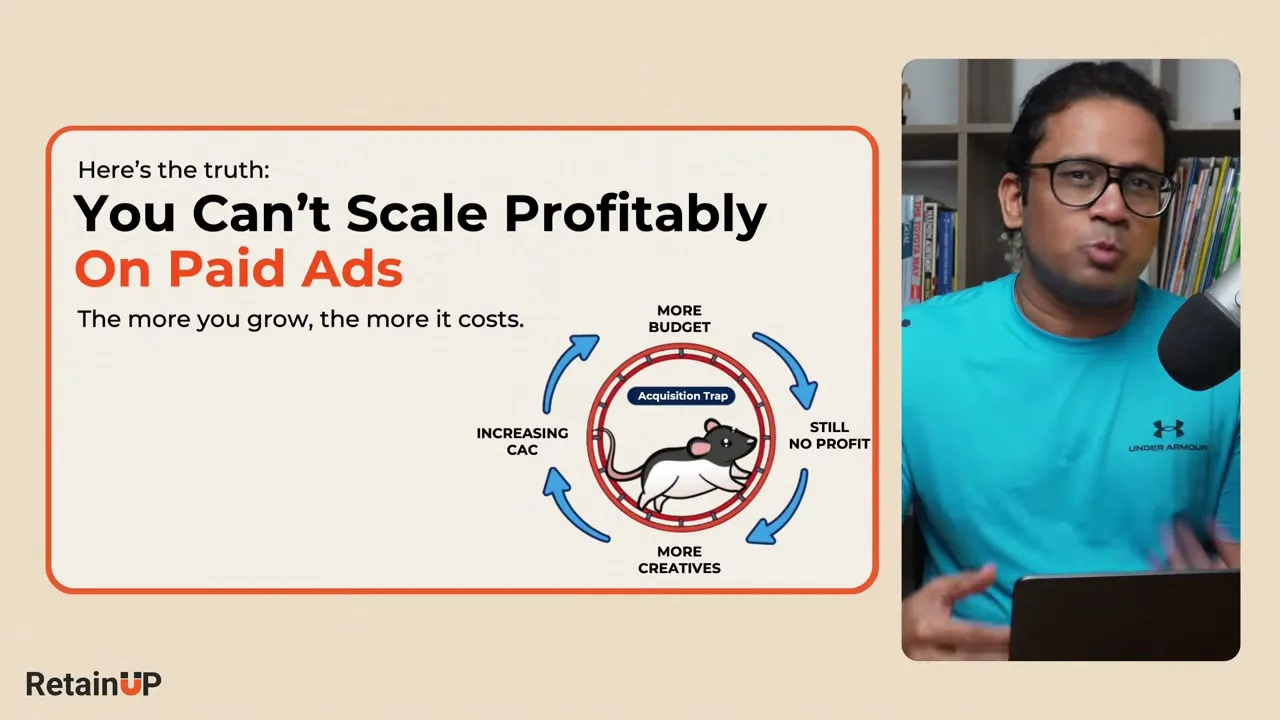
You want to grow, so you lift the budget to $150K. CAC goes from $50 to $80. MER drops and profit disappears.
So you pull the budget back. Now you have no new growth, just a bigger ad bill.
That is the trap: a stage where more budget stops driving profitable growth. You change creatives and test more hooks, but the numbers stay flat. The ads keep running and you stay in the same spot, like running on a treadmill.
Why most brands hit the wall
Many brands grow fast on paid ads for the first one or two years. Then they hit a wall.
At some point there are no new customers left at your target CAC. The low-hanging fruit in your market is gone.
The market adoption curve
Think about the adoption curve. Innovators and early adopters cost the least to win. The early majority is next.
As you reach for the late majority, or any wider top-of-funnel audience, CAC keeps climbing. That happens to every brand. The question is whether you can afford the higher CAC.
Most brands cannot, so they run a loop. Raise the budget, watch CAC break, pull the budget back, raise it again.
Every extra purchase costs more than it returns. You lose money on each new order. That is the acquisition peak, and past it you are burning cash.
Ads are fine. Ads as your only engine is the problem
More customers does not mean more growth. More from every customer does.
Most brands think scale means more new buyers. Scale comes from compounding retention.
Two brands, same CAC
Both brands pay $50 to win a customer, and the first order is $100.
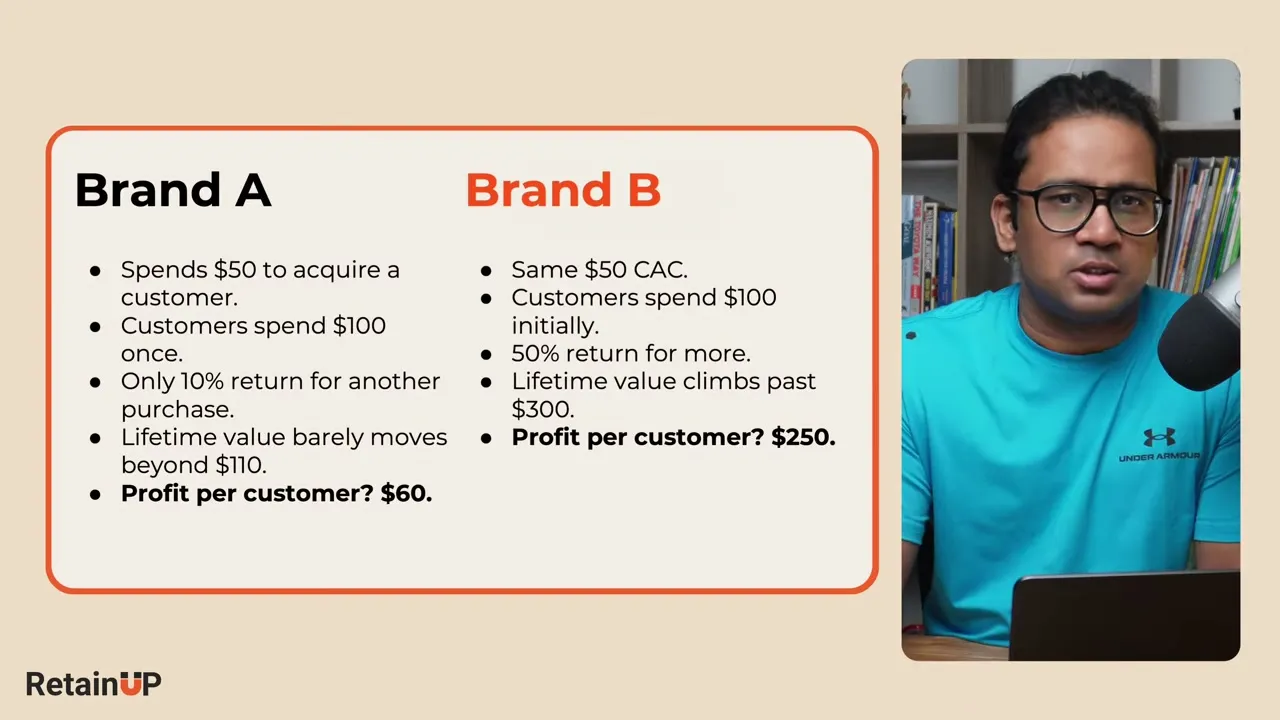
- Brand A: 10% of customers buy again. Lifetime value barely passes $110. Profit per customer is about $60.
- Brand B: 50% buy again. Lifetime value climbs past $300. Profit per customer is about $250.
Same ad spend. Brand B got about three times the value from each buyer.
Now Brand B can pay more to acquire. It can go after the top-of-funnel customers that break Brand A. If you want the math behind that limit, see how churn sets your maximum CAC.
Retention compounds like interest
You acquire once and sell many times. Each repeat order costs no CAC and adds margin.
One brand shows it clearly. After COVID they held new customer acquisition on a flat curve, at 2,000 to 3,000 orders a month at most. It rose only slowly.
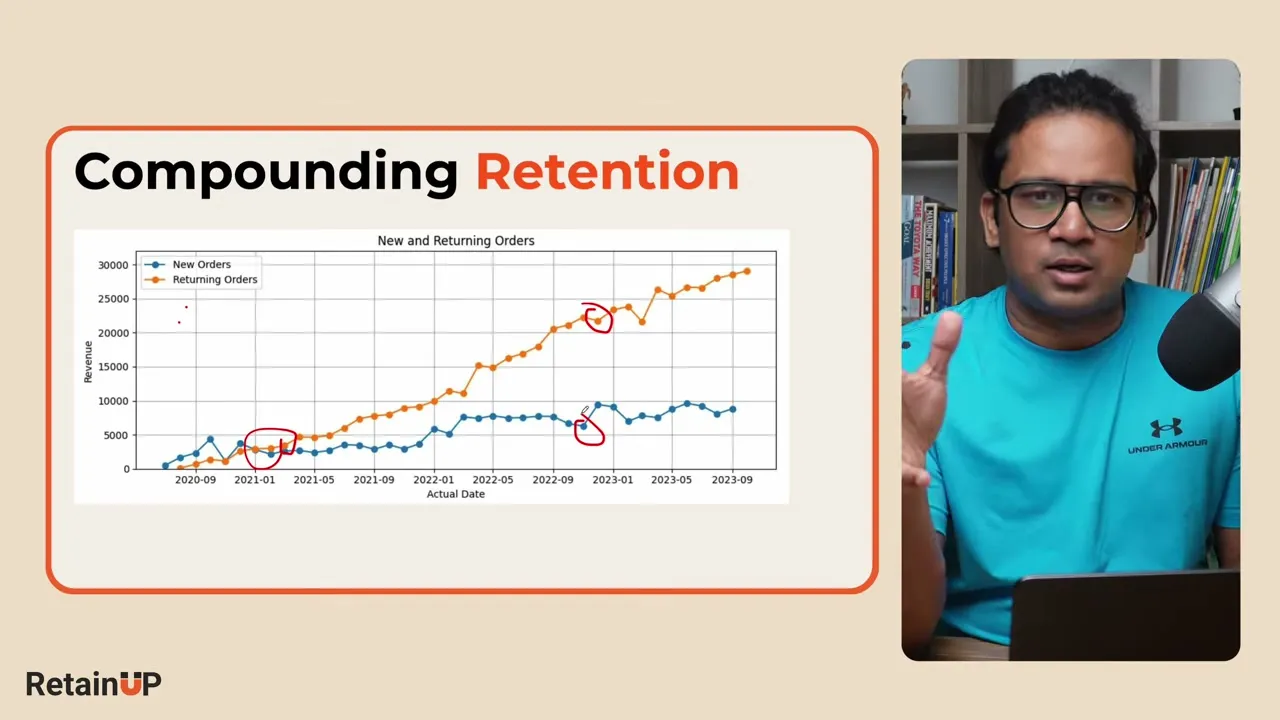
Their old customers passed that line. First they placed 2,000 to 3,000 orders a month. Later it was 20,000, while new customers sat around 4,000 to 5,000.
They could still afford more acquisition. But the growth came from the customers they already had.
Many brands chase that curve with acquisition, where the economics never work. Eventually they pull the budget and get stuck again. Retention is the same choice between retention and acquisition every brand faces, just played over years.
The way out: a repeat purchase flywheel
A repeat purchase flywheel moves people from buyers to repeat buyers to loyal customers.
It lifts profit per customer, shortens your CAC payback period, and steadies growth without bigger ad budgets.
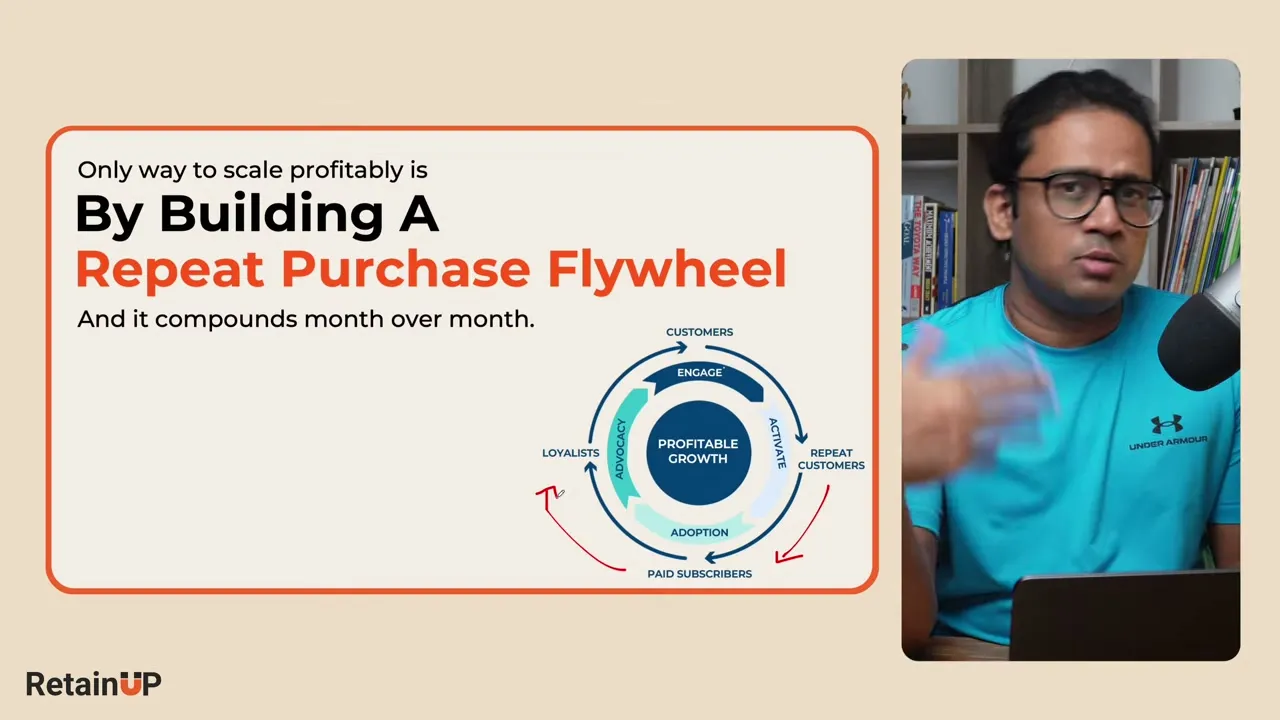
It runs in steps. A customer makes a first purchase, then a second. After the second you try to move them to a paid subscription, then to a membership or loyalty program. Some refer others, and those referrals bring new customers back into the wheel.
It compounds. You might start with 100 people, then add 200 and 300. Once they return every two or three months, the wheel spins fast.
The parts are reorder reminders, post-purchase nurture journeys, loyalty triggers and VIP flows. Retention amplifies your acquisition instead of fighting it.
What loyal customers give you
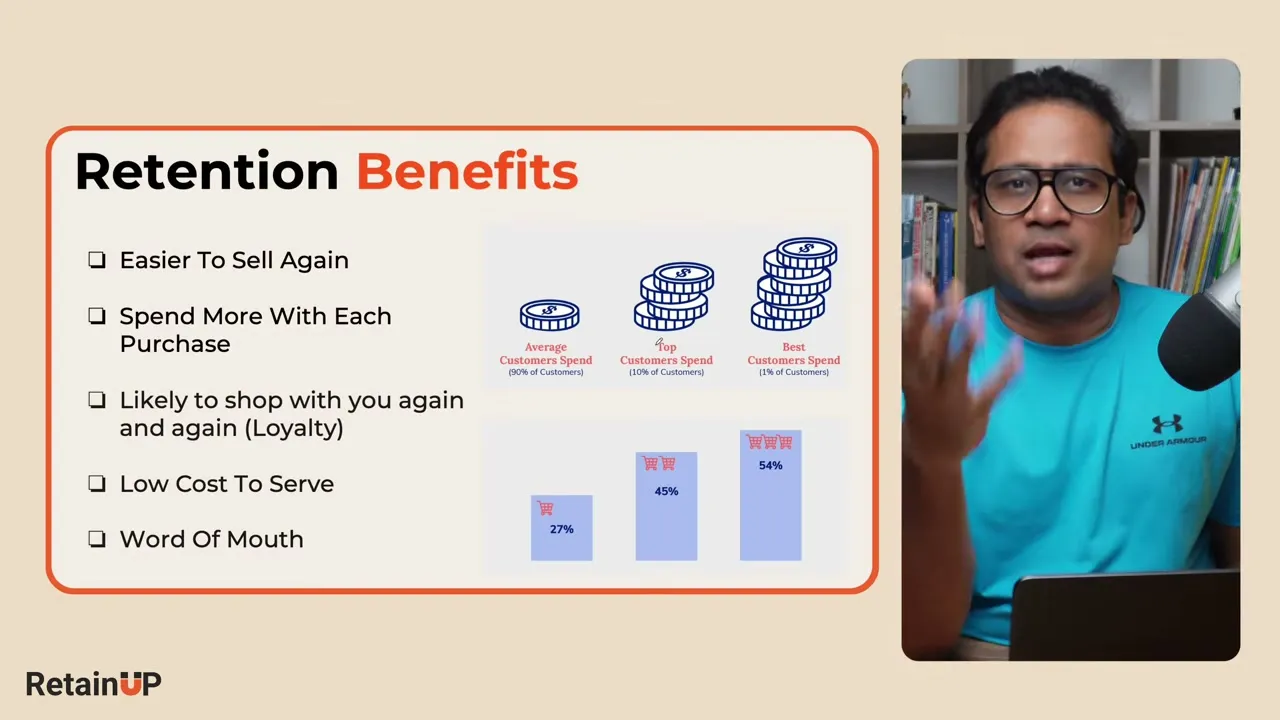
- They buy more often.
- They buy higher ticket sizes.
- They show up at big moments like Black Friday, Christmas and new launches.
- They lower your future CAC because they refer new customers.
Retention is a multiplier that turns growth into scale. Acquisition and retention work together. You acquire fewer customers and get the most from each one.
How we build it
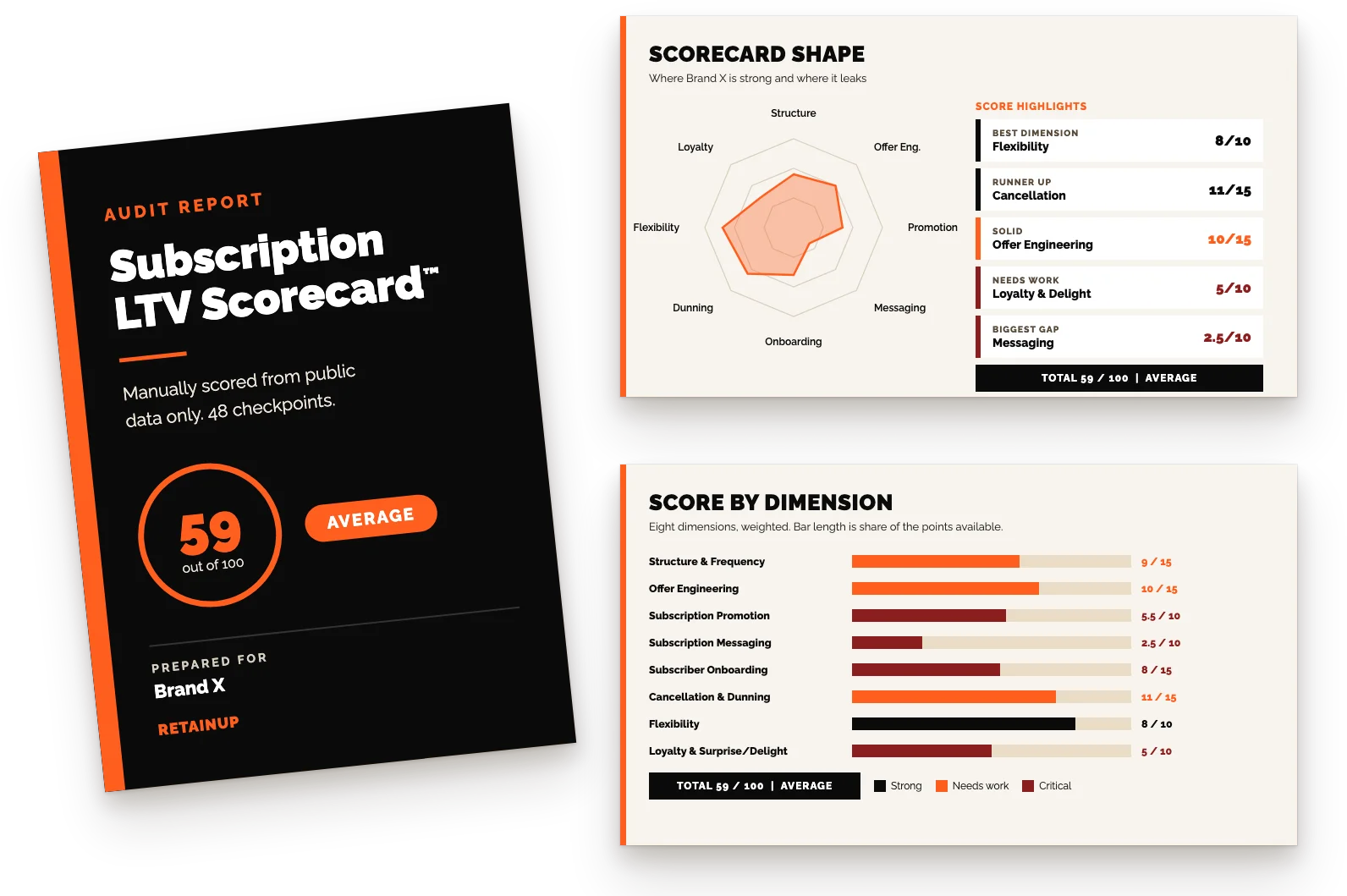
At RetainUp we do this with a Repeat Purchase Maximizer, in three phases: map, activate and sustain, across nine steps.
We read your patterns, decode customer voice and map the journey. Then we build nurturing, reorders, subscriptions, and loyalty and membership programs. We push all of it across direct mail, SMS and WhatsApp.
If you are stuck, stop chasing strangers at rising cost. Start with the customers you already paid to acquire.
Want to see where your own repeat revenue leaks? Get a free subscription audit.