Key takeaways
- Habit stacking ties a product to a habit the customer already has, like coffee, brushing teeth or the first glass of water.
- SULT’s product page answers when to use the electrolytes with four moments: first thing, the midday slump, pre and post workout, and hangover.
- Subscription brands should add a “when to use this” section to the product page and the day-3 email, before the customer decides to quit.
With consumables, every customer has a quiet question you never hear:
when do I actually use this?
They bought it. It sits in the cupboard.
They are not sure if it is a morning thing, a workout thing, or an every-day thing.
So they use it twice, lose the thread, and the reorder never comes. Confusion shows up in your dashboard as churn.
SULT answers the question right on the product page.
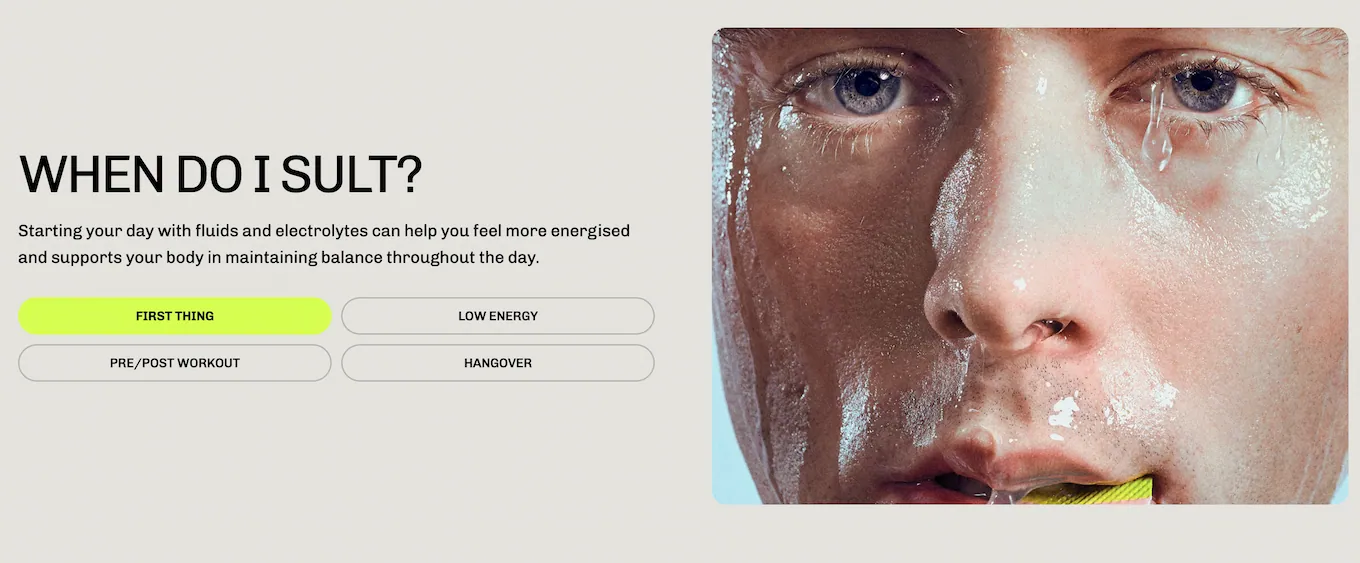
SULT is an electrolyte brand. Instead of listing minerals, they ask “When do I SULT?”
and give four answers: first thing, the midday slump when you reach for another coffee, pre and post workout, and hangover.
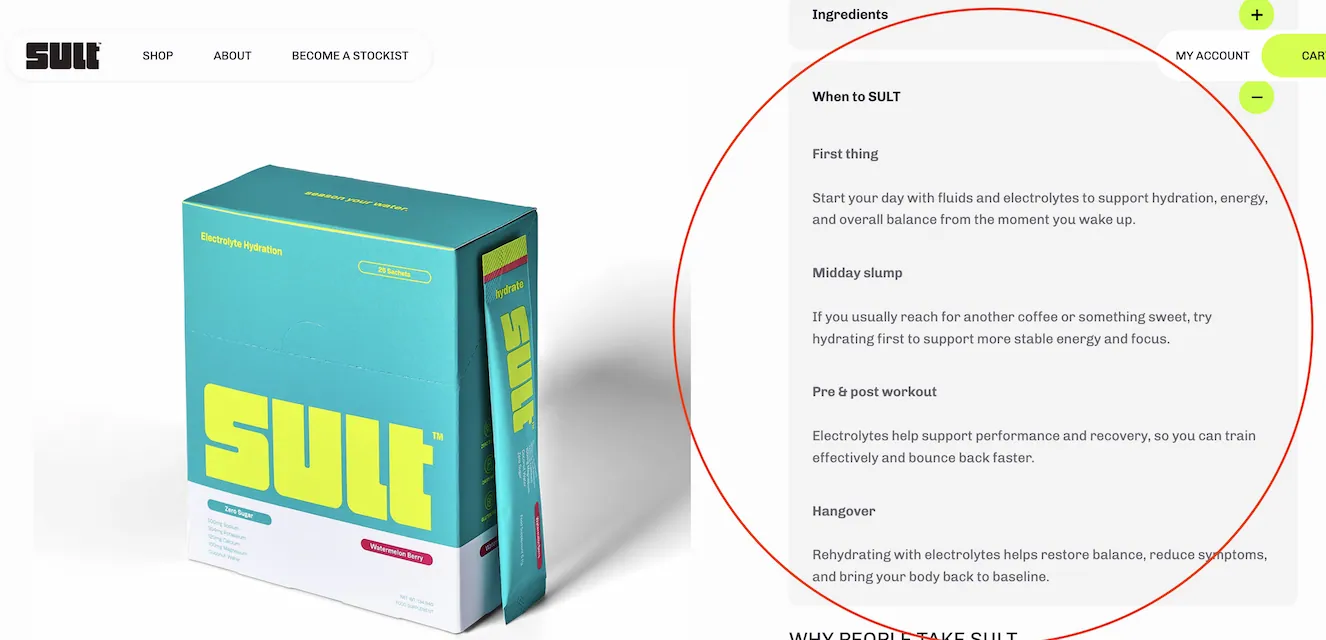
Every answer pins the product to a moment that already exists in the day. First thing rides waking up. The midday slump rides the 3pm coffee reach. Workout rides a slot the customer already schedules.
They did not create a new habit. They mapped their product onto four the customer already runs.
That is habit stacking, the quiet engine behind the best retention in DTC.
James Clear’s rule: attach a new behavior to one that already fires every day.
Don’t build a routine. Borrow one.
Watch the category do the same thing.
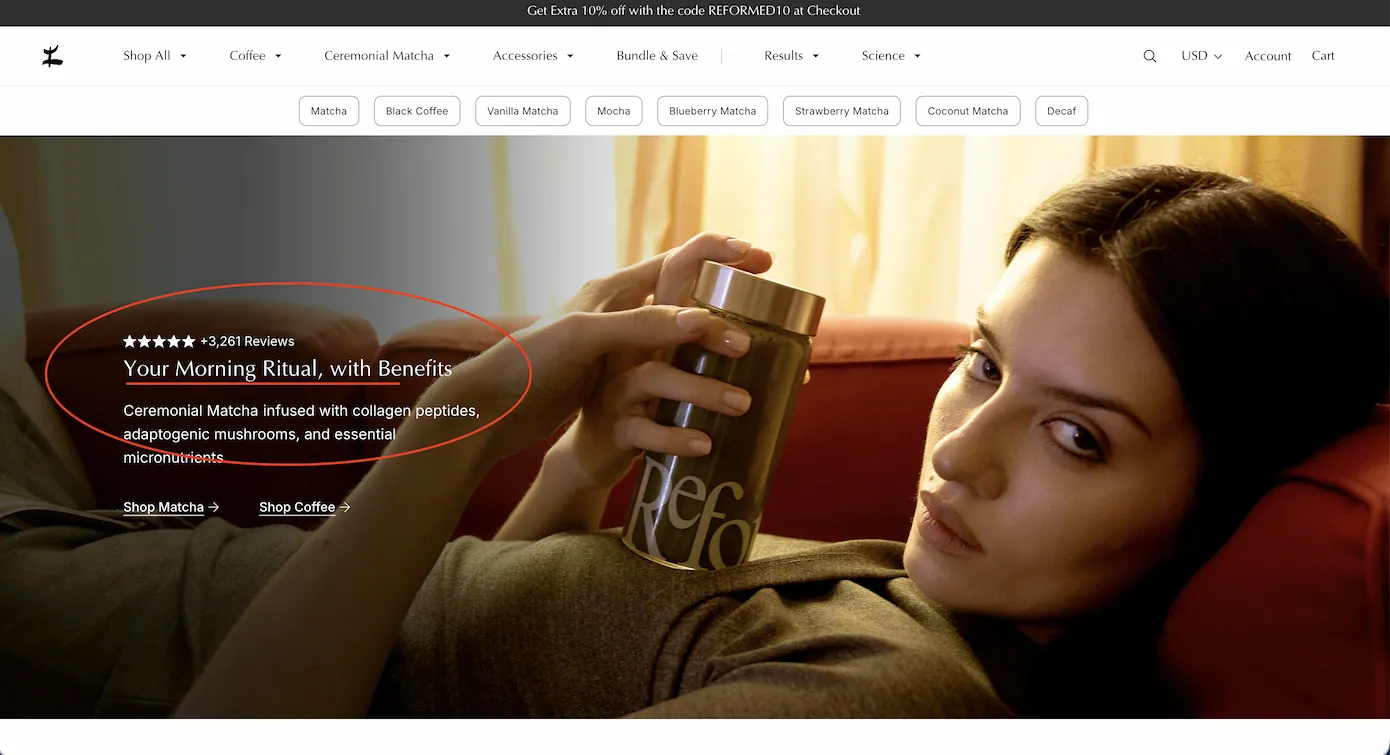
Reformed hides collagen and creatine inside the coffee and matcha you already drink. Their homepage does not say supplement.
It says “Your Morning Ritual, with Benefits.” They even sell the frother and bottle to own more of the morning.
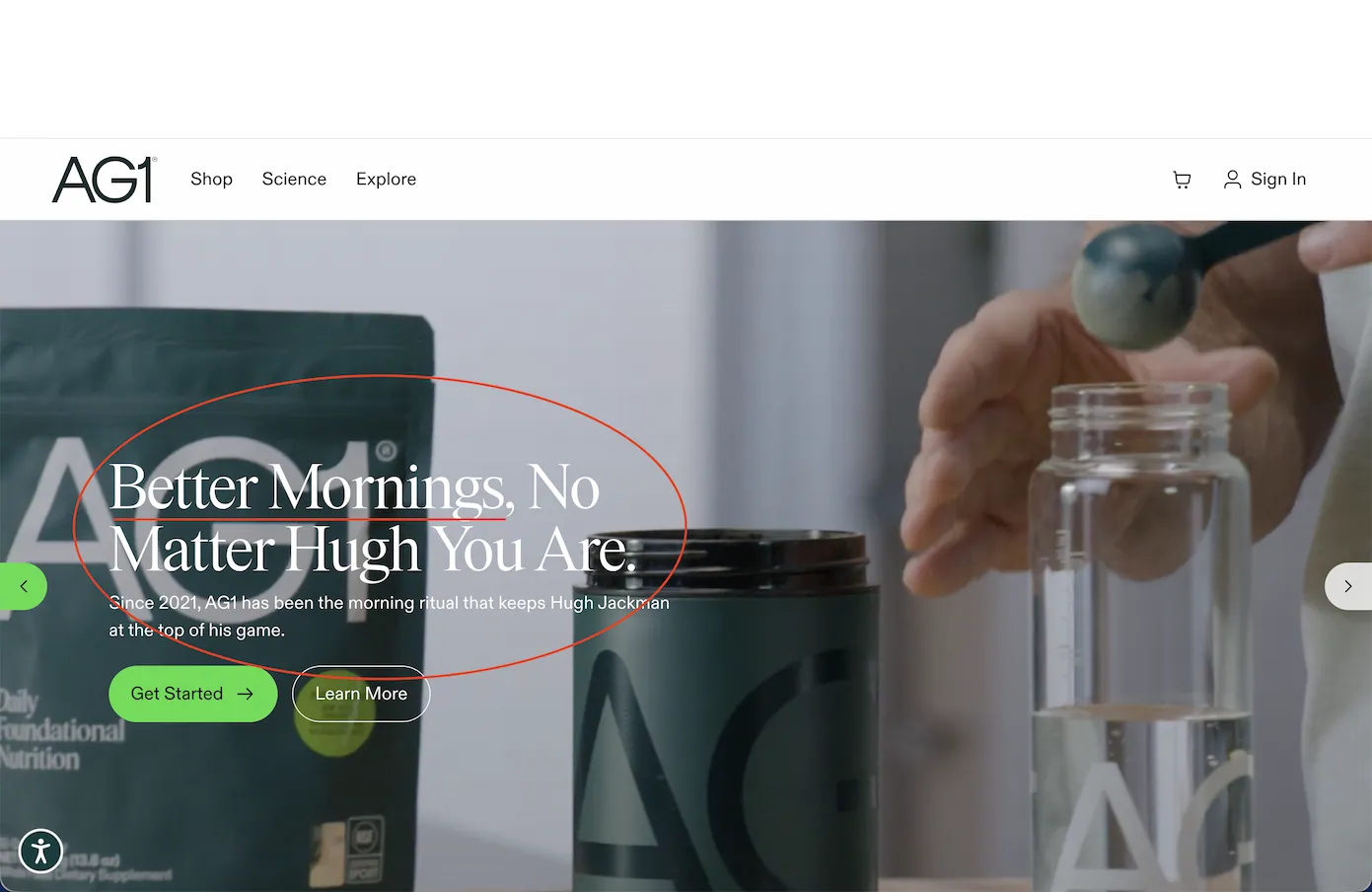
AG1 calls itself “the morning ritual,” anchored to your first glass of water.
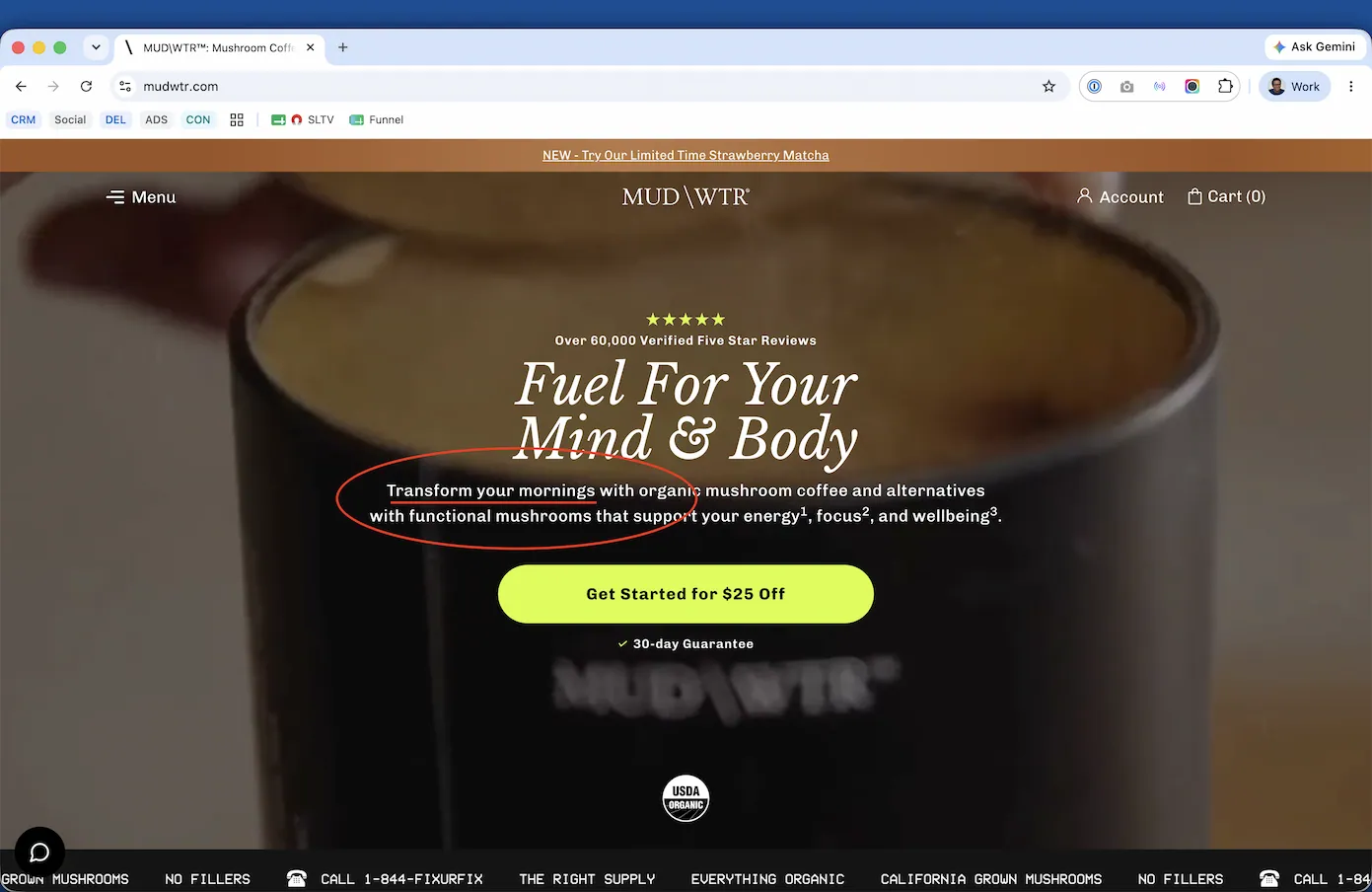
Mud\Wtr swaps your coffee mug: same morning, same cup, different powder.
Then the rest of the shelf:
Seed times AM and PM doses to the teeth you already brush.
Graza sits on the counter and ships refills before you run out.
Olipop takes the soda slot at lunch. Quip mails brush heads on your brushing schedule.
None of them added a step. They rode one already there.
Why it works: your customer makes 35,000 decisions a day.
A product that needs a new “when” competes with all of them. A product that answers “when” with a habit they already have competes with none.
So the fix is a “when.” Give the product a moment in the day, not another benefit on the label. Three steps:
Pick the daily habit your product rides. Coffee, teeth, the first glass of water, the gym bag.
Add a “when to use this” section on the page and in the day-3 email, before the customer has decided to quit.
Name the moment, not the mechanism. “Take it first thing” beats “supports cellular energy” every time.
The brand that tells the customer when to use it gets the reorder.
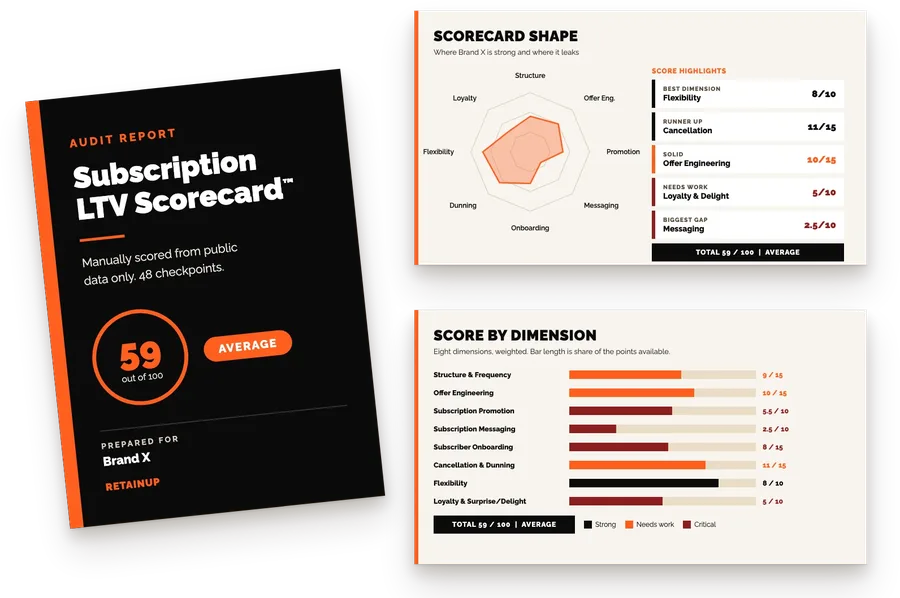
Want to see where your subscription leaks before the reorder? Get your free Subscription LTV Scorecard.
One email a week on subscription retention: the numbers, the strategy, and what to fix first.

Rahi Jain
Rahi Jain is a subscription LTV specialist who helps DTC brands maximize their LTV from subscriptions.
More about Rahi