Key takeaways
- 70% of first-time buyers never come back, so the second order is the whole game.
- If a customer sees no value within 21 days of a one-time order, they rarely reorder.
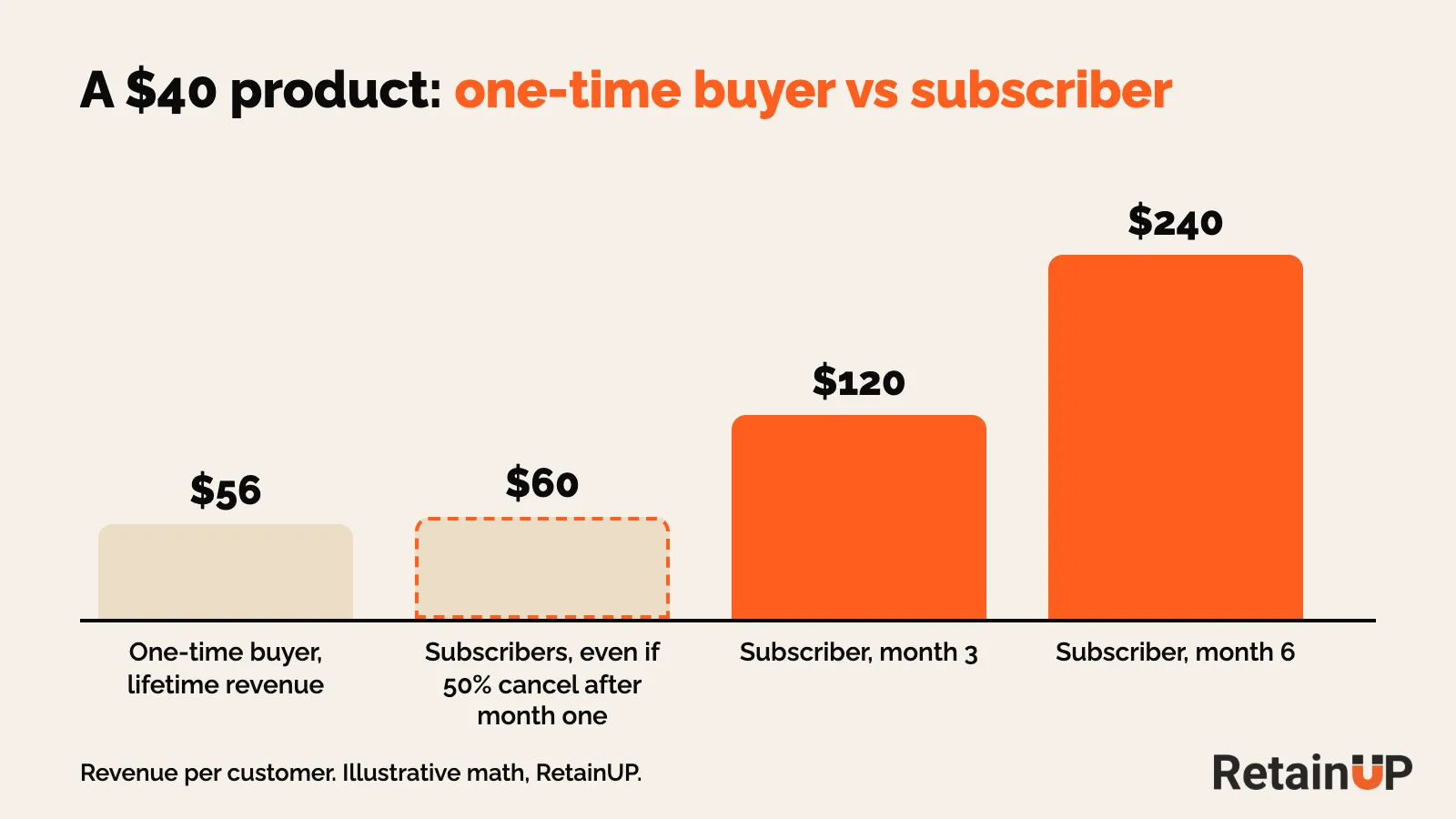
- On a $40 product, one-time buyers average $56 in lifetime revenue. A subscriber is at $120 by month 3.
70% of first-time buyers never come back. I have worked with 80+ subscription brands across supplements, skincare and beverages, and the one-time buyer is the segment with the most room left in it.
For a subscription brand, the best second order is a subscription. So this page is about the people who bought once without subscribing, and how you move them across. It sits inside the guide to getting more buyers to subscribe, which covers the product page side.
Why the second order should be a subscription
Every brand that pushes subscription hears the same worry. It will tank our conversion rate. They are right that it drops a few points. They are wrong about what that means.
On a $40 product, one-time buyers average $56 in lifetime revenue. A subscriber at 3 months is already at $120. At 6 months, $240. Even if 50% cancel after month one, you still pocket $60. Still better.
And you already paid to acquire them. They already have the product in hand. So the only questions left are when you ask, and how.
A second purchase raises lifetime value roughly 2x to 3x. So the hurdle is that second order inside 90 days, and for you that second order should come with a plan attached. Anything after 90 days is the cherry, not the cake.
Why one-time buyers do not come back
Find out why they did not come back. Then build the offer around it. The same five come up again and again:
- No contact after the order. A confirmation email, then nothing until the next sale.
- The product did not match what they expected. The promise was bigger than the experience.
- A competitor got there first. A better deal or a new product pulled them away.
- A poor first experience. Slow shipping, a quality issue or a bad support reply.
- They lost track of you. No reminders, so the brand slipped from mind.
Write to one-time buyers on a regular schedule, with a reason to return in every send. Most of these are silence.
Three buyers who reorder but never subscribe
Some one-time buyers do come back, just never on a plan. Bold calls them self-driven returners, lapsed-then-back buyers and casual repeaters. All three turn down the commitment and the fixed calendar a subscription asks for. Even when they love the product. Make the plan feel lighter. Skip, swap and cancel in one click, shown before they buy. The research on that sits in why customers subscribe and why they don’t.
The first 21 days after a one-time order
Most brands chase the sale and go quiet once the order ships. No value realization, no habit, nothing for buyer’s remorse.
Remorse is real. Excitement peaks when the customer places the order, then dips over the next 2 to 3 days while the parcel is in transit, and if a customer does not see value within 21 days, they rarely come back.
I run the sequence in four steps, in this order:
- Delivery updates that keep the excitement up while the order ships.
- Usage guides and how-to videos once the product arrives.
- Habit nudges, such as asking if they took today’s supplement. A surprise in the box helps.
- Replenishment, with the subscription offer, only after the first three.
Timing matters. Ask for the reorder too early and you sound needy. You come across as someone who cares about the next sale, not about how they use the product.
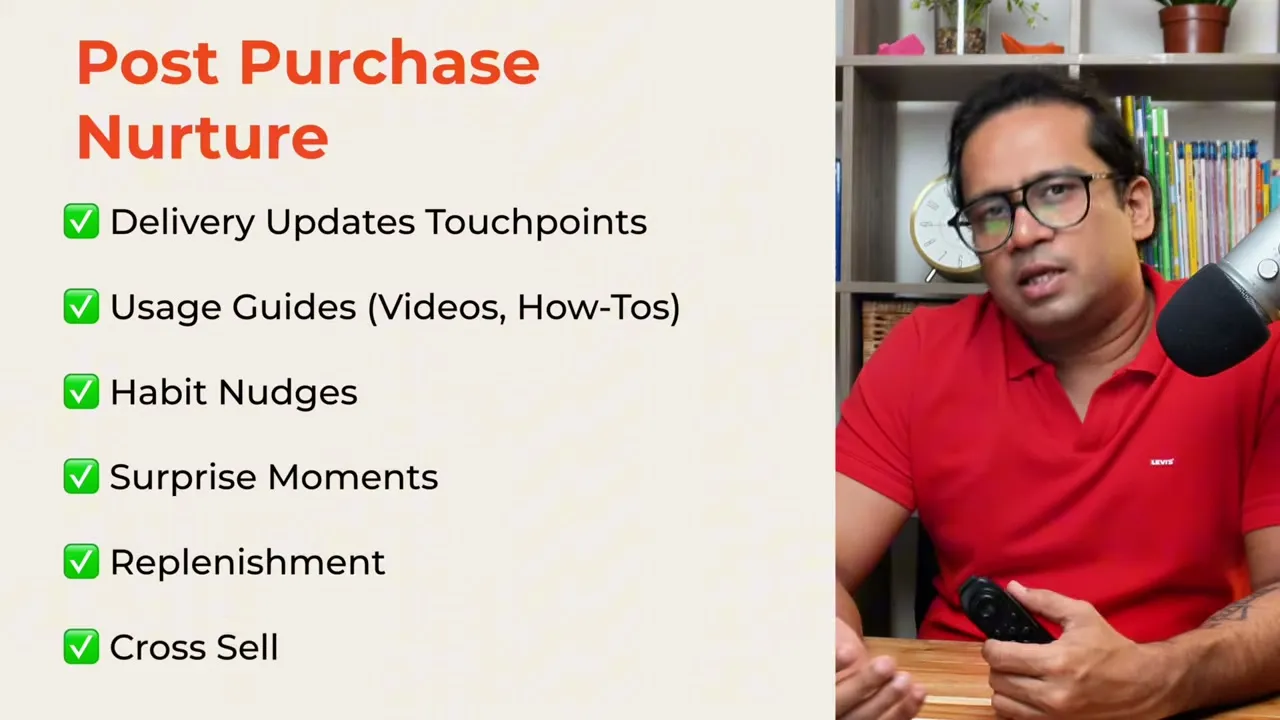
Segment it into four buckets: first-time buyers, repeat buyers, paid subscribers and loyal customers. And build it around the hero SKU. Generic messages do not land, whether they recommend, teach or ask for a reorder. I walk through this sequence, and the other repeat purchase mistakes, in this video.

Late deliveries kill the second order
A late or missing parcel undoes the first 21 days. Track three numbers:
- OTIF (on time, in full). Aim for 100%. Set a realistic target between 80 and 100%.
- “Where is my order?” queries. Customers should not need to ask.
- Time to resolve shipping queries. The faster you update them, the better.
Then over-communicate. A tool like AfterShip or Wonderment sends an update at every step: shipment created, picked up, stalled, out for delivery, attempted and delivered. Delayed? Say so early.
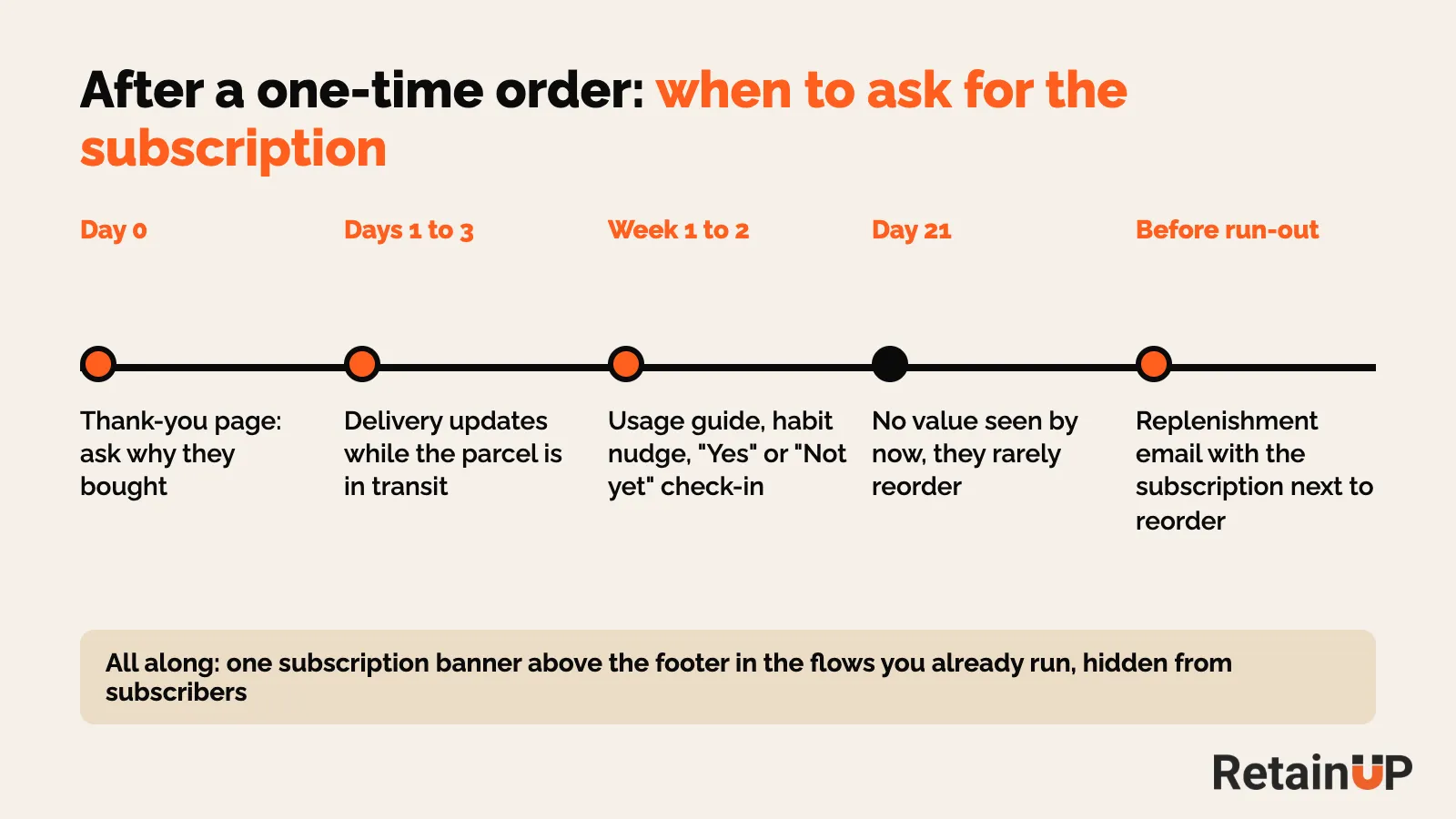
Ask why they bought on the thank-you page
Only 1 in 26 unhappy customers complain. The rest just leave.
So ask. Early. Put a one-question survey on the thank-you page, or send it within 7 days. Excitement is high then. So you learn why they bought, the emotional angle and the problem they want solved. That answer tells you which subscription message to send them later.

A week or two in, follow with a usage question. Two options. Never a no: “Yes, I can see the difference” or “Not yet, still early.” Anyone picking the second gets a troubleshooting email. Anyone picking the first gets the subscription ask. Same email, two outcomes instead of one. The full method is in usage check-ins and surveys.
The replenishment flow, timed to when the product runs out
Replenishment flows work best for products with a predictable usage cycle, such as skincare, supplements or groceries. The flow reminds customers to reorder before they run out. Send it just before the refill is due.
Work out the timing from the pack: units divided by daily dose gives you the run-out day, the same math that sets your subscription frequency. A 30-serving tub taken once a day runs out around day 30, so the first reminder goes a few days before. Klaviyo reports that Balance Me lifted repeat purchases 83% with replenishment emails timed from order data. That was repeat orders. No subscription ask yet.
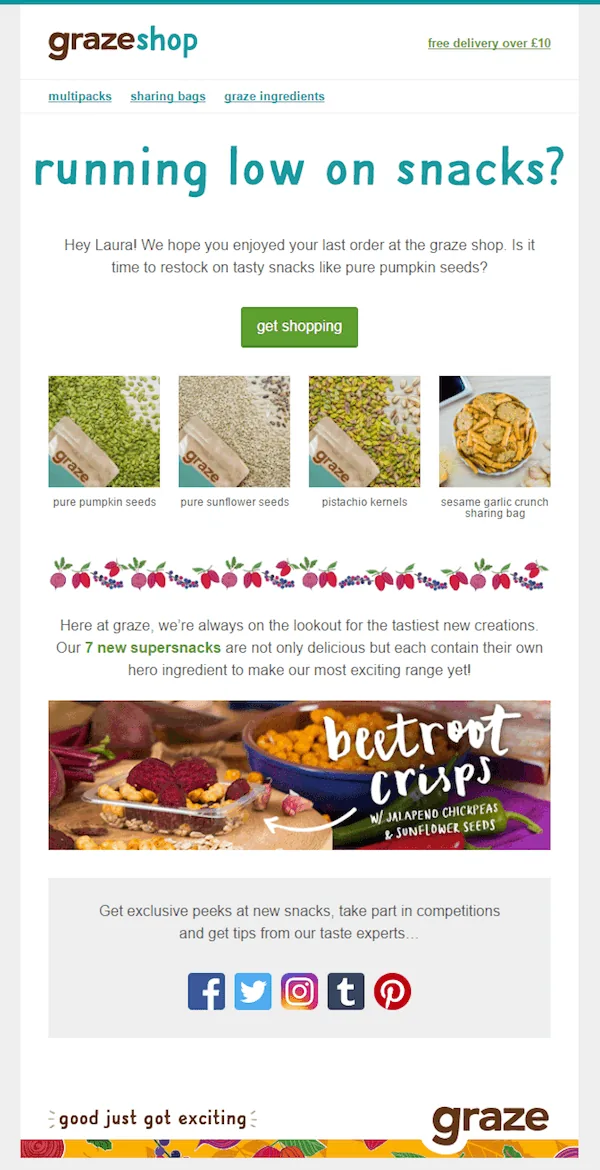
Then turn it into a subscription flow. Two changes. Both small:
- Add one email to the replenishment flow that asks them to start a subscription instead of reordering by hand.
- Update the existing replenishment emails so each one shows the subscription and its perks next to the reorder button.
Two angles work in the reminder block. “Running low?” for the buyer who is nearly out. “Might go out of stock” when you have a real reason to say it. And the buyer who has reordered five times at a steady rhythm? Invite them in. Use the frequency you now know is right. The pattern tells you when.
Put the subscription offer in the flows you already run
Your automations already reach people who are not subscribed. Use them. Nobody else will.
Welcome, browse abandonment, add to cart, cart and checkout abandonment, active on site, post-purchase for one-time buyers, VIP and winback. All of these go to buyers already in a purchase mindset. Most say nothing about the subscription.

For one of our brands we wrote three banners, one message each, across 8 flows:
- “Subscribe & save up to 45%” for abandonment and welcome.
- “Still ordering manual refills?” for first-time buyers and VIP.
- “Gaps Break Progress” for post-delivery.
The rules we follow:
- One banner, above the footer.
- Only where nothing promotes subscription yet. Check each email first, image text included. One subscription block per email, never two.
- Hidden from active subscribers.
- “Up to” wording. The banner travels across flows whose discounts differ, so it states the ceiling, not one flow’s offer.
Email is not the only channel. A text to a one-time buyer lands fast. Use their name and the product they bought.
Dedicated sends to the list are a separate job. Launch, perks and BFCM campaigns live in subscription promotion campaigns.
The upgrade offer after a one-time order
Then the direct ask. A subscription upsell flow in Klaviyo. It starts on the first purchase.
- Find the period when customers are most likely to come back for another order. That is when the flow fires.
- Send 1 to 3 emails that remind them of the perks of subscribing.
- Give a limited-time incentive for their first subscription order.
Tie the offer to what they bought the first time. Repeat buyers with 2 to 4 orders get small rewards and the invitation to subscribe. Their feedback runs more positive by the second order, so ask for a review in the same send.
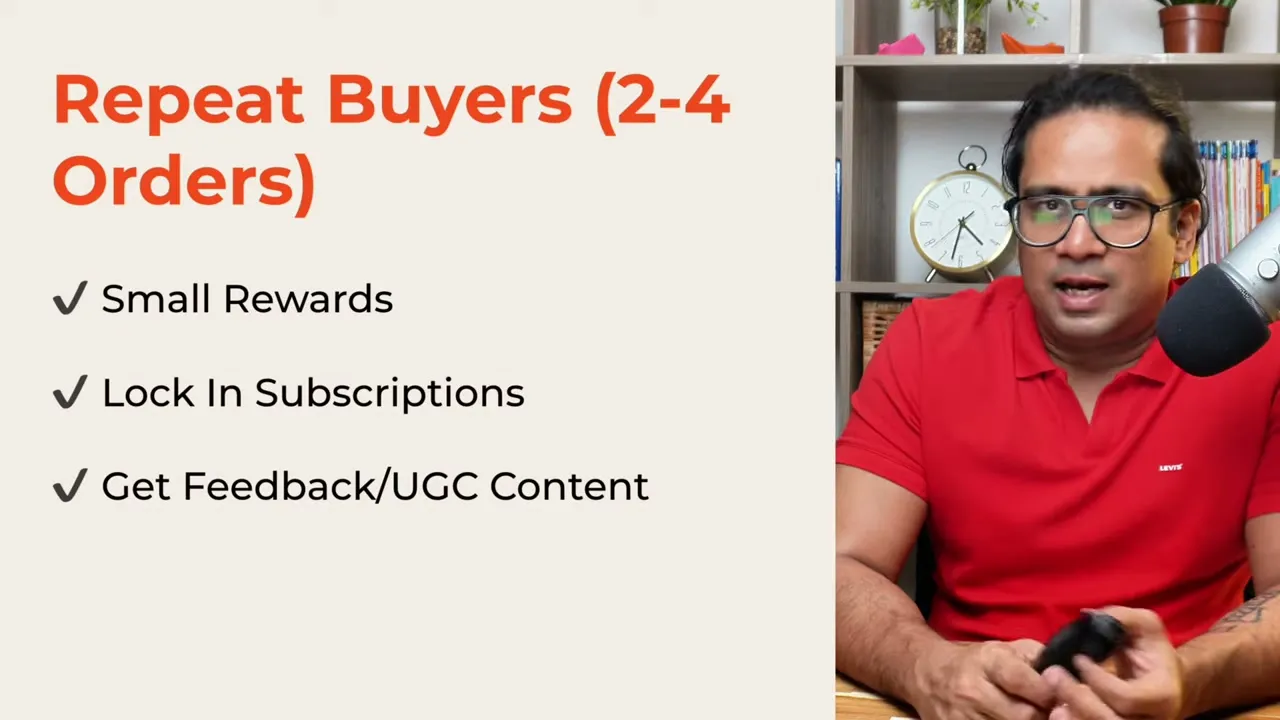
Frame it against what they already paid
Use dollars here. Right after the sale, a cash delta beats a percentage. “Pay an extra $20” converts where “save 20%” does not. The card is already charged. The number is small and concrete.
One of our pet brands sells a one-month pack at $49 one-time. The offer after the order is to pay an extra $24 and move to the two-month subscription, plus 3 free gifts. Further up the same ladder the deltas land exactly on the published tier prices: $45 plus $34 is $79, and $79 plus $20 is $99. So the upsell costs nothing beyond the ladder already in place.
Make the switch one click
An upgrade email fails if the buyer has to rebuild the cart. Skio has a one-time to subscription Quick Action for this. The link carries their last order. They click and confirm. Skio suggests a 15 to 20 day delay in the Klaviyo flow, filtered to one-time orders and with active subscribers excluded, which sits inside the 21-day window above.
Zaymo does it inside the email: a one-time button and a subscribe button, each showing its price. There is one catch. It is on Zaymo’s help page: a one-time order cannot turn into a subscription in one click, because the card has to be saved on the subscription platform first. So the subscribe button opens a checkout with the subscription already picked.
One rung at a time
A one-time buyer is offered a subscription, not the three-month plan. Convert the behaviour first. Then ladder the volume. And never two offers in the same week. The cart, checkout and thank-you page versions of this, including tools like AfterSell, are in the Subscription Recommendation Journey™.
How to tell if it is working
For an ecommerce brand the success metric is how many one-time buyers become two-time buyers. For you, it becomes take rate: the share of buyers who choose to subscribe. That’s the number. Track it by flow and you learn which message earns the plan.
Count it in a window. Always. Shopify’s returning customer rate counts anyone who ever bought more than once, with no time limit. So a customer who came back after 4 years counts as retained. That inflates the number. Shopify might say 40% of customers return. Measured as 90-day repeat purchase, only 20% do.
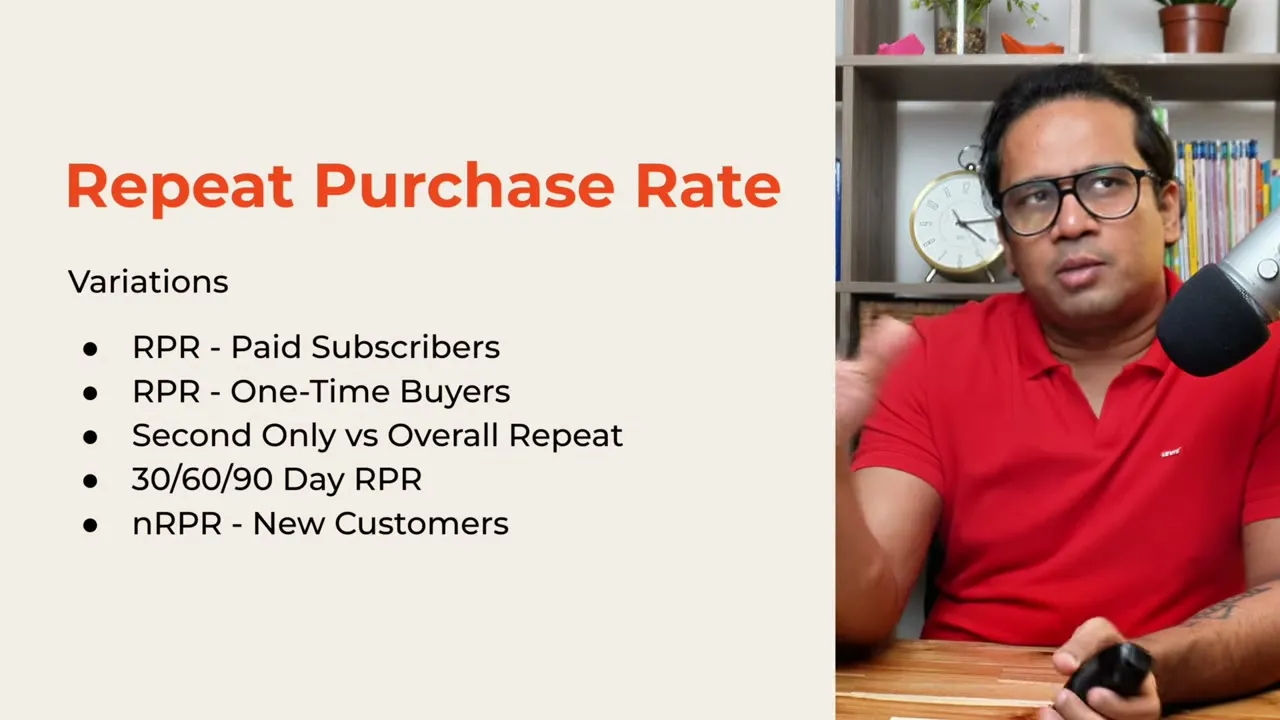
Take everyone who bought one-time in March and check how many placed a second order, or started a subscription, within 30, 60 or 90 days. Pick the window from your product’s run-out day. The order-level formula is in the take rate formula.
Even a 10% repeat rate means customers already repeat something. Find that behaviour and amplify it. Peel Insights tracks a related cut, the one-time to subscriber rate: of your new subscribers, the share who bought one-time first. Split it by first product. You see which one leads people onto a plan. Push that one in ads.
Then judge the converts by where they are at order 3. Not by the sign-ups. A big incentive can fill the plan with people who leave at the first full-price charge. Getting past order 2 and order 3 covers that drop.
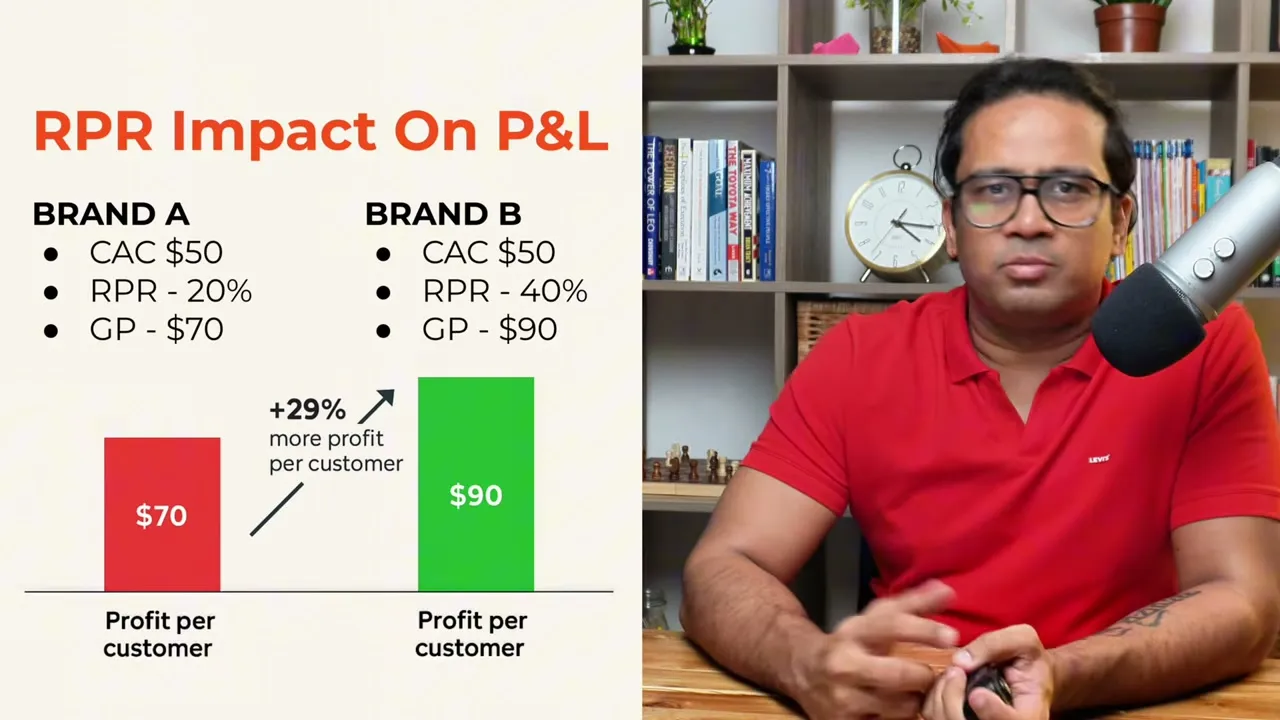
Lifting 90-day repeat from 20% to 40% at a $50 CAC adds 29% more profit per customer, before any third or fourth order. Faster CAC payback too. Expect 6 months to a year before the whole repeat loop builds momentum. Play the long game.
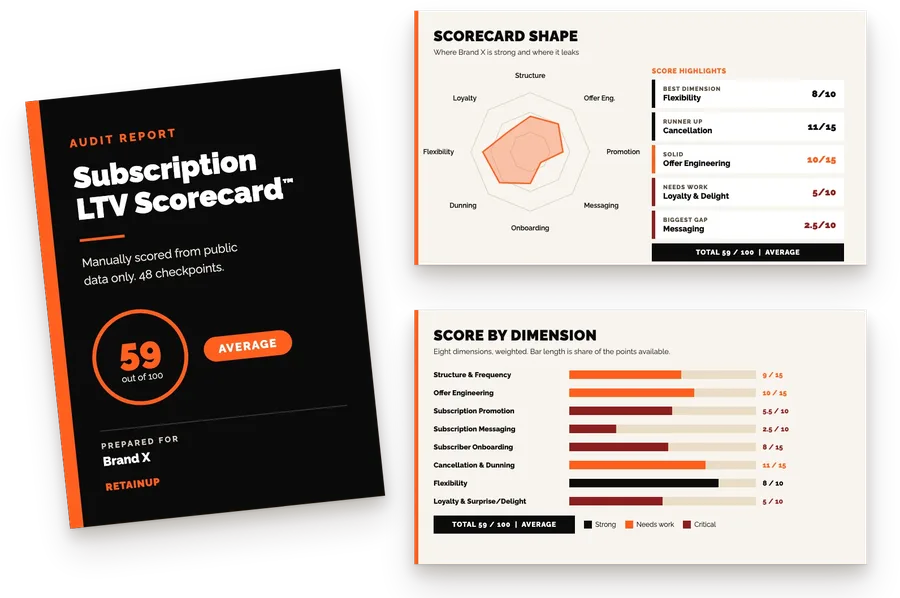
The Subscription LTV Maximizer™ builds this for you: the subscription offer, widget, cancel flow, portal, payment recovery, pause and skip in Recharge, Skio, Stay AI or Loop, plus the email and SMS that move one-time buyers onto a plan, live in 30 days for $5,000. If you want to see where your own one-time buyers leak first, the free subscription audit checks 48 points and sends your top 3 leaks in 24 hours.
FAQ
How do I turn one-time buyers into subscribers?
Ask them at the moment they run out, with a reason to stay. Spend the first 21 days on delivery updates, usage guides and habit nudges. Then send a replenishment flow timed to the run-out day, with the subscription shown next to the reorder button. Add a subscription banner to the welcome, browse and cart flows you already run. Hide it from people who already subscribe.
When should I offer a subscription to a one-time buyer?
Offer it just before the product runs out, after they have seen it work. If a customer does not see value within 21 days they rarely come back, so delivery updates, usage guides and habit nudges come first. Ask too early and you sound needy. Units divided by daily dose tells you the run-out day for each pack.
Can I convert a one-time order into a subscription automatically?
Yes, with a link that carries the order into a subscription. Skio’s Quick Action does this from a Klaviyo email sent about 15 to 20 days after a one-time order, so the buyer only clicks and confirms. Email tools like Zaymo show one-time and subscribe buttons with both prices, but the subscribe button still opens a checkout, because the card has to be saved on the subscription platform first. Exclude active subscribers.
Is a percentage or a dollar amount better for a subscription upsell?
Right after a purchase, a dollar amount works better. “Pay an extra $20” converts where “save 20%” does not, because the card is already charged and the number is small and concrete. Keep the extra amount close to the gap between the tier they bought and the next one, so you are not funding a discount on top of a ladder that already discounts.
How do I measure one-time buyer conversion to subscription?
Take a cohort of one-time buyers from one month and count how many started a subscription or ordered again within 30, 60 or 90 days. Pick the window from how fast the product runs out. Avoid Shopify’s returning customer rate. It has no time limit. It can show 40% where 90-day repeat is only 20%.
One email a week on subscription retention: the numbers, the strategy, and what to fix first.

Rahi Jain
Rahi Jain is a subscription LTV specialist who helps $1M to $10M DTC brands reduce subscription churn and maximize LTV on Recharge, Skio, Stay AI and Loop.
More about Rahi