Key takeaways
- Carnivore Snax grew active subscribers 84.6% in 6 months, with one humor-angle campaign a month to every non-subscriber.
- Good Protein gave subscribers BFCM first, as next-order add-ons. Add-ons went from 18% to 25% of subscription revenue that month.
- Active subscribers get 1 email a month and no discount sends. A sale they can see is a reason to cancel.
Flows run on their own. Campaigns are what you plan on the calendar.
So a subscription campaign is a one-off send built around the subscription program. A launch email, a perks announcement, a Black Friday send. It's one part of getting more buyers to subscribe, and the part most brands do once, at launch, and never again.
Two audiences, two different jobs
Every subscription campaign goes to one of two groups.
- Non-subscribers. One-time purchasers, repeat purchasers and new email subscribers. The job is to move them onto subscription.
- Subscribers. The job is to reconfirm value, not to sell harder.
Mix them up and both go wrong. The non-subscriber gets a quiet newsletter with no reason to switch. The subscriber gets a discount email and starts doing maths.
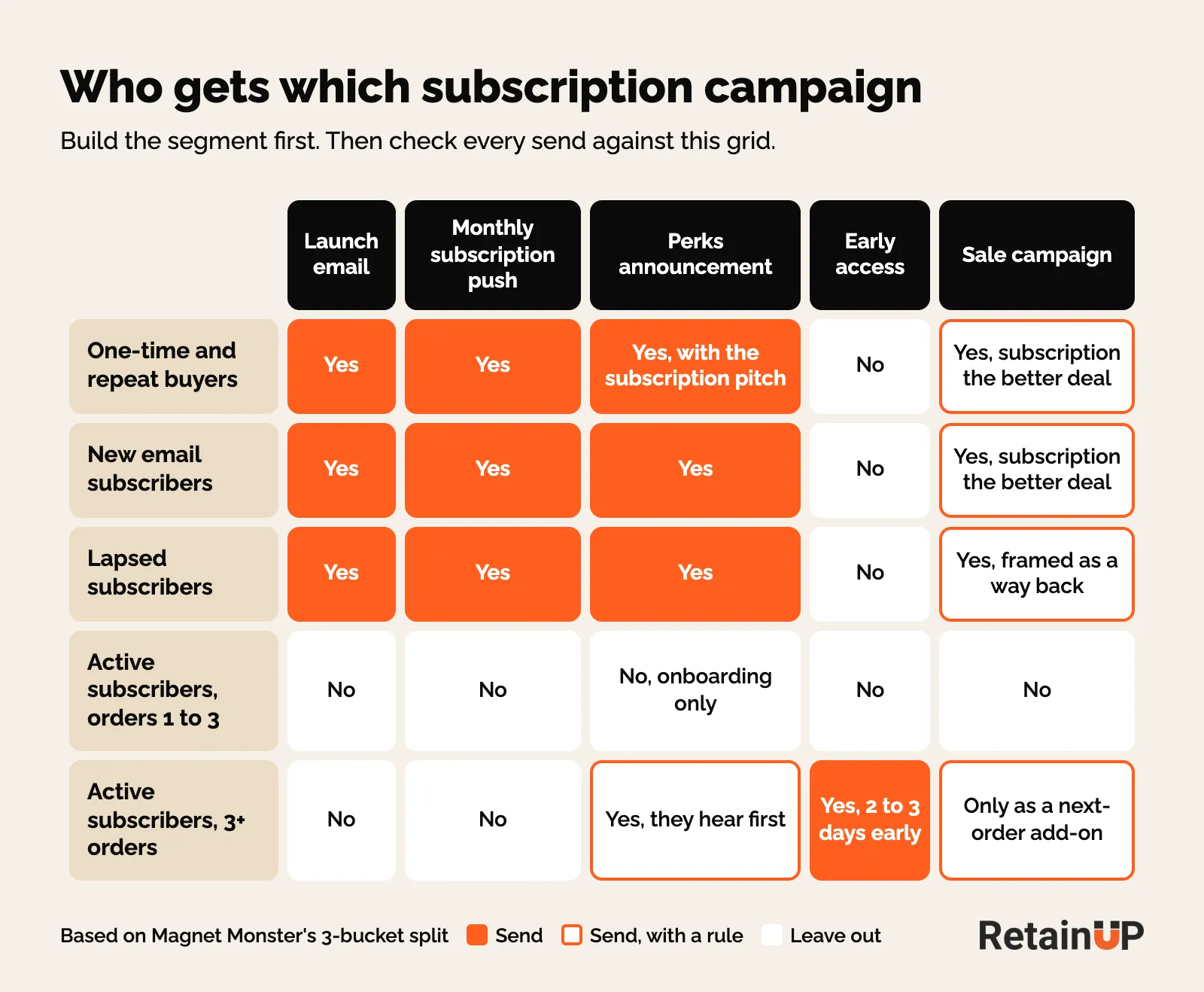
Magnet Monster splits the list into three buckets, and it's the cleanest version I've seen:
| Bucket | What they get |
|---|---|
| Prospects, one-timers, lapsed subscribers | All content, including every subscription campaign |
| Active subscribers, orders 1 to 3 | Onboarding only |
| Active subscribers with 3+ orders | Curated offers |
The middle row matters most. A new subscriber in their first three orders is still deciding if the product works. That's the job of onboarding, and a campaign landing in the middle of it is noise.
Who gets the subscription campaign
Build the segment before you write a word.
One-time purchasers, repeat purchasers, new email subscribers and lapsed subscribers go in. Then exclude every active subscriber. Every time.
Send a campaign to each segment, and once in a while a campaign to the full list that promotes the subscription with its perks. The one-time buyer gets the version written around the product they already bought. The new email subscriber gets the case for subscribing from scratch.

Repeat purchasers are the easy win. For most replenishable brands, only about 20% of repeat customers are on a subscription. Another 55 to 60% reorder on their own with nothing managing them (that's Bold's read of Shopify stores, no sample size given). They already behave like subscribers. And campaigns are only half the work with them. The other half is flows, timed to when the product runs out, which live in turning one-time buyers into subscribers.
The subscription launch email
Whether you're launching the program or relaunching it with new perks, the first campaign to the full list carries the whole case. Most brands send a banner that says "Now available on subscription" and a 15% off line. That's a discount announcement.
What goes in it, in this order:
- Why subscribe. Results come from daily use. You never run out mid-routine.
- The price. One clear number, the same rate as the product page.
- The perks. Named and concrete. A welcome kit, a gift on order 3, free shipping.
- How it works. Pick a frequency, get a reminder before every charge.
- Control, last. Skip, swap or cancel from the portal.
Control goes last on purpose. Lead with "cancel anytime" and you've led with the exit. The full argument, objection by objection, sits in why subscribe.
The email is one channel. Recharge's launch guide also puts the news on social, on a homepage banner and on a dedicated page with the perks, the cancel policy and an FAQ. So link the email to that page, not the shop. What goes on it is in the subscription landing page.
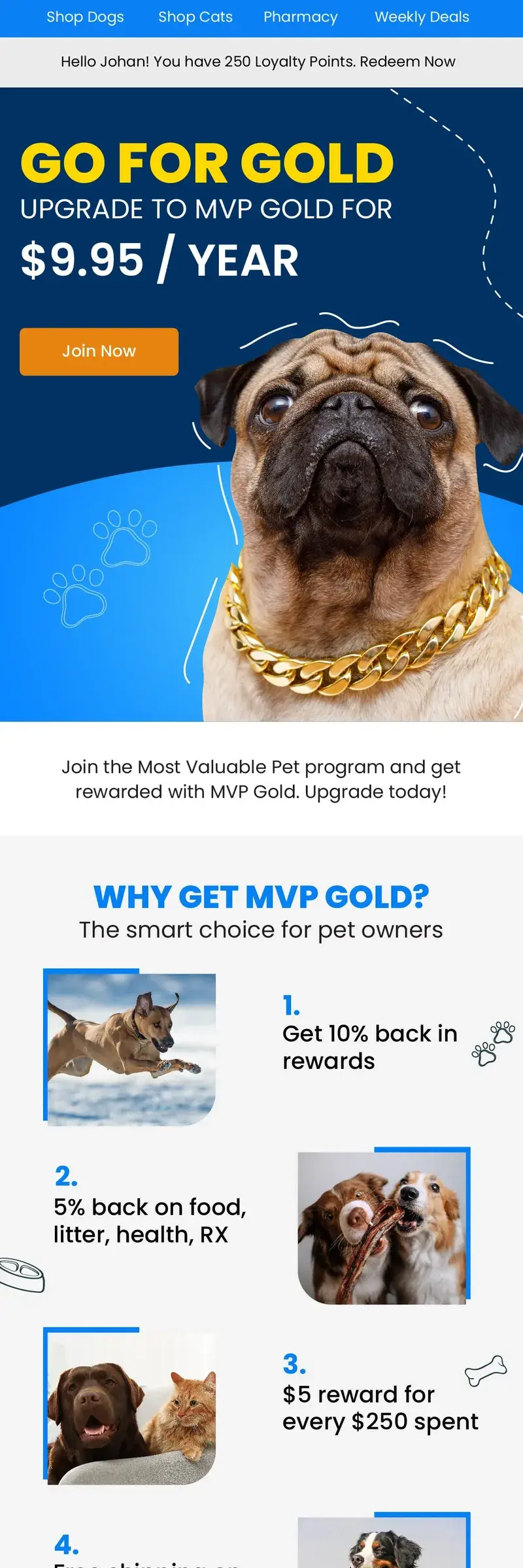
This pet retailer's MVP Gold email is a membership, not a replenishment plan, but the layout is the one to copy. Price in the hero. Then a numbered list of what you get. Each perk has a picture. No discount banner.
What about a first-month discount?
The old playbook says to add a limited-time discount on the first month. Be careful with it. Deep first-order discounts bring deal seekers, and they take the discount and cancel. A welcome kit stacked on your normal rate does the same job without training anyone to wait for a code. The numbers on why sit in first-order offers.
And free shipping on its own doesn't carry a launch. Nobody subscribes just to get free shipping. Amazon taught everyone that shipping is free. So keep shipping free for subscribers and charge for it on one-time orders. We tested it. The subscription take rate went from 17.5% to 42%. But the conversion rate dropped. Some people won't pay shipping on a first order. The rest of the perks menu is in subscription perks.
Campaign ideas that sell the subscription
One launch email isn't a program. Your list needs to hear about the subscription every month, from a new angle each time.
A few subject lines that work as whole campaigns (from Laya Consulting):
- "Why 90% of our customers subscribe after their first order"
- "Subscriber-only benefits you didn't know about"
- "What it's like to be a member for 6 months"
- "Thinking about subscribing? Here's everything you need to know"
Swap in your own number for the first one. If your number isn't 90%, don't use it.
The last idea on their list is the one I keep coming back to. Make it feel like a club, not a contract. That one sticks.
A subscription section in your regular campaigns
Not every send has to be about the subscription. For two of our brands, one in four campaigns each month carried a section for it. At Boka, buyers with two or more orders and over $100 spent got a VIP offer of their own, and active subscribers were left out of the regular campaigns.
Build that section once, as a saved block in Klaviyo, and drop it into product, content and new-launch sends to non-subscribers. Repeat suggests the same block in post-purchase emails and in the email after a 5-star review.
One humor campaign a month: Carnivore Snax
Carnivore Snax grew active subscribers 84.6% in 6 months (via No Limit Email). Part of it was simple. One humor-angle campaign a month to all non-subscription customers, pushing the subscription program.
They paired it with a plain-text "reverse psychology" email in the replenishment flow for 2-time buyers. So the campaign kept the subscription in view, and the flow caught people at the moment they were about to reorder anyway.
Plain text from a real person: Brez
Nick Shackelford at Brez runs plain-text, no-graphics emails on a monthly cadence. From the founder, from support, from product. One of those went out as a teaser, not a sale. It did $40k with nothing to buy in it.
A plain-text note from the founder about why the product works better taken every day is a subscription campaign. It just doesn't look like one.
Campaigns for your subscribers: perks and early access
Don't email existing subscribers much. Two reasons to send them a campaign: to reconfirm value, or to cross-sell a new launch. Keep it to 1 email a month, and tightly control what they get in the first 6 months.
The perks announcement
When you add a perk, tell the people who already have the subscription first. Then send the full list a campaign promoting the subscription with the new perk in it. Same perk, two sends, two jobs. Gifts by order number and the roadmap behind them live in subscription rewards.
Early access
Send subscribers a campaign 2 to 3 days before any public launch or promotion. Make the subject line say it plainly: "You get it first."
Make it about their next order. A one-tap link that adds the new product to the next box, no login, does more than a link to the shop. Zaymo and Loop Quick Actions both do this.
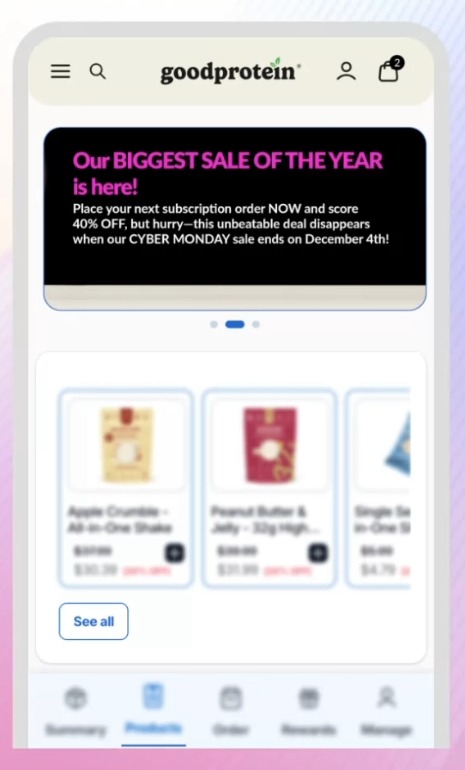
Good Protein ran this in their portal for BFCM. Add-ons went from 18% to 25% of subscription revenue that month (via Loop). The add-on side, and which product to offer to whom, is in add-ons and cross-sell.
Brez had another one worth stealing. A giveaway tied to the charge cut-off: "Stay subscribed past the 27th, and get entered to win free cases."
Keep subscription the better deal during a sale
Your subscription is 20% off all year. Your Black Friday sale is 30% off one-time. Which one would you pick?
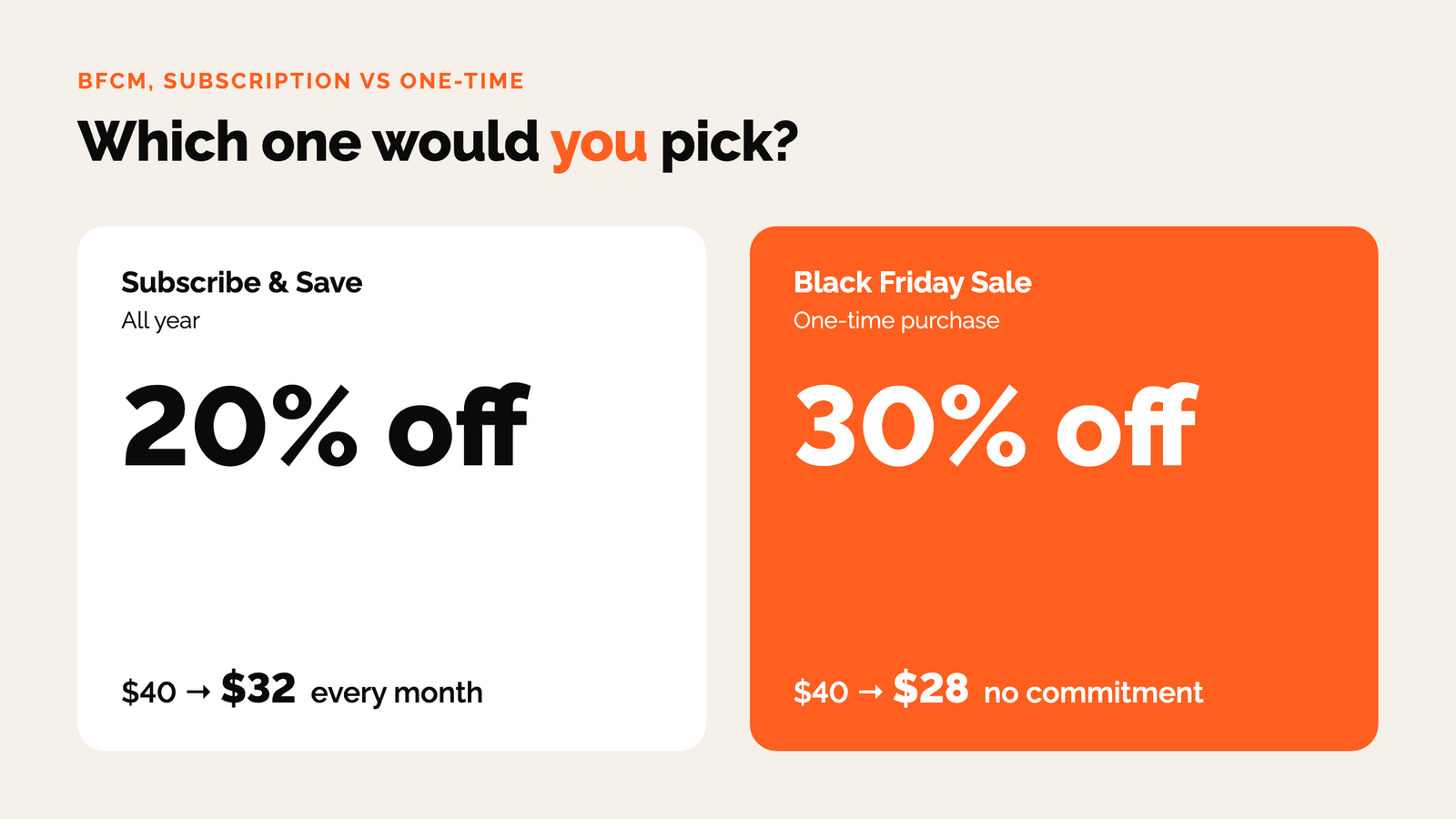
Most new customers pick one-time. You buy your biggest cohort of the year at your lowest margin, and most of them never order again. Your take rate drops in the biggest month of the year.
You can't be a subscription-first brand if one-time gets your best deal of the year. So every sale campaign gets checked against one rule. If one-time gets 30%, subscription gets more. Or it gets something one-time can't.
- Put the sale on a longer plan. Run your best deal on a 3-month prepaid plan or a sale-only bundle, not on the first box. When Good Protein's discount grew with the plan length, 60% of subscribers picked the longer plan (via Loop). More in prepaid and longer plans.
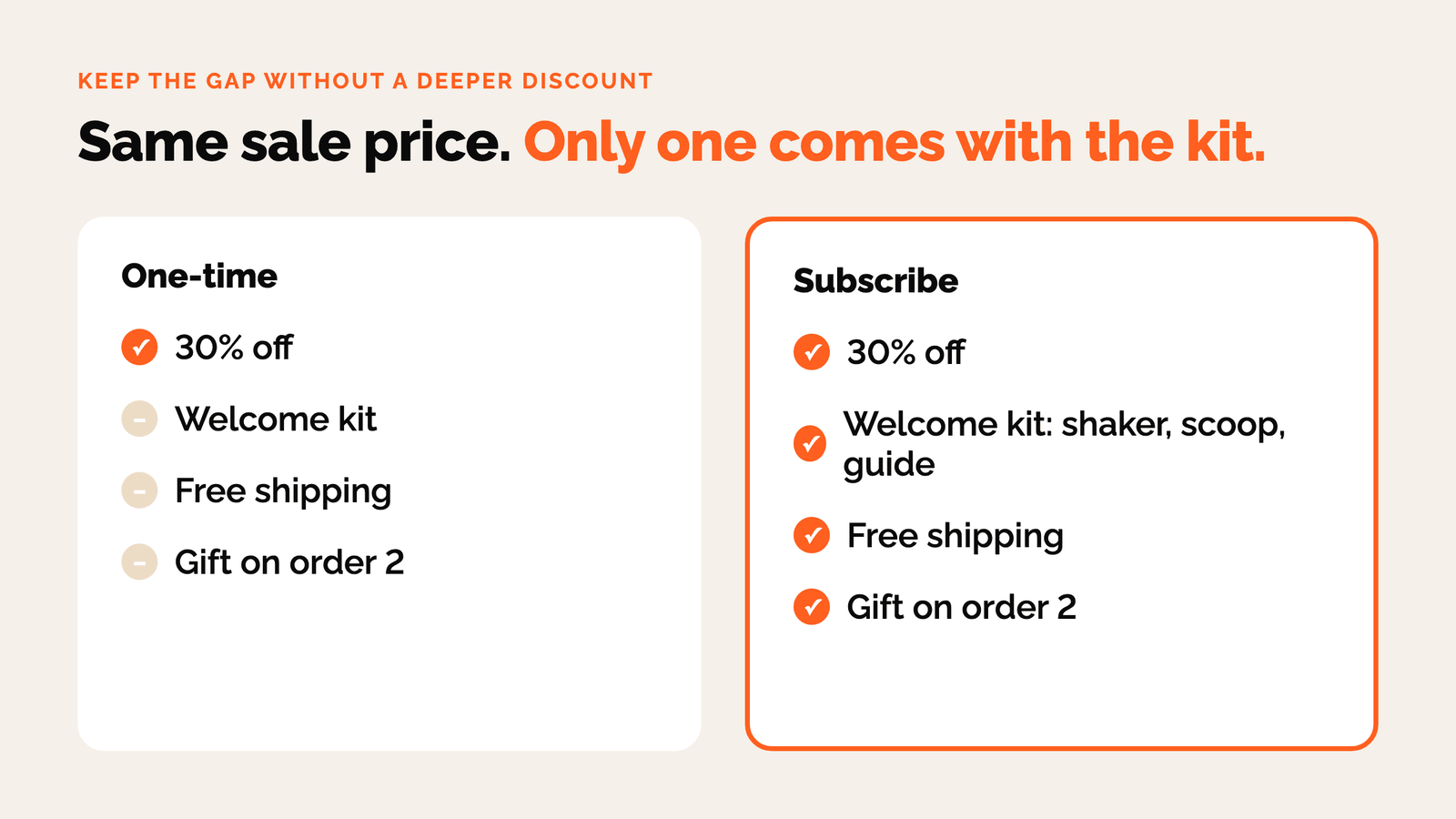
- Give a welcome kit only with subscription. One-time gets the sale price. Subscription gets the sale price plus the kit. It keeps the gap without a deeper discount.
- Ask again after they pay. Anyone who bought one-time gets a one-click post-purchase offer to switch. They already paid, so there's no risk to the sale. The setup is in the cart, checkout and post-purchase upsell.
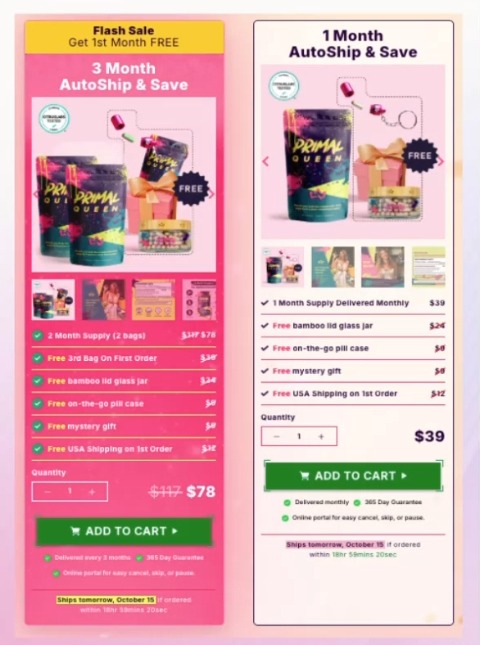
Primal Queen did a version of this with a flash sale on the 3-month plan, extras listed next to the 1-month option. Build all of these offers by mid-November, not the week of the sale.
Or run the sale on the subscription only. Drunk Elephant ran an 8-day Subscribe to Save Event in October 2026: 15% off the first subscription order, 20% off the second, 10% after, plus free shipping (via Sequenzy). It applied only to new subscription orders. The deal also runs into order 2, past the first box.
The same rule holds for a summer sale or a birthday sale. A seasonal freebie makes sense during the season. Just don't let it become the everyday offer. The rest of BFCM, from the cancel reason to holiday retries, is in BFCM for subscription brands.
Take active subscribers off these sends
As Matthew Holman put it: "Your 50% off sitewide sale will cancel your best customers."
Nothing spikes cancellations faster than giving new customers a better deal.
Subscribe and save runs at 20 to 25% all year. Then November hits and the brand goes 40, 50, 60% off sitewide. The maths is obvious. Cancel, grab the sale, maybe come back later.
So every campaign in this article excludes active subscribers. The launch email, the monthly push, the sale. And the loyalty and points flows too, because those are where a 15% code slips through to someone already on 20% off.
Here's the catch. You can suppress subscribers from the email. You can't stop them seeing the Instagram post or the site. That's why the subscriber gets the sale first, as an add-on to their next order, before the public offer lands. The suppression rules for every flow are in keeping discounts away from your subscribers, and what to send them instead is in emails for active subscribers.
How to build the exclusion
- One Klaviyo segment for active subscribers, fed by your subscription app's events.
- Add it as an exclusion on every campaign that sells the subscription or carries a discount.
- Check it the week of every sale. A subscriber who paused or skipped is still a subscriber.
If you split subscribers further, by tenure or by the sale they joined in, that's subscriber segmentation.
How to judge a subscription campaign
Revenue per send is the wrong number here. A campaign that sells the product one-time can look great on revenue and do nothing for the program.
- Subscription starts from the send. Not orders. New subscriptions.
- Take rate on the orders it drove. If 100 people ordered and 10 subscribed, that's your number, whatever the email platform says.
- The cohort at order 3. Sale-acquired subscribers tend to be the lowest-retention audience you'll get. Compare them to a normal month's cohort at day 30, 60 and 90 before you call it a win.
Formulas for the first two are in the take rate formula. What good looks like by category is on the benchmarks page.
And how often? During a big sale, more than you'd think. We sent 4 campaigns in a day to the same person for a premium apparel brand on Singles' Day. Unsubscribes stayed under 0.2%. Yes, it surprised me too. Each email had a different job. Each went to a different segment. I'm not saying every brand should. Most shouldn't. Without clean segments you will burn the list. Outside a sale, once a month to non-subscribers is a good start, and the rest of the month belongs to flows.
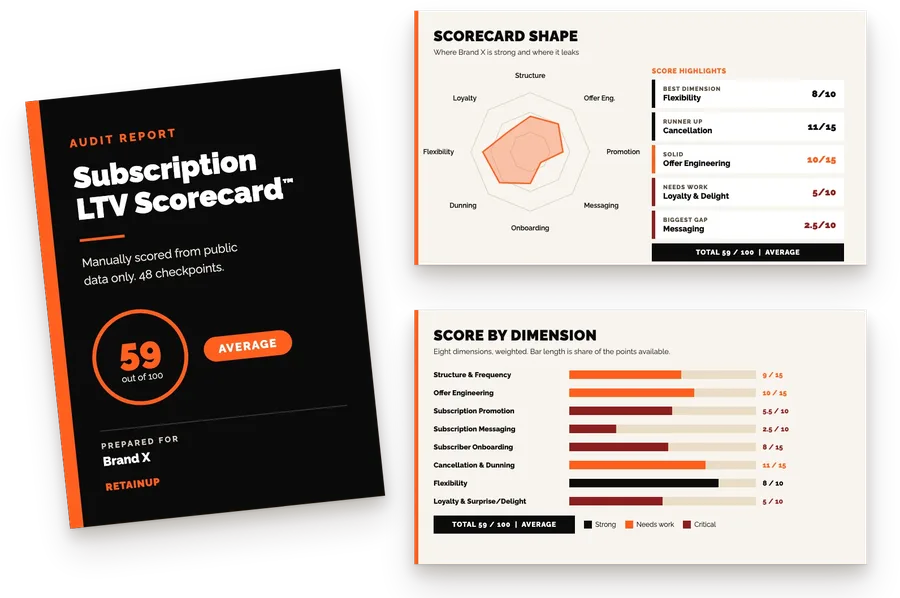
If you want the subscription offer, widget, cancel flow and the subscriber-only sends built in Recharge, Skio, Stay AI or Loop, the Subscription LTV Maximizer™ does it with email and SMS, live in 30 days, for $5,000. Or start with the free subscription audit: 48 checkpoints and your top 3 leaks in 24 hours.
FAQ
How do I promote my subscription program to existing customers?
Send a dedicated campaign to one-time buyers, repeat buyers and new email subscribers, with active subscribers excluded. Lead with why subscribing works better for the product, then the price, then the perks, and put control last. Follow it with one campaign a month from a new angle, like a founder note, a customer story or a subscriber-only perk, so the program stays in view all year.
Should I send discount emails to my subscribers?
No. Active subscribers already get a discount on every order, so a sale email shows them a better deal than the one they pay for and gives them a reason to cancel. Exclude them from every discount send, loyalty and points flows included. If you want to give them something, give it first and as an add-on to their next order.
How many emails should active subscribers get?
About one email a month outside of flows. Use it to reconfirm value, announce a perk or offer a new launch as an add-on. In the first three orders, keep them on onboarding emails only, because they are still deciding if the product works. Subscribers with three or more orders can get curated offers and early access.
What should a subscription launch email include?
It should give the reasons to subscribe, the price, the perks and how it works, with skip, swap and cancel at the end. Use the same rate and program name as the product page. A numbered list of named perks reads better than a single discount banner, and a free gift usually beats a deep first-month discount.
One email a week on subscription retention: the numbers, the strategy, and what to fix first.

Rahi Jain
Rahi Jain is a subscription LTV specialist who helps $1M to $10M DTC brands reduce subscription churn and maximize LTV on Recharge, Skio, Stay AI and Loop.
More about Rahi