Key takeaways
- At two of our brands on Loop, customers skipped about 15% of orders due each month. The rate looked alike. The cause did not.
- At one pet care brand, 66.8% of subscribers who paid order 2 paid again within 120 days. Of those who paused before it, 13.5%.
- Dunning pauses counted as customer pauses roughly double the paused rate. Split every number by who acted before reading it.
Every subscriber already holds two tools: skip and pause.
For some brands they are a pressure valve. For others they are a cancellation on a timer. So the analysis decides which, brand by brand.
This page is the diagnosis half, part of subscription metrics. The fixes, in rank order, live in the flexibility ladder.
Count skips and pauses by who made them
Classify by who acted before counting anything.
A pause from dunning, a resume from the timer and a cancel keyed in by staff all look identical in a total. And your app shows you the total.
In a Loop activity log, Source and Entity say who acted. Customer Portal and Loop cancellation flows are the customer. Admin Portal is staff. Loop Dunning is a payment failure. System on a resume is the timer.
Here is what it changed at a pet care brand of ours on Loop:
- Dunning had parked failed payments as pauses. They made up more than half of everything paused. Counted as customer pauses, they roughly double the paused rate.
- The first pass read nearly every skip as a payment failure, because Loop writes "-" in every blank field and the script counted it as filled.
Dunning pauses are failed payments parked. They belong with passive churn, so take them out first.
Migrations do the same damage. A second brand moved off Appstle in one day, and the migration created and cancelled the same subscriptions within hours. Read raw, that more than doubled its cancel count and put its paused count at two and a half times the real figure. Give the migration its own bucket and keep it out of every denominator.
Use the right denominator for each rate
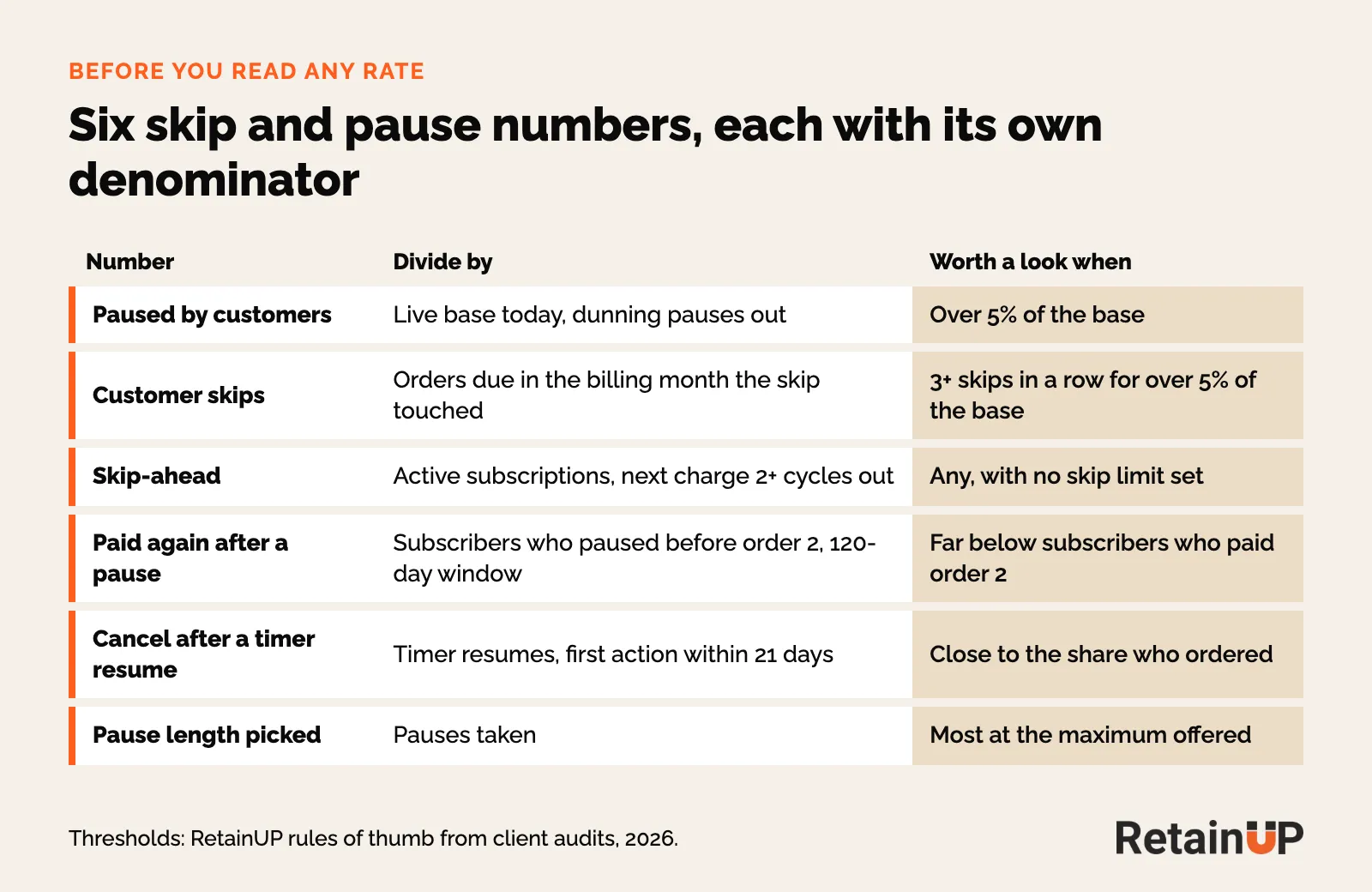
One denominator per column, named in the header.
Paused is a stock, a count at one moment. So rate it against the live base. Skips and delays are flows, events across a period. Rate them against orders due, meaning orders placed plus orders skipped in the same billing month.
Never add a stock to a flow. An earlier deck of ours put paused subscriptions beside delays and skips and summed them into one rate. It printed 2.03%. The per-order rates it used put the real figure near 2.6%.
Key each skip to the order it touched
A skip taken in July against a November order belongs to November. At our second Loop brand, a gummy subscription, keying skips by the day they happened read 18.1%. Keyed to the billing month of the order, it read 14.4%.
Same data. Different story.
Use the activity log, not the skipped orders export
The skipped orders export drops skips that belong to subscriptions which have since cancelled.
Read from the export, 9.5% of skippers at the gummy brand had cancelled. Read from the activity log, 26.9%. The export makes skipping look about three times safer than it is, by construction. Use it for order values. Never for outcomes.
Compare a month to the same month last year
Pause is seasonal. Pauses rise from October through January and unpausing climbs from February to April, according to Recurly's 2026 State of Subscriptions. So a January pause rate set beside October reads like a crisis when it is the calendar.
Some products are seasonal too. Skio's rule: if more than 20% of cancels fall in a few months and say "don't need it right now", the product has a season. Those subscribers need a pause with a return date.
What healthy skip and pause rates look like
For replenishment subscription brands, my rule of thumb is 3% to 5% of the base on pause. Above 5%, product is building up and the habit is broken. Below 3%, the daily routine is locked in.
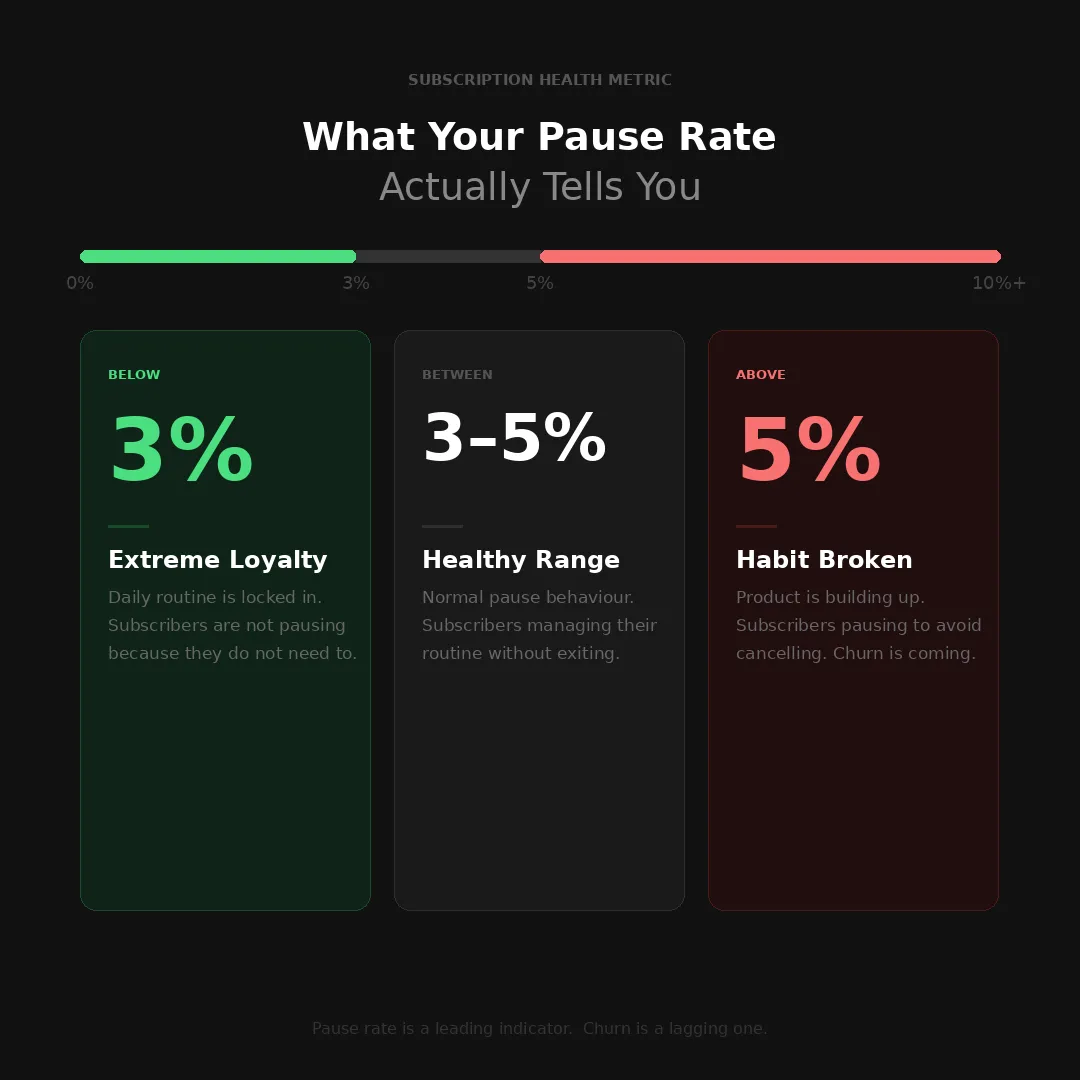
It is my starting point. No published band exists, and I have seen decks call 5 to 15% paused a "healthy range" with nothing behind it.
Skips are steadier. Both brands we ran this on in 2026 landed near 15% of orders due each month. Pause was where they split. The pet care brand had 2.9% of its live base paused by customers. The gummy brand used pause on 1.2% of orders due.
| Signal | Threshold | What it points to |
|---|---|---|
| 3+ consecutive skips | Over 5% of the active base | Frequency mismatch |
| Pause-to-churn within 90 days | Over 60% | Max pause too long, nothing catching the resume |
| Pause length chosen | Most at the maximum offered | The setting decided, not the customer |
| First skip lands on order 2 | Most first skips | Expectation or cadence problem at the start |
For category medians next to your own numbers, use the subscription benchmarks page.
Diagnosis one: the frequency is too short
"Too much product" is the obvious explanation for skipping. Overstock caused 27% of subscription cancellations from 2023 to 2024 across all of Ordergroove's merchants, so it is often right.
Test it first.
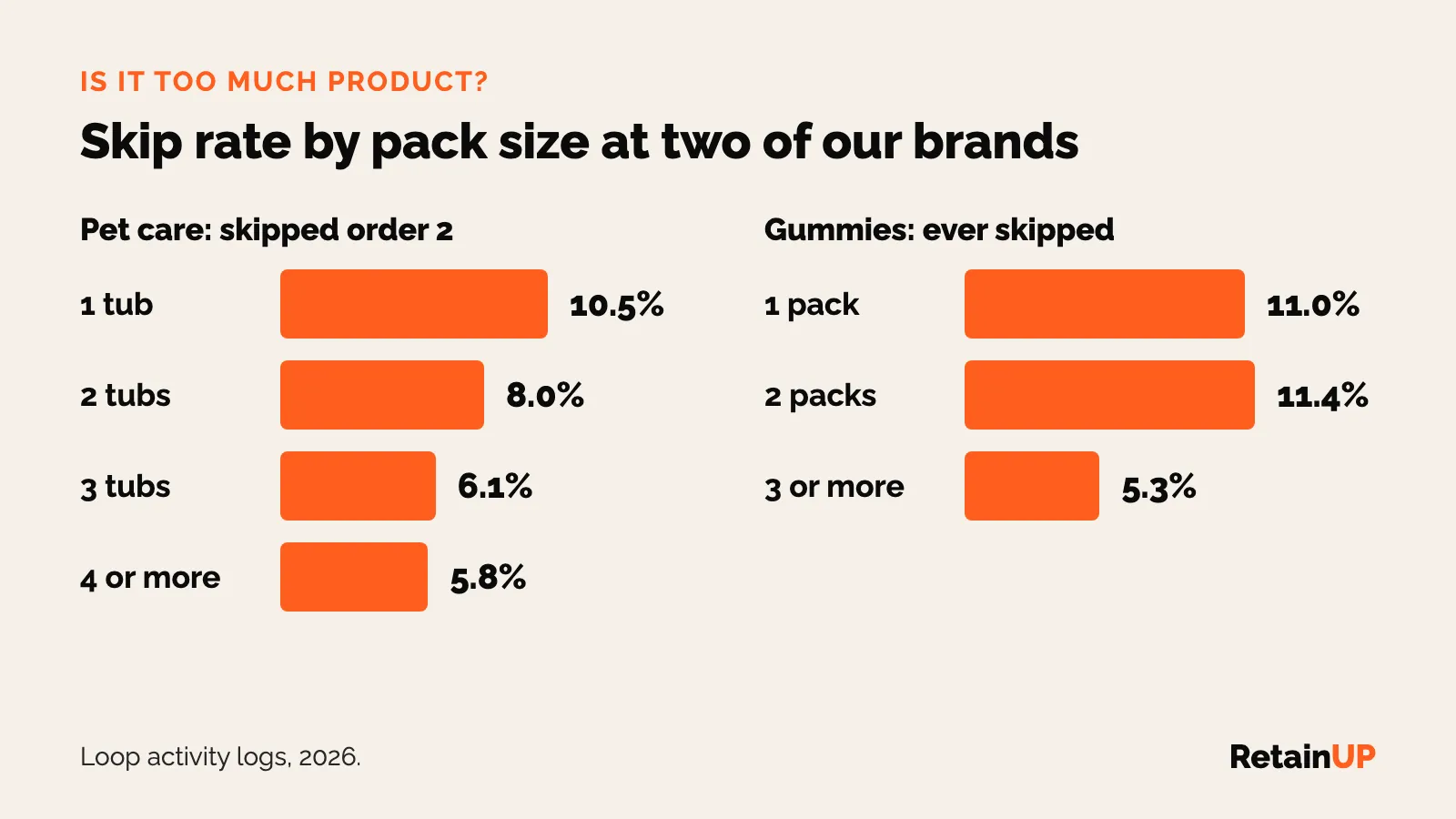
Split skips by pack size. If oversupply drives skipping, bigger packs should skip more. At the pet care brand, skipping the second order fell as pack size rose, from 10.5% of single-tub subscribers to 5.8% of four-plus. At the gummy brand it was flat across one and two packs.
Do the same split by delivery frequency. Monthly and quarterly subscribers signed up with different intent, which is why Skio reads each frequency's retention curve on its own. A skip rate that climbs in one cadence only points at that cadence.
Then check cadence against consumption. Orders at the gummy brand sat 27 to 28 days apart and one pack is 28 gummies. Matched. "Already have enough stock" was 6.3% of cancel reasons.
So the frequency was fine there. When pausers cluster at the first order and "too much product" ranks high, fix it in subscription frequency before touching any pause setting.
Two more signals. Subscribers who move themselves to a slower cycle by hand: a few customers at the gummy brand switched to every 56 days through the portal, with no prompt. And a cohort that skips every other order, which Loop reads as a default frequency set too short. Both are demand for a slower option.
Diagnosis two: the offer is too weak or the product is not used
Skip and pause can work fine and still be the wrong thing to tune.
Product not used looks like oversupply in the data.
At the gummy brand, skip was a pressure valve and pause was barely used. The leak was taste. Of the customers who gave a cancel reason, 58.7% said taste or texture. Price was 7.9%. Too much product, 6.3%.
The cancel flow had no skip step and no pause step. Its only offer was a discount, aimed at the 7.9%. It saved 2.33%. So read the reason mix against what the flow offers before changing a setting. Cancel reasons has the treatment for each reason.
Look at the last message before each skip
Record the last message each subscriber got in the 48 hours before every skip and cancel. At the gummy brand, 15.3% of payment reminders were followed within 48 hours by a skip or a cancel. The median skip landed 2 days before the charge it removed. The reminder was doing its job, and the portal it pointed at offered cancel as easily as skip.
The message before the action is usually a bigger lever than the setting. Cancellation day spikes reads it by day.
Read pause as rehearsed churn
Most brands count a subscription pause as a save.
40 to 60% of paused subscribers are gone in 90 days. 70% in 180. A one-month pause brings back about 9 in 10. A three-month pause brings back 6 or 7.
The longer the pause, the smaller the return. The subscriber who paused already pictured life without you.
You will see rosier numbers. Recurly says 3 in 4 subscribers who pause eventually return, and Loop sets a 60% pause return rate as its target. "Eventually" has no window. Gone in 90 days does. Pick one definition and hold it.

Measure paid again, with a window longer than the pause
Anchor every subscription at its second order: paid, skipped, or paused before it. Did each group pay again within 120 days?
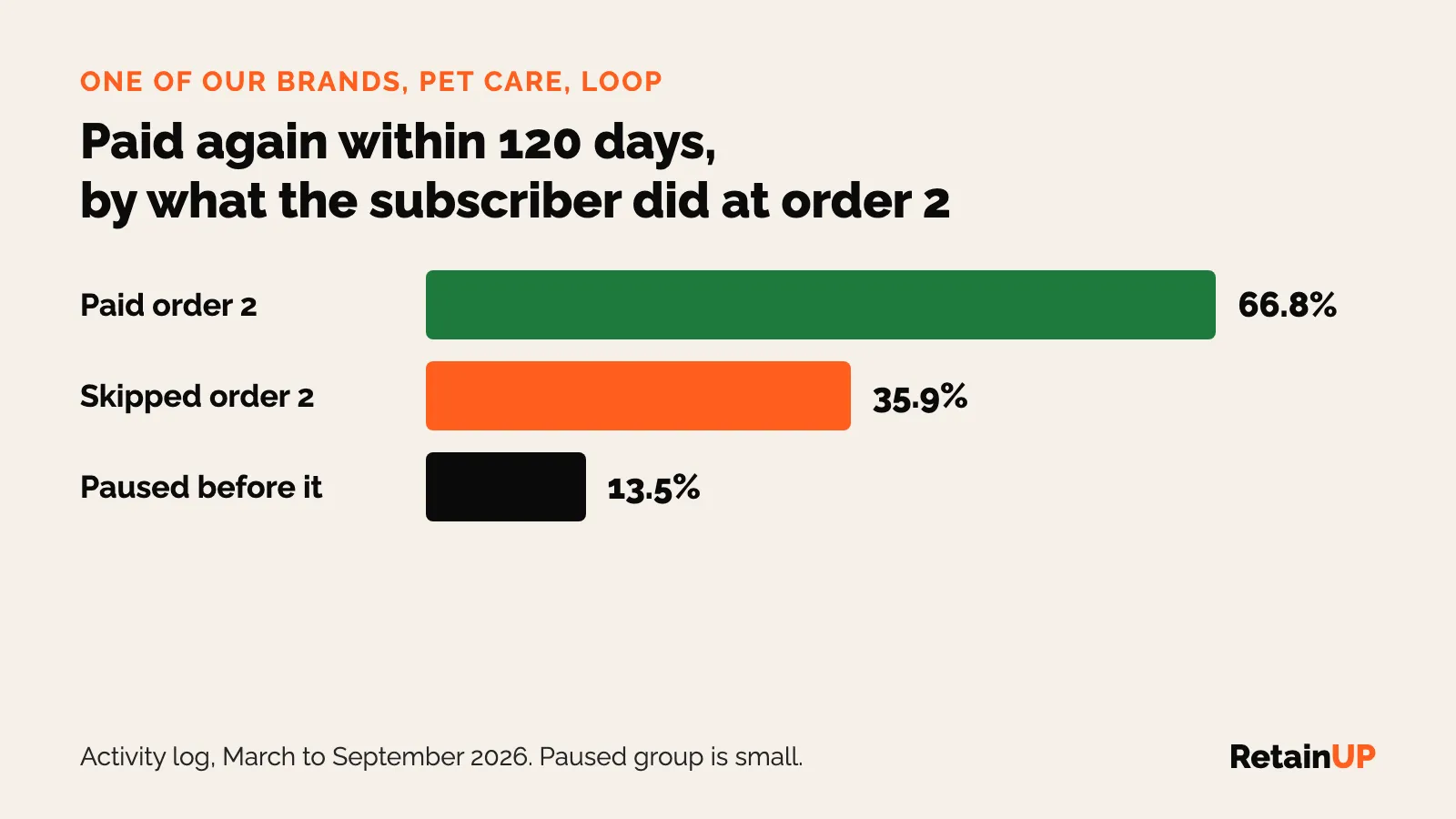
Why 120? A 60-day cancel window sits inside a 90-day pause, so pausers look safe because nothing can happen to them inside it. At the pet care brand they looked safest at 60 days and paid again least at 120. The paused group was small. Read it as a direction.
Recurly's pause tracking guide agrees. Subscribers take about 80 days on average to decide whether to come back, so a read from the first 30 days is skewed. Give any pause test 90 days before judging it.
Follow the timer
A resume by the timer is not a comeback. At the pet care brand the system ran 91% of all resumes.
So record the first thing that happens within 21 days of each automatic resume.
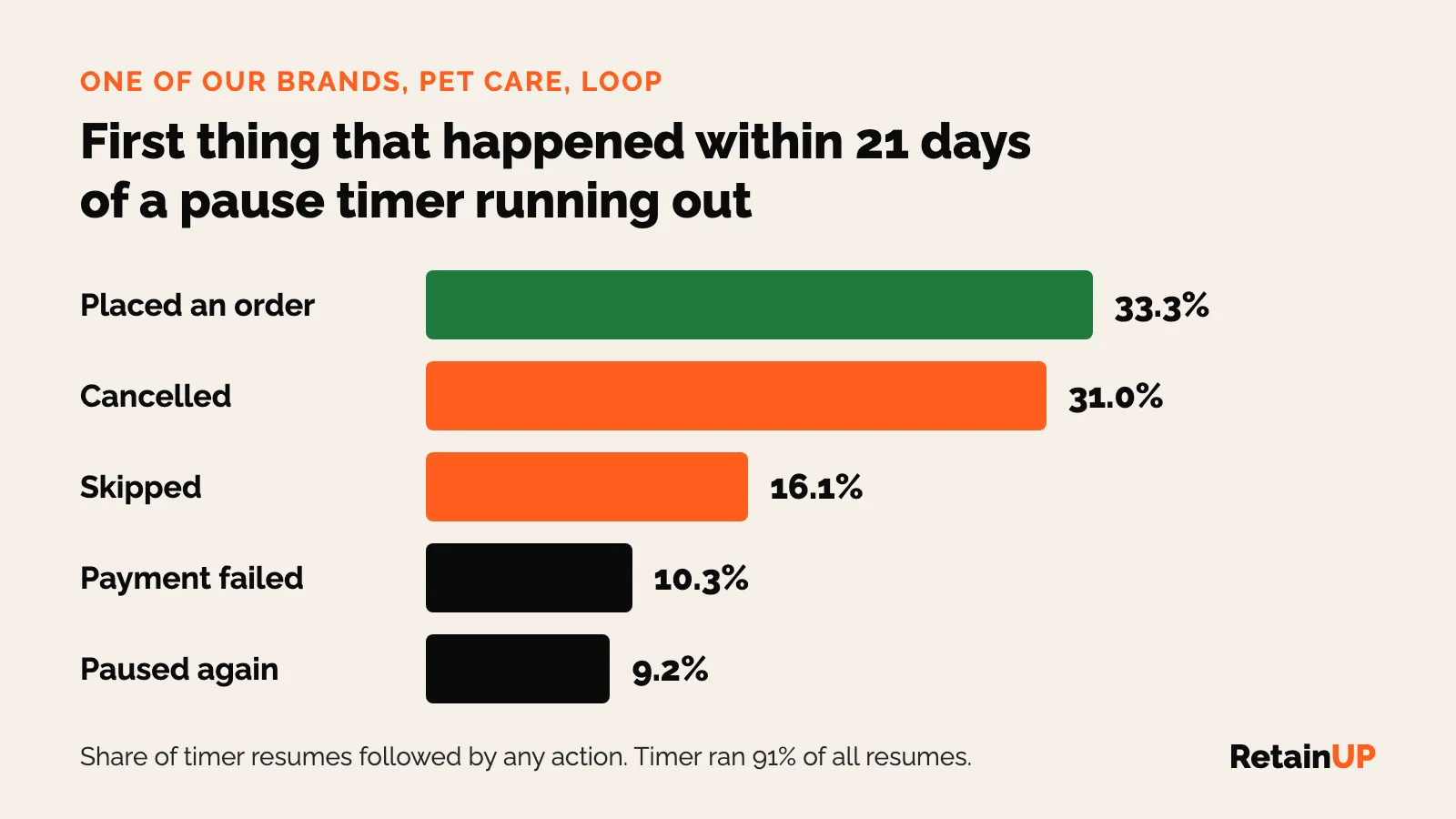
A third ordered. Almost as many cancelled.
And check which length got picked. Most pausers at both brands chose 3 months, the maximum offered. A cluster at the maximum means the setting decided.
Zero resumes can mean the timer has not fired yet. Every pause at the gummy brand was still inside its window when we pulled the data. A third of those pausers had already cancelled.
Find the serial skippers still counted as active
When the portal has no skip limit, some subscribers skip months of orders in one sitting and never bill again. At the pet care brand, skip-ahead accounts took 48.7% of every customer skip. The largest had skipped every order out to May 2032.
At the gummy brand, one customer started skipping and did not stop. Every order out to the following March, gone in 71 seconds. Loop sent a confirmation email after each one. Four minutes later they cancelled.
No intervention at any step.
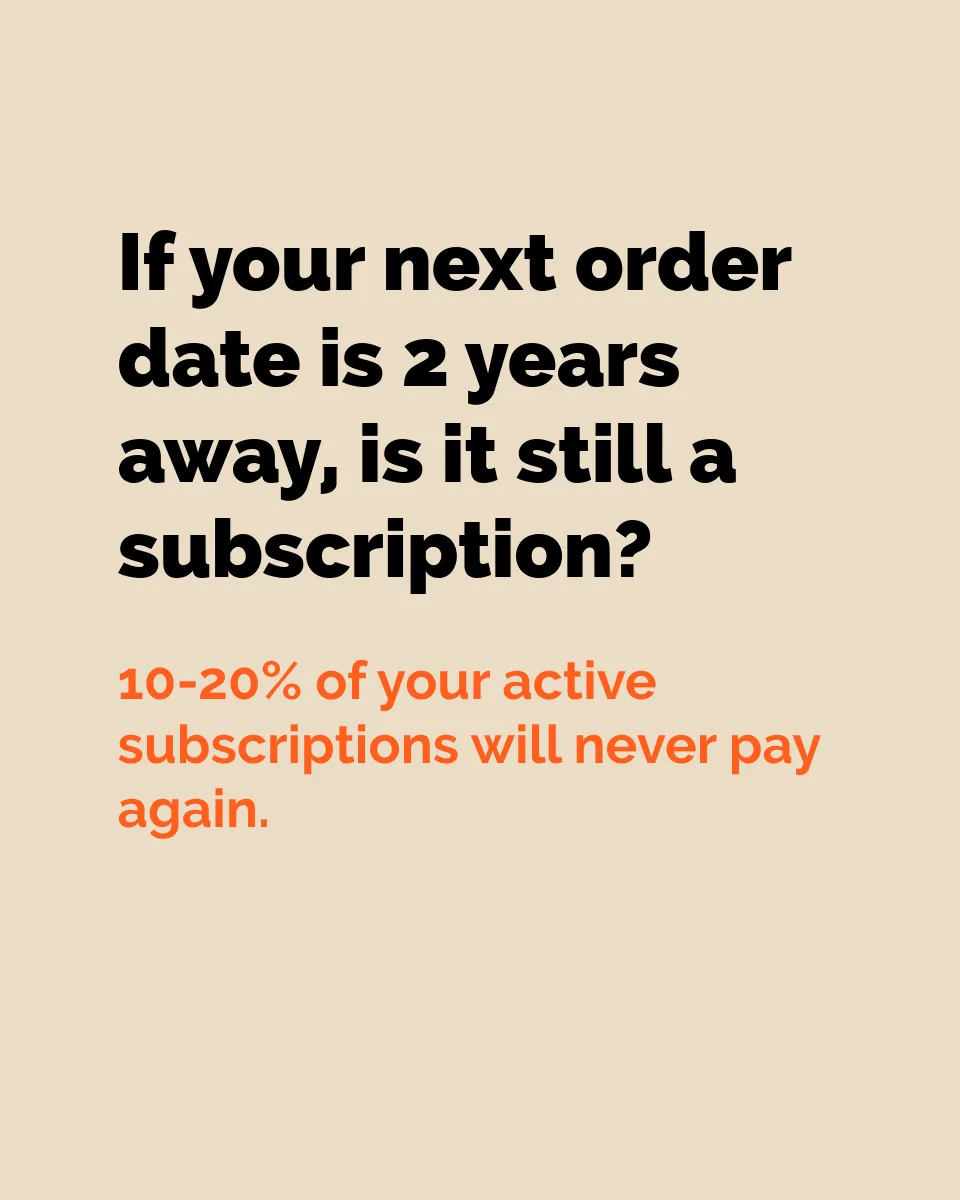
Around 10 to 20% of active subscriptions are dead, and brands still count them as active. Most brands run Recharge, Skio, Loop or Stay AI on the defaults, with no limits on flexibility. They find out 12 to 18 months later.
To find them, pull every active subscription whose next charge is more than two cycles out, or that has skipped and never billed. Active vs passive churn covers rebuilding the true active number.
What skippers do on the next cycle
Skip on its own is a good sign more often than a bad one.
Across 6 subscription brands, No Limit Email found 60% of skippers reorder on the next cycle. 18% cancel, 17% skip again and 5% pause. Ordergroove found subscribers stay 135% longer when they can skip, pause or delay an order.
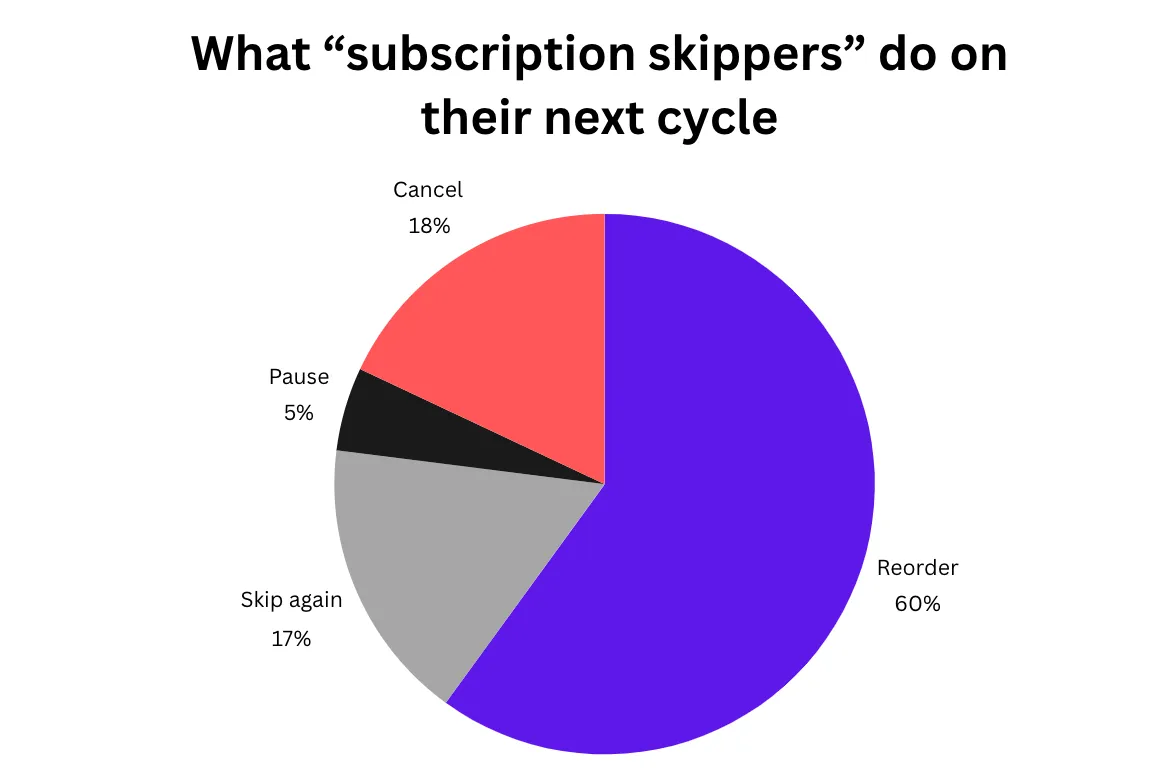
At the gummy brand, 26.9% of skippers had cancelled, against 43.4% of all subscriptions. Tenure muddies that, but skip was a pressure valve there.
Where skip goes wrong is position. At the pet care brand, 80% of skipping subscribers took their first skip at the second order. At the gummy brand, 67% skipped the very first renewal. A skip that early is a new subscriber saying the first box hasn't been used up, or hasn't worked yet.
One ratio ties skip to cancel. Divide customer skips by customer cancels over the same months. Loop puts a healthy ratio at 3 to 5 skips per cancel. It is a vendor number, so watch your own trend more. A falling ratio means skips are turning into exits.
Report revenue pushed out by skips next to revenue lost to cancels, every week. George Kapernaros of YOCTO wrote that at one account, deferrals made up 69% of the gap between forecast and billed revenue. Cancels were 16%. Across his accounts, 14% of subscribers skipped order 2 and 18% skipped order 3.
What to fix once you know the cause
Write the actions as settings with values: the setting, its current value, its new value.
| What the numbers say | Where to fix it |
|---|---|
| Skips rise with smaller packs, "too much product" ranks high | Frequency first, then pause limits against the corrected schedule |
| Most first skips land on order 2 | Onboarding and the expectation before the first full-price charge |
| Skips and cancels cluster within 48 hours of the reminder | The upcoming billing reminder: skip and reschedule as the main buttons |
| Skip-ahead with no limit | Cap consecutive skips at 2 |
| Pause lengths cluster at the maximum | Lower the max pause, require a resume date |
| Timer resumes followed by cancels | A reminder before the timer fires |
| Most cancels keyed in by staff | A support macro that offers skip, then pause, before cancelling |
Check that last row first. At the pet care brand, 64% of cancellations were keyed in by staff from emails, so the cancel flow's skip and pause offers never reached them.
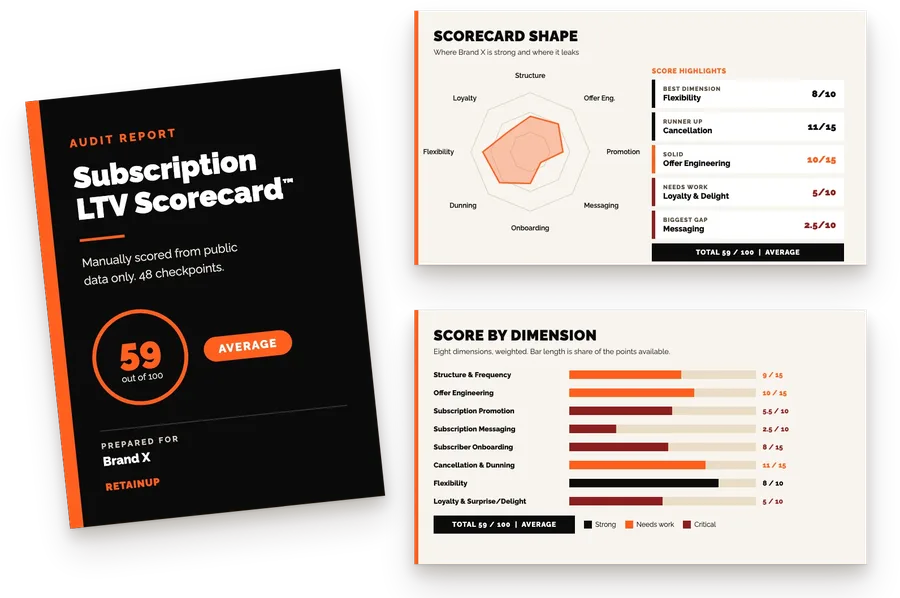
If you want this read done on your own data, the Subscription LTV Roadmap™ reads your subscription data, skip and pause included, then gives you a 90-day plan of 30 to 50 changes in order, in 3 working days, for $1,000. Or start with the free subscription audit: 48 checkpoints and your top 3 leaks in 24 hours.
FAQ
What is a good subscription skip rate?
Around 15% of orders due each month is what we saw at two brands on Loop in 2026, one pet care and one gummies. Count skips against orders placed plus orders skipped in the same billing month. Then watch subscribers with three or more skips in a row. Above 5% of the active base points to a frequency that ships faster than people use the product.
What is a healthy subscription pause rate?
For a replenishment brand, 3% to 5% of the live base on pause is my rule of thumb. Above 5% usually means product is building up and the habit has broken. Count only customer pauses. Payment failures parked as pauses by dunning can double the figure, and pause rises every October to January, so compare against the same month last year.
Do subscribers who pause come back?
Fewer than most dashboards suggest. Industry data puts 40 to 60% of paused subscribers gone within 90 days and about 70% within 180. A one-month pause brings back roughly 9 in 10, a three-month pause 6 or 7. Measure paid again over a window longer than the pause.
Is skipping an order a sign a subscriber will cancel?
Usually not. Across six brands studied by No Limit Email, 60% of skippers reordered on the next cycle and 18% cancelled. Watch for skips in a row, many orders skipped in one sitting, and a first skip on the very first renewal. Those point to a cadence or expectation problem.
Should a subscription brand offer a pause or a discount when customers cancel?
Offer whichever answers the customer's reason. A discount only answers price. At one gummy brand the only cancel offer was a discount, price was 7.9% of reasons, taste was 58.7%, and the offer saved 2.33%. Skip and a slower frequency answer too much product. A pause capped at 90 days, with a resume date, answers a break of known length. Read your reason mix first.
One email a week on subscription retention: the numbers, the strategy, and what to fix first.

Rahi Jain
Rahi Jain is a subscription LTV specialist who helps $1M to $10M DTC brands reduce subscription churn and maximize LTV on Recharge, Skio, Stay AI and Loop.
More about Rahi