Key takeaways
- Habits take around 66 days to form, not 21. In one skincare brand's cohorts, about 70% of reorders came before day 60.
- SULT answers "when do I use this?" on the product page with four moments: first thing, the midday slump, pre and post workout, and hangover.
- Space Goods found that customers who make it with warm milk stay longest, and now teaches that preparation to every new subscriber.
This is one part of the subscription onboarding guide, which walks the first 90 days in order.
What is the one thing you have used every day for years?
A supplement, a gummy, a serum, a protein shake. Most people have one. Even something as simple as soap or coffee.
And now ask why that one stuck and the others did not. Rarely because it worked better.
It found a slot in your day and stayed there.
James Clear wrote 300 pages on why that happens. Twenty million people bought it. Almost nobody in DTC has applied it to a subscription, and your new subscriber is running the same test right now, in their first month.
Why "take it daily" loses the subscriber
With consumables, every customer has a quiet question you never hear: when do I actually use this?
They bought it. It sits in the cupboard. They are not sure if it is a morning thing, a workout thing, or an every-day thing. So they use it twice, lose the thread, and the reorder never comes.
Confusion shows up in your dashboard as churn, a few weeks later.
And habits take around 66 days, not 21. Longer than month one. A subscriber who takes it every morning through the first bottle renews without thinking about it. One who takes it four times and leaves it on the shelf is already gone, whether the charge comes at day 30 or day 90. The cancel just arrives later.
I had this debate with a skincare brand. Their view was "customers take time to see results, let's wait before asking for the reorder." The problem? If they are not using it early, waiting will not save them.
By day 60 the habit is either built or broken. In that brand's cohorts, about 70% of reorders happened before day 60. After that, reorders flatlined. By day 90 the customers were gone. That is one brand's data, not a law.
Once it is on the shelf it never comes back. No discount brings that customer back, because they stopped taking it, not stopped liking it.
So the goal is to reinforce the habit while it is still forming. Usage tips so the product actually gets opened. One-tap reorders before the bottle runs out. And nudges in days 30 to 45, not day 90.
Thomas Lalas says the same on the Recharge blog. An unused product does not renew.
The habit loop behind every reorder
You want to exercise daily. Your customer needs to reorder regularly. Both are habits. And both follow the same rules.
James Clear's loop is cue, craving, response, reward. Lay out the gym clothes, want the post-workout high, go for the run, feel great after. The reorder runs on the same four steps.
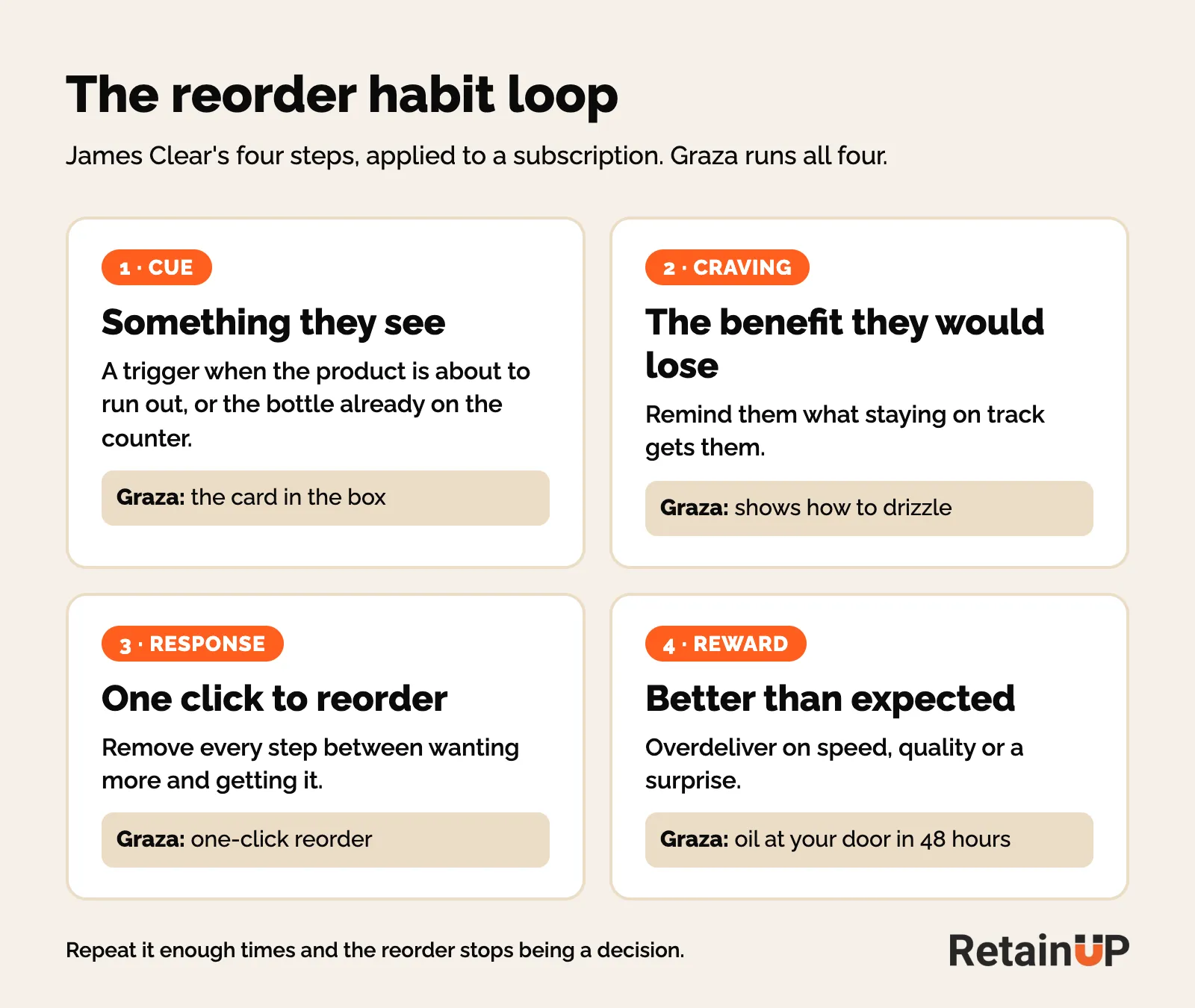
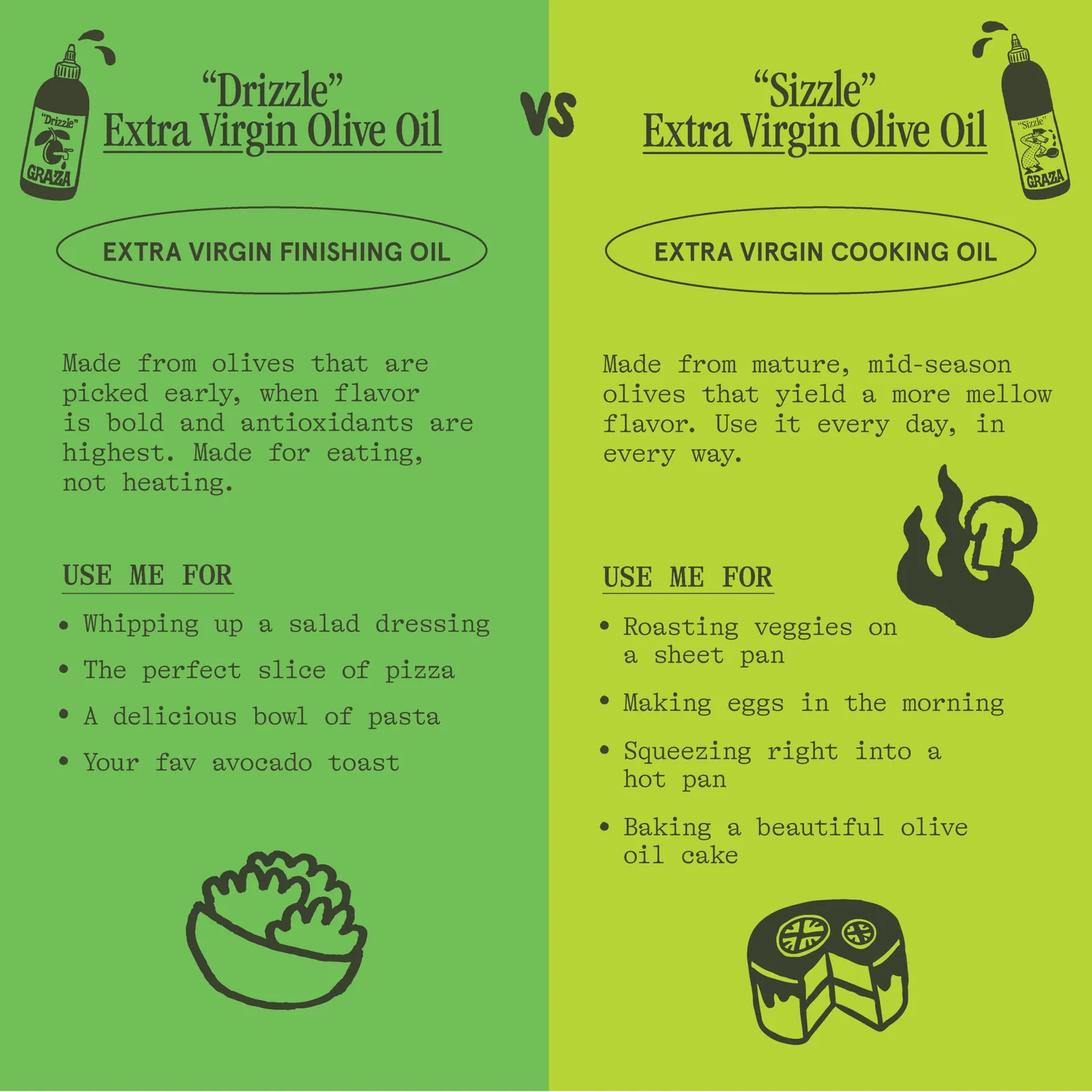
Graza runs all four. Card in the box, how to drizzle, one-click reorder, oil at your door in 48 hours. Once the loop repeats enough times, reordering becomes the default. Not a decision.
Nir Eyal's Hooked, the book that made "habit-forming products" a phrase, splits triggers in two. Outside ones, like your emails, start a habit. Inside ones keep it going. For a subscription the inside trigger is a routine the customer already has. Coffee fires every morning whether you send an email or not.
Tie the product to a routine they already have
"Take it daily" is easy to drop. "Stir it into the coffee you already make" is a habit.
James Clear's rule: attach a new behavior to one that already fires every day. Don't build a routine. Borrow one.
SULT answers the question right on the product page. SULT is an electrolyte brand. Instead of listing minerals, they ask "When do I SULT?" and give four answers: first thing, the midday slump when you reach for another coffee, pre and post workout, and hangover.
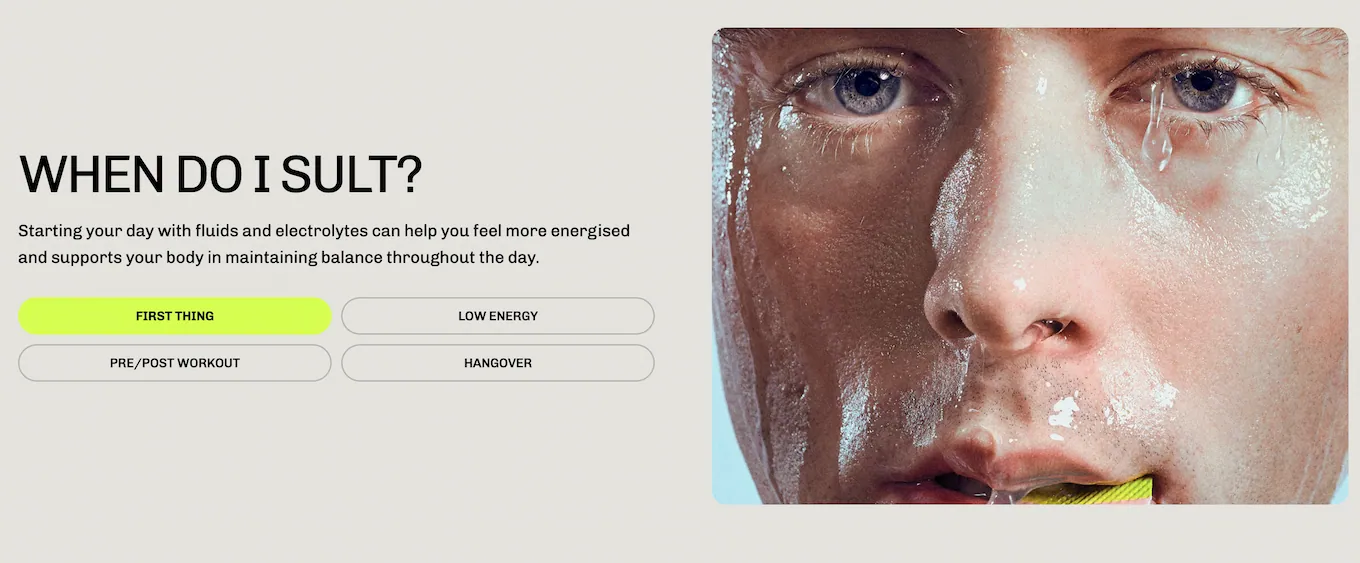
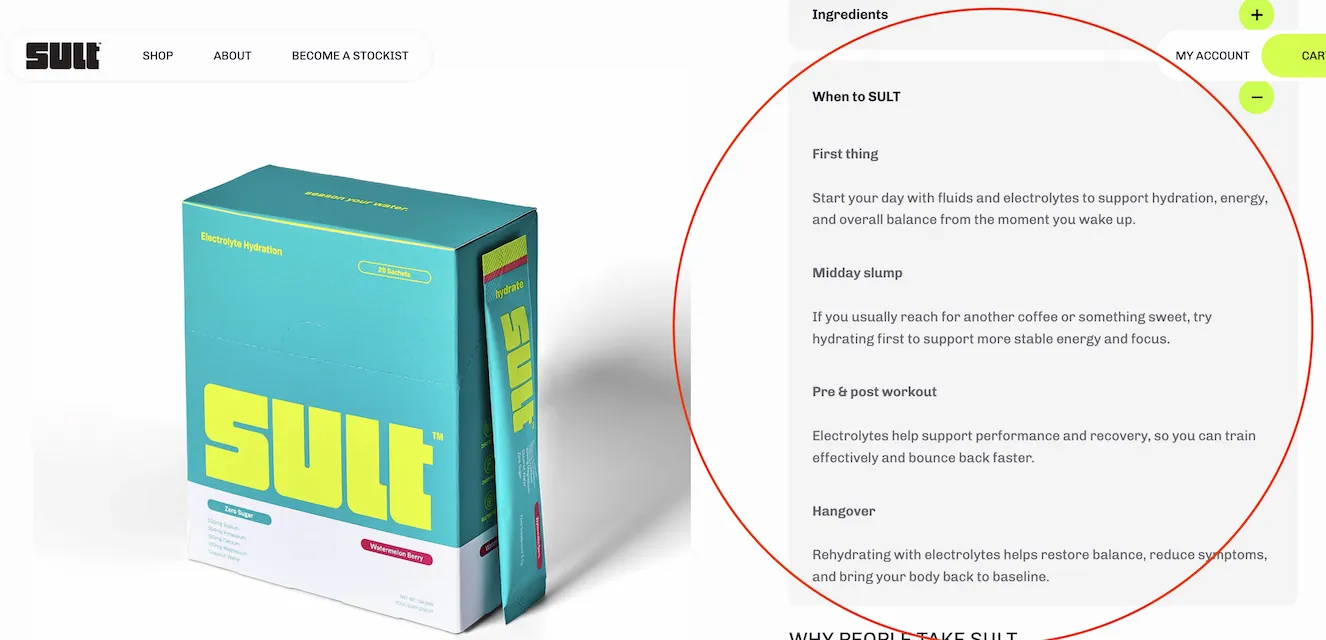
Every answer pins the product to a moment that already exists in the day. First thing rides waking up. The midday slump rides the 3pm coffee reach. Workout rides a slot the customer already schedules.
So no new habit. They mapped their product onto four the customer already runs.
The category does the same thing
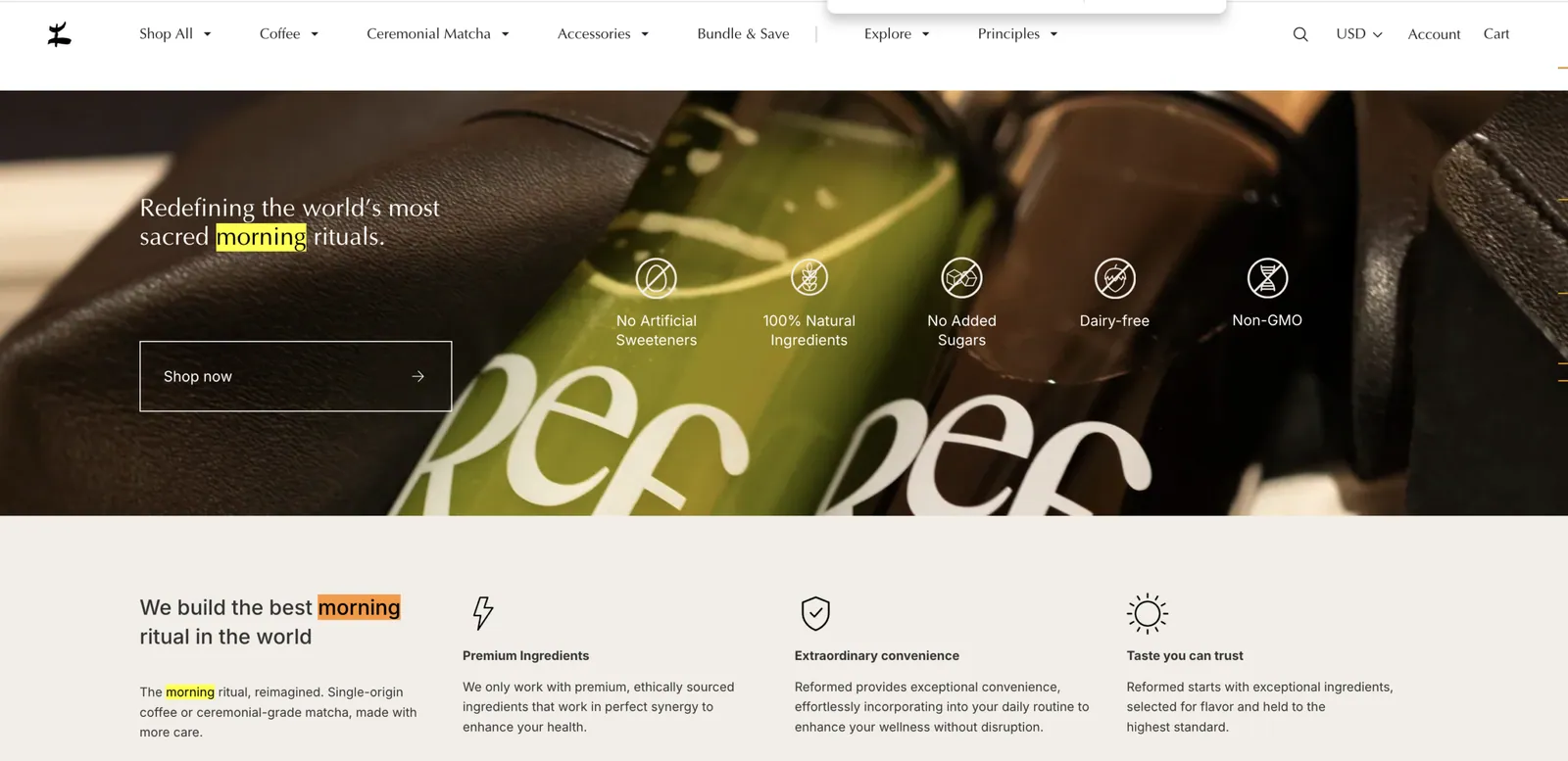
Reformed does not sell collagen. They put collagen and creatine inside the coffee and matcha you already drink, and their homepage says "We build the best morning ritual in the world." They even sell the frother and bottle to own more of the morning.
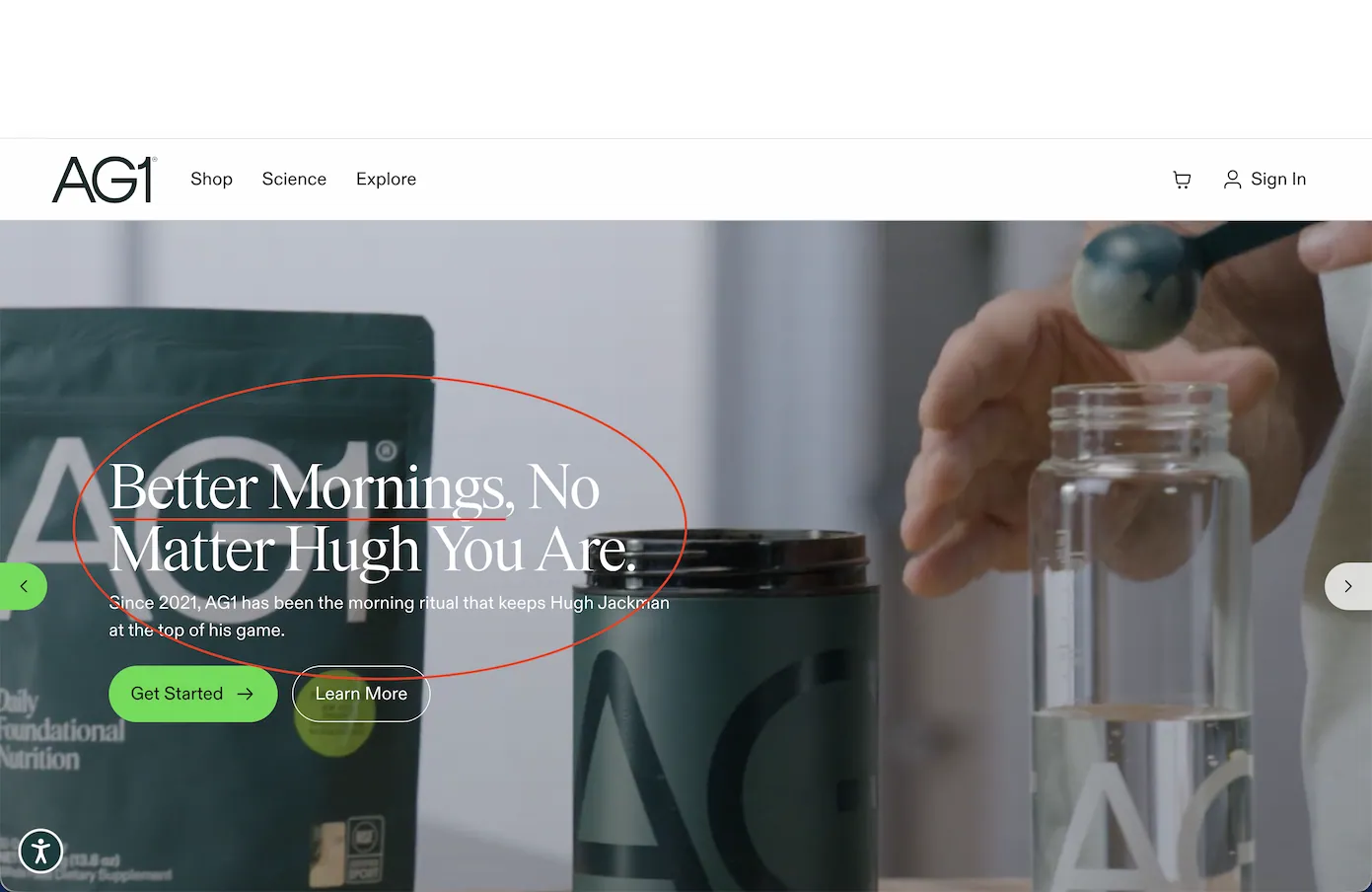
AG1 calls itself "the morning ritual," anchored to your first glass of water. "Start your morning by adding AG1 to 250-350 ml of cold water."
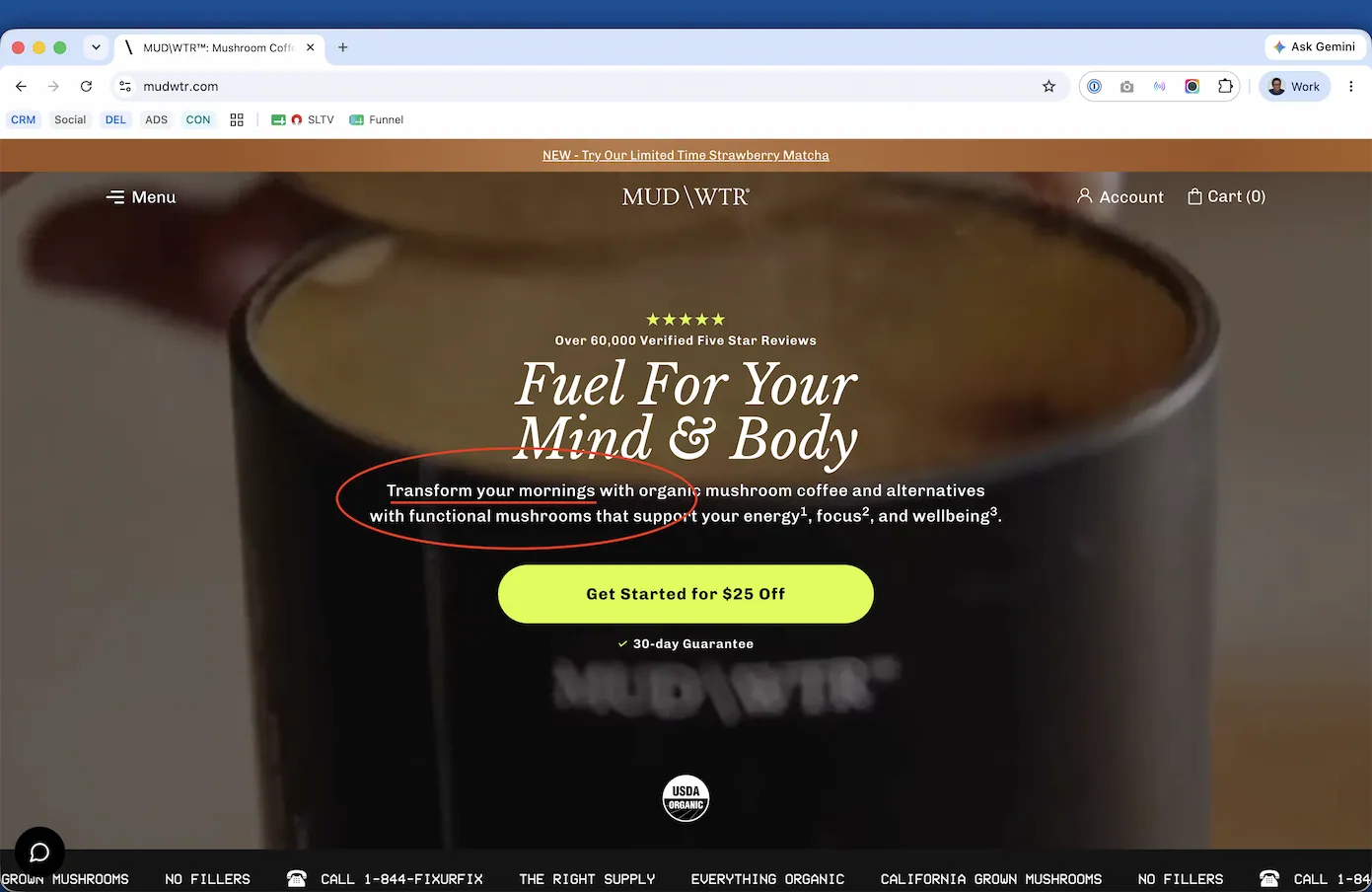
Mud\Wtr swaps your coffee mug. Same morning, same cup, different powder.
Then the rest of the shelf. Seed times AM and PM doses to the teeth you already brush. Olipop takes the soda slot at lunch. Quip mails brush heads on your brushing schedule.
None of them added a step. They rode one already there.
Why it works: your customer makes 35,000 decisions a day. A product that needs a new "when" competes with all of them. And one that answers "when" with a habit they already have competes with none.
How to pick the anchor
- Pick the daily habit your product rides. Coffee, teeth, the first glass of water, the gym bag.
- Add a "when to use this" section on the product page and in the day-3 email, before the customer has decided to quit.
- Name the moment, not the mechanism. "Take it first thing" beats "supports cellular energy" every time.
We ran this with a skincare brand. Day 0 was the welcome and an identity message. Day 3 stacked the product into their morning. Day 14 showed progress, day 21 a nudge. Their 90-day repeat purchase rate went from 22% to 35%. That is one brand, and the whole sequence changed, not only day 3. The rest of the schedule is in the month-one onboarding email schedule.
Keep the product in sight
A product in the cupboard gets skipped. A product on the counter gets used.
Seed built the anchor physically. The glass jar lives on the nightstand and the refill pouches pour into it. AG1 does it with the shaker and the fridge pouch. Graza sits on the counter and ships refills before you run out.
IM8 goes further with its gifts. Month 2 is a mixer, month 3 a shaker bottle, month 5 a travel pouch. A discount is a transaction. A red shaker bottle in a gym bag is a visual cue.
So if you give something, give something used daily. Wine gets drunk. A second tub goes in the cupboard. A shaker sits on the counter for two years. More on what to send and when is in subscription perks, gifts and welcome kits.
Make the format do the work
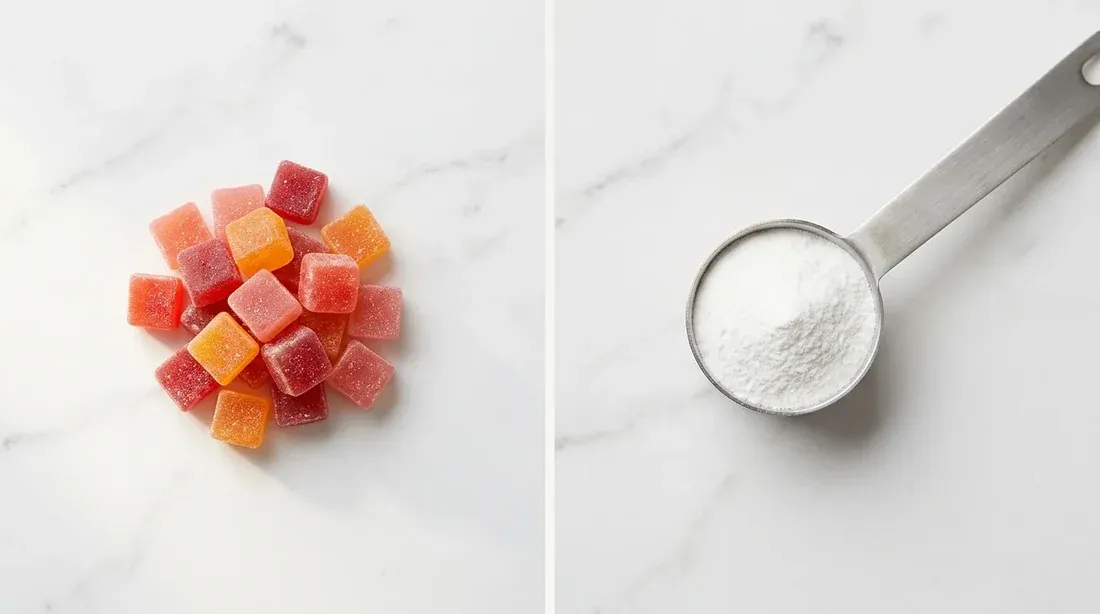
A tub and a scoop ask for a decision every morning. A gummy asks for nothing.
So format beats reminders. Grüns put a greens powder into a gummy and never had to teach anyone how to take it.
Find the way of using it that keeps people longest, then teach that one
Does coffee taste better with warm milk or cold water? For a coffee brand that question is worth a lot of money.
Space Goods sells mushroom coffee. They surveyed customers on how they were preparing it. Cold, hot, with milk, with other additives. Then they looked at LTV by preparation method.
Warm milk. Every time. Customers who made it that way had the best experience and stuck around longest.
That finding is now in their onboarding email, on the product page and on the insert in the box. Every new subscriber learns the highest-LTV preparation from day one.
Meanwhile most brands ship the box and wait. Just a scoop and silence. So customers take it on and off, notice nothing, and quietly decide it is not working.
Any product can do this. Ask how customers use it, then match the answers to who stays. The survey itself is covered in usage check-ins and surveys, and the card that carries the instructions is in the first box.
Teach one way, then keep teaching it
Graza ships two bottles, Drizzle and Sizzle, and tells you what each one is for. Salad dressing, pizza, avocado toast. Roasting veg, eggs, a hot pan.
No thinking at the counter.
Match the habit to the bottle
One more check. If the label says take 2 and most people take 1, the bottle lasts twice as long as your emails assume. One supplement brand had exactly that, a 60-tablet bottle that lasted 60 days, not 30. So we made days 1 to 45 habit only, no selling, and moved the reorder push to days 45 to 75. Their 90-day repeat rate went from 28% to 43%.
Frame the price as a daily cost
$90 a month feels expensive. $3 a day does not.
AG1 works out at $2.63 a day on subscription, and uses that framing on the product page and through onboarding. Then it compares the daily cost against what you would buy instead: multiple supplements at $3.39 a day, a cup of coffee at $4.99, or eating out at $14. By the time you see the price, you are comparing it to lunch. Most brands discount first.
And a daily number ties the product back to the routine, because the cost now sits next to the coffee it rides on.
Put it in three places:
- The subscription pricing on the product page.
- The onboarding emails, early, before the first renewal.
- The cancel flow, before any discount shows up.
That last one matters most for "too expensive" cancels where the person does not see the value. How that screen is built is in the subscription cancel flow.
Name the identity and show people who stayed for years
AG1 does not say "our greens are clinically studied." It says "the world's top performers drink AG1", then hands the page to a surfer who calls it the way he starts his day.
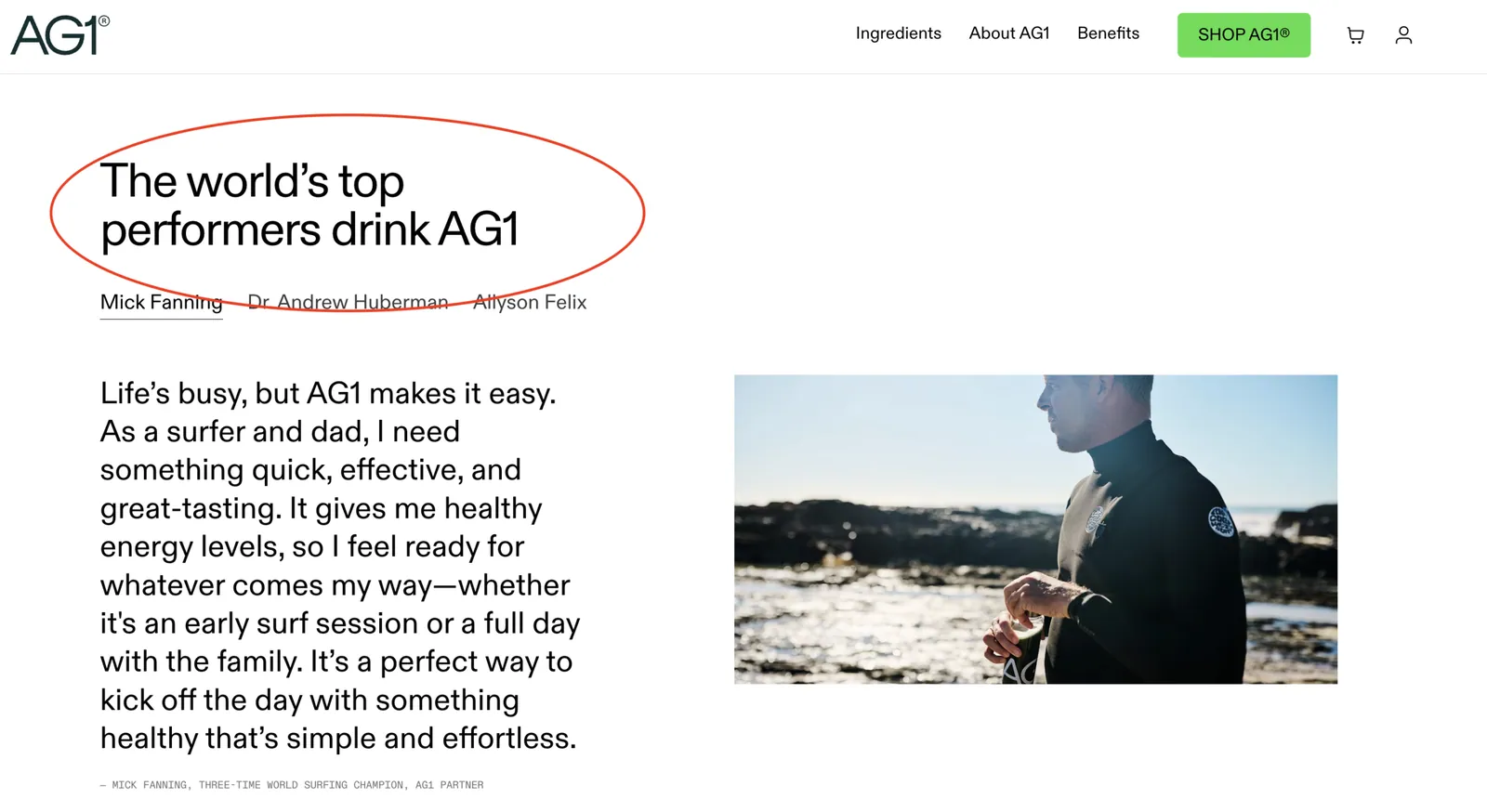
"I'm someone who takes greens every morning" holds longer than "I bought greens."
Use long-term testimonials
Most brands sell short-term wins. That attracts people who try and cancel.
AG1's testimonials lean on years of use, not first-month results. "I've been taking AG1 since 2012" does more retention work than "I felt better in a week."
Mark the reward and expect the plateau
A greens powder, a probiotic, a testosterone protocol. None of them work in a day. So tell subscribers what to watch for and when. Mars Men names three dates. Day 7, the fog starts to lift. Day 30, energy and recovery. Day 90, people ask what you are doing differently.
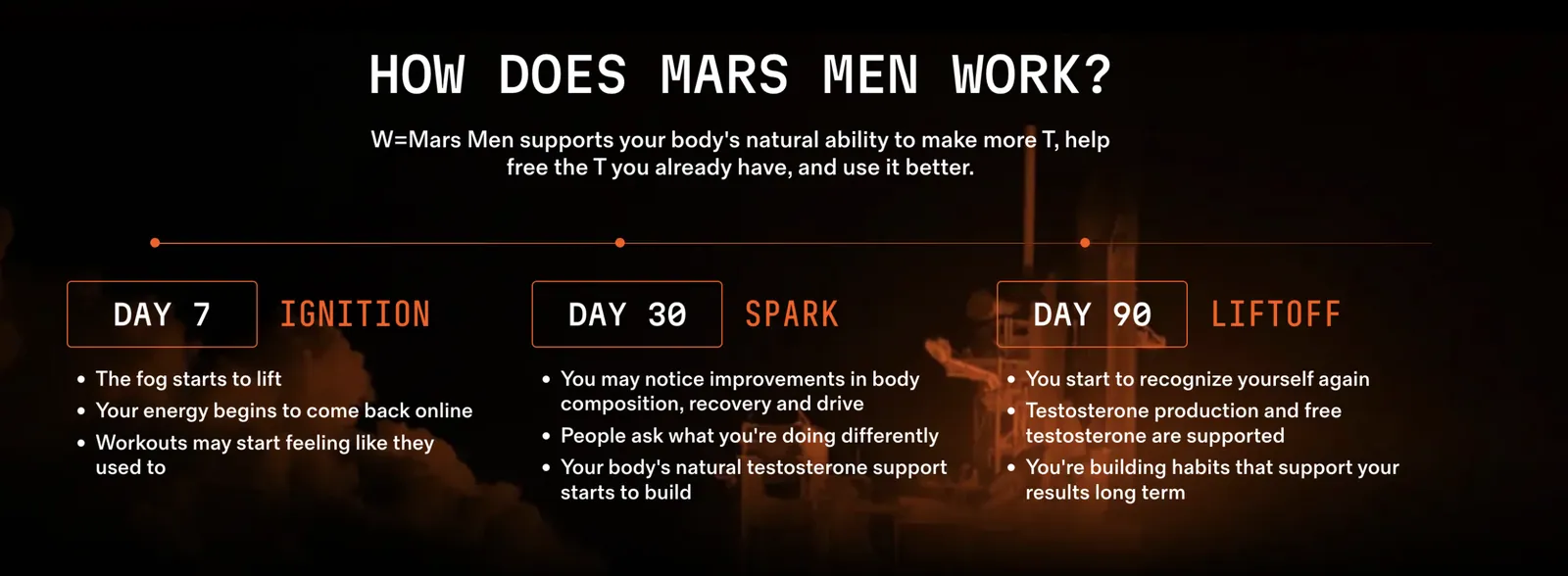
A subscriber who knows what day 30 should feel like does not quit in week three. AG1 sets 90-day expectations in its welcome sequence. And Seed has you take one capsule for three days, then two, so the ramp-up itself tells you this is a process.
Usage will dip somewhere in the middle, where effort runs ahead of results. Plan a message for that stretch.
Where the habit content goes in month one
None of this works if it lives only on the product page. It has to show up while the product is in their hands.
- Delivery day. An email and an SMS triggered on delivered, not on a timer. When to take it and where it sits in their day.
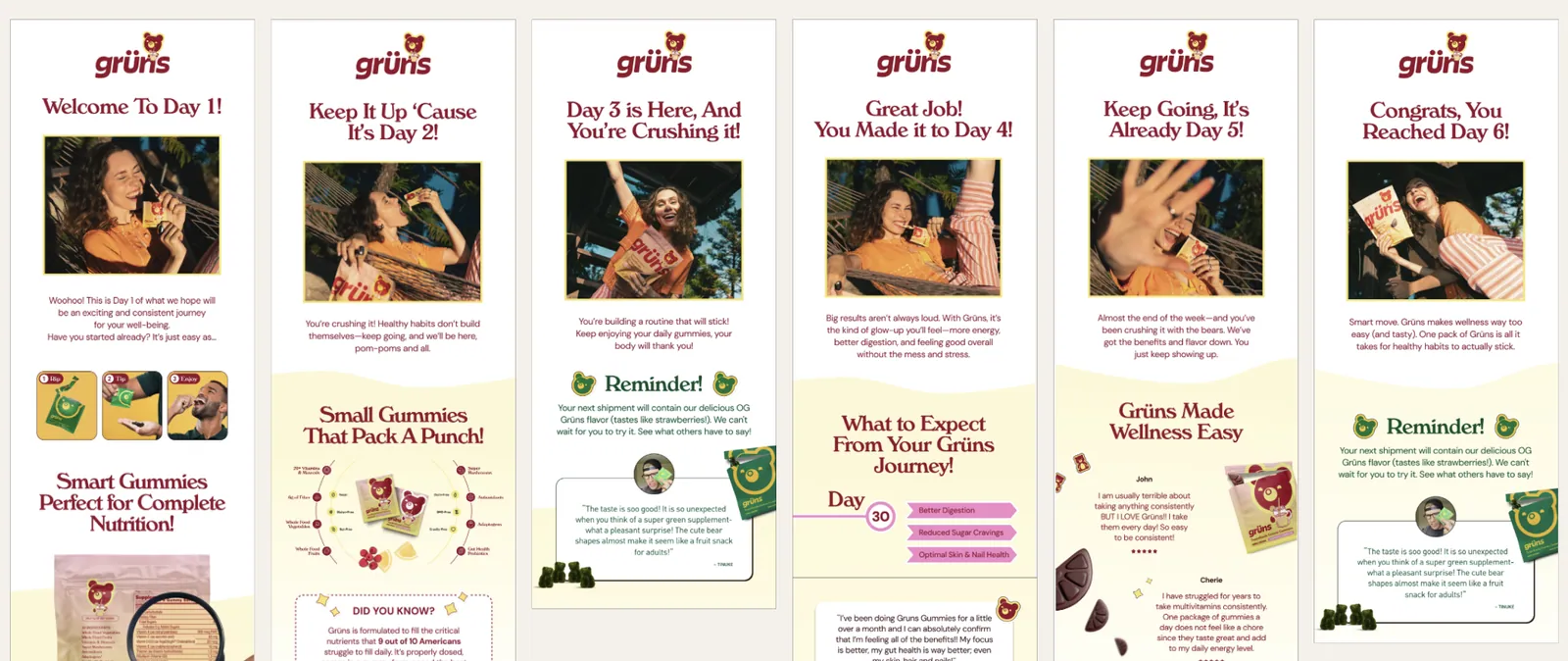
- Week one. Six emails in six days. Most brands would call that spam. Grüns counts the days out loud in the subject line. Welcome to day 1. Keep it up, it's day 2. Day 3 and you're crushing it. A streak is a habit tool, and the day-3 email is where the "when to use this" goes.
- The billing reminder. The highest-open email you have in month one. Mars Men opens theirs with "you're in your activation phase" and tells the subscriber what they should be noticing by now.
Don't worry about repeating yourself. Most subscribers read selectively. Where new subscribers drop off is in getting past order 2 and order 3. The full day-by-day plan is in the month-one onboarding email schedule, and the reminder rewrite is in the upcoming billing reminder.
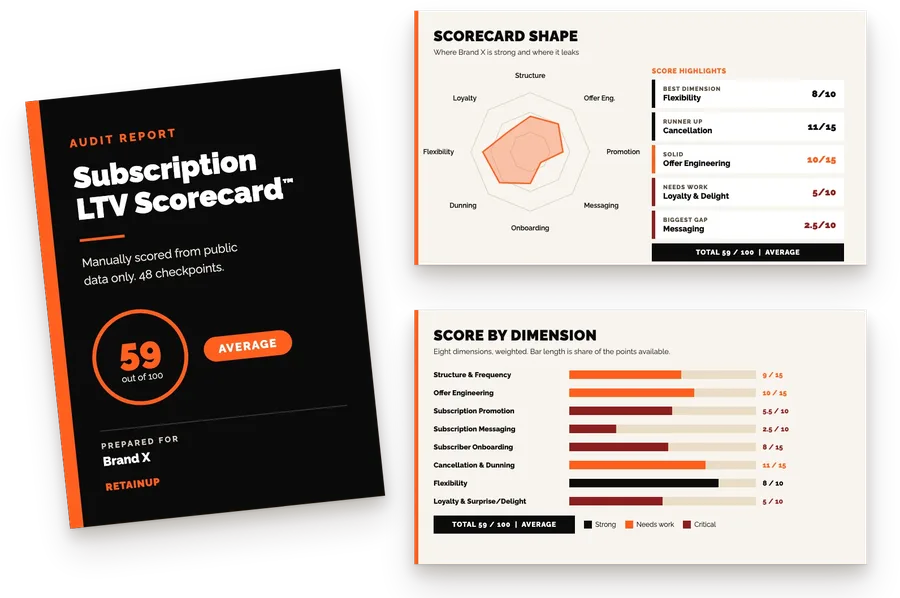
Routine anchors stick when the emails, the insert and the portal teach the same moment. The Subscription LTV Maximizer™ builds the offer, widget, cancel flow, portal, payment recovery, pause and skip in Recharge, Skio, Stay AI or Loop, plus the email and SMS that carry the habit through month one, live in 30 days for $5,000. To see where your onboarding leaks first, the free subscription audit checks 48 points and sends your top 3 leaks in 24 hours.
FAQ
How long does it take a subscriber to build a habit with my product?
Around 66 days, not the 21 most people quote. That runs past the first charge, so the habit has to start in month one. In one skincare brand's cohorts about 70% of reorders came before day 60, then reorders flatlined. A subscriber who uses it every day through the first bottle tends to renew without thinking. One who leaves it on the shelf usually cancels later.
What is habit stacking for a subscription product?
Habit stacking means attaching your product to a habit the customer already has. James Clear's rule is to tie the new behavior to one that already fires every day. Seed times its AM and PM doses to the teeth you already brush. Reformed puts collagen inside the coffee you already drink. The product never asks for its own slot in the day, so it competes with far fewer decisions.
Should I show a daily price for my subscription?
Yes, a daily cost reads smaller than a monthly charge and ties the product to a routine. $90 a month feels expensive, while $3 a day does not. AG1 uses it on the product page, in onboarding emails and in ads, and compares it to a cup of coffee. It also works in the cancel flow, before any discount.
What makes a product habit forming?
A product becomes habit forming when it rides a cue the customer already has and pays off often enough to repeat. James Clear's loop is cue, craving, response, reward. For a subscription that means a fixed moment in the day, a clear benefit to watch for, a one-click reorder and a delivery that beats expectations. Format helps too. A gummy needs no decision, while a tub and a scoop ask for one every morning.
One email a week on subscription retention: the numbers, the strategy, and what to fix first.

Rahi Jain
Rahi Jain is a subscription LTV specialist who helps $1M to $10M DTC brands reduce subscription churn and maximize LTV on Recharge, Skio, Stay AI and Loop.
More about Rahi