Key takeaways
- One of our brands had 7 of the 9 core subscription flows missing, and 15% of its cancels came on day zero.
- At one brand, a reminder flow sitting in Draft still made 93.5% of all subscription flow revenue.
- At one brand, 47.1% of subscribers ended after a skip, against 12.1% of those who moved their order earlier.
This is one part of the subscription retention guide.
Most subscribers do not leave in a rage. They drift out because nobody gave them a reason to stay at the moment it mattered.
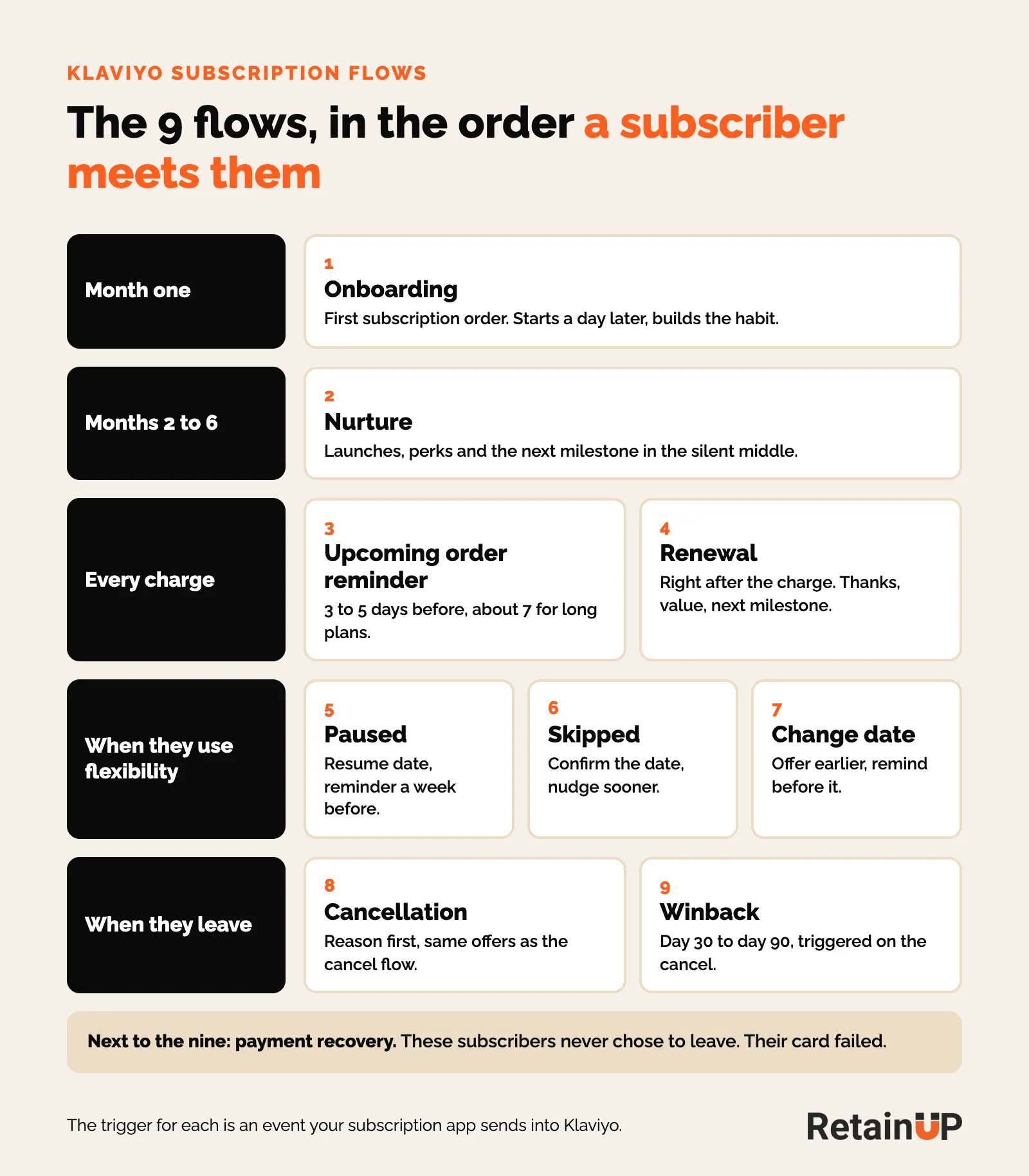
Nine flows cover those moments. Most brands run two.
So here are the nine flows we build in Klaviyo and the subscription app, on Recharge, Skio, Loop or Stay AI. The detail lives on each flow’s own page.

The 9 flows on one page
Each flow is a trigger, a timing, a message, an offer and a KPI. The trigger is almost always an event the subscription app sends into Klaviyo.
| # | Flow | Trigger | Timing | KPI |
|---|---|---|---|---|
| 1 | Onboarding | First subscription order | Starts a day after the order, runs month one | 60-day repeat rate |
| 2 | Nurture | Active subscriber, past onboarding | Months 2 to 6 | Order 3 retention |
| 3 | Upcoming order reminder | Upcoming charge | 3 to 5 days before every charge, about 7 for long plans | Skip vs cancel rate |
| 4 | Renewal | Successful renewal charge | Right after the charge | Retention to the next order |
| 5 | Paused | Subscription paused | At pause, and a week before it restarts | Resumes by the customer |
| 6 | Skipped | Order skipped | At skip, and before the next date | Orders after a skip |
| 7 | Change date | Next charge date moved | At the change, and before the new date | Orders after a delay |
| 8 | Cancellation | Subscription cancelled | At cancel, then follow-ups | Next order rate |
| 9 | Winback | Subscription cancelled | Day 30 to day 90 | Reactivation rate |
The event names change by app. On Recharge, the Klaviyo integration sends each subscription and order action as a metric, and Recharge’s own guide shows how any of them can start a flow. Skio, Loop and Stay AI each send their own set, listed in subscription app events in Klaviyo.
One of our brands came to us with 7 of the 9 missing. Another had none.
Flow 1: Onboarding
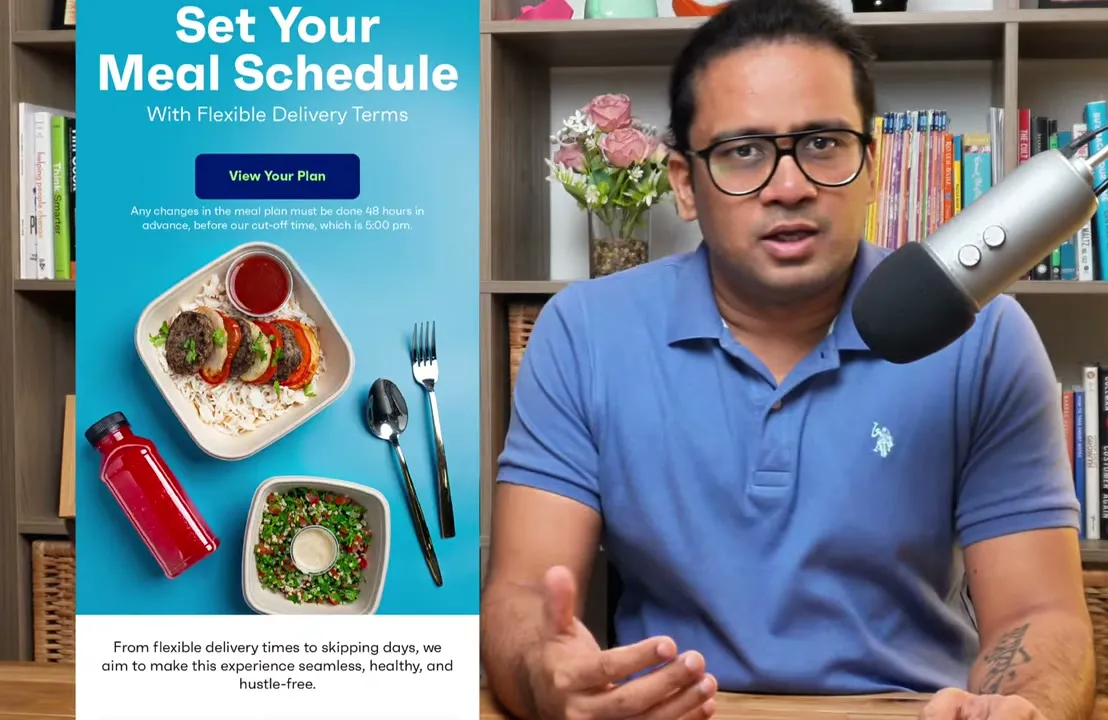
Most churn happens before the second order. The customer never builds a habit, and if they don’t see the value up front, they cancel.
So the job is the habit. The flow we started from has three emails:
- A welcome email: the benefits, with a short founder video on how it works.
- A renewal roadmap: when the next order ships and how to change frequency.
- A VIP perks email: rewards, bonus points or early access.
Start it one day after the order, and exit anyone who cancels, pauses or skips, or you end up congratulating a person who just left. Brands running a flow like this cut month one churn by up to 25%. The day-by-day schedule is in the month-one onboarding email schedule.
Flow 2: Nurture for months 2 to 6
Onboarding ends. Most brands go quiet until the next charge. That silent middle is where cancels build. Fill it with launches, perks and the next milestone, as in emails for active subscribers.
Tease the next gift here. Say which order carries it. The gift rules themselves live in subscription rewards. One rule we hold to: never name a gift in an email until it is sourced and set up for that tier.
Flow 3: The upcoming order reminder
A surprise charge cancels itself.
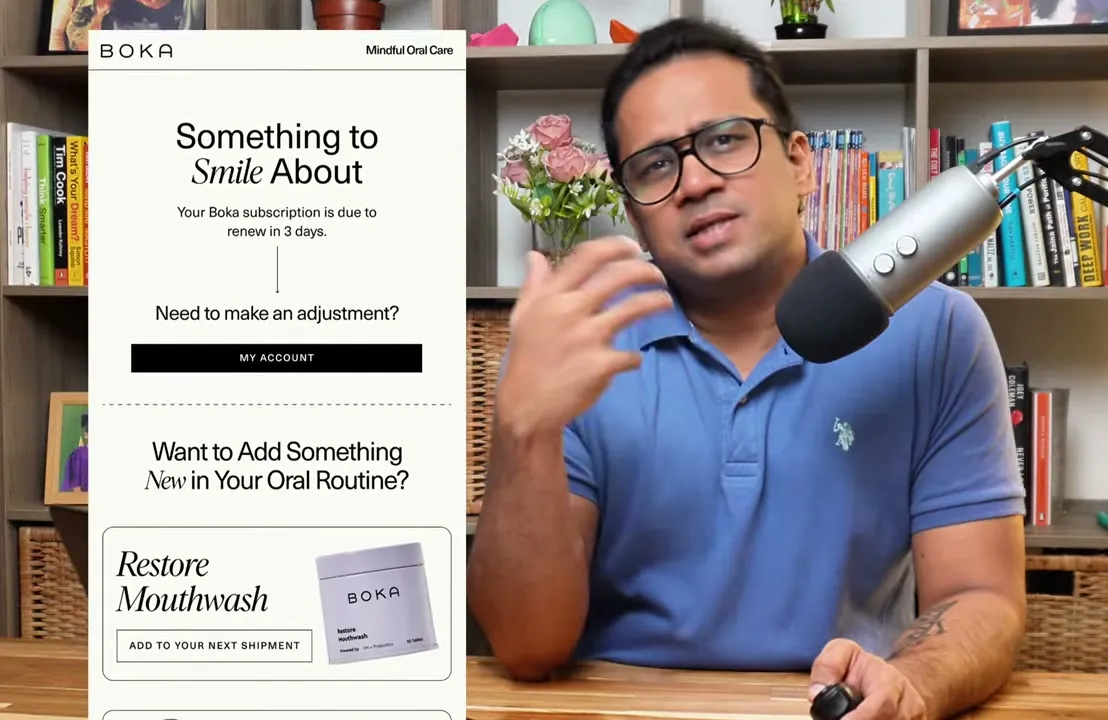
A sudden $50 bill tomorrow makes people cancel out of frustration. So send an email or SMS 3 to 5 days before every charge, naming the subscription, the date and the amount. Run versions for order 2, order 3 and recurring. It is also a good moment for one-click upsells: pitch another product or bundle for the next shipment.
At one brand, the reminder flow made 93.5% of all subscription flow revenue. It was in Draft. At SunMed the upcoming subscription email is 77% of flow revenue. What goes in it, and why it can cause a cancel spike, is in the upcoming billing reminder.
Check coverage, not just status
A live reminder can still miss people, so compare upcoming charge events to reminder sends, day by day. One brand sat at 97.9% coverage and looked fine. The gap was a list exclusion, and every profile on it got charged with no notice.
And on Loop, we watched the native reminder stop sending one day with no error. So keep the app’s own email on until the Klaviyo one is sending, then switch it off.
Flow 4: Renewal, the email after the charge
Five of the brands we have audited sent nothing after a successful renewal. Nothing.
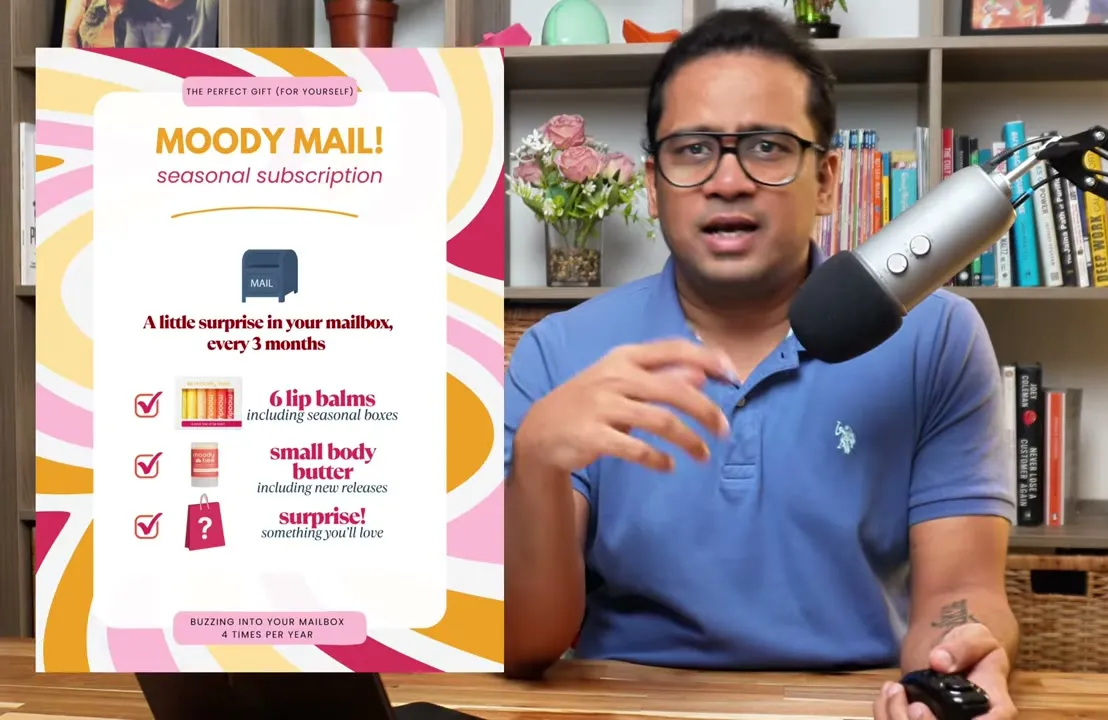
Send one after every renewal. Thanks, the value so far, the next milestone. Short. It moves the charge from “another payment” to “I’m getting rewarded”, the reframe a fitness brand used in its reminder to cut churn by 23%.
Flows 5 to 7: Paused, skipped and change date
These three follow a subscriber who used the flexibility you gave them. Most pause or skip before they cancel. That is your window. What to offer, and in what order, is in the flexibility ladder.
Paused
Only where pause is switched on. Confirm the pause and name the resume date, remind them a week before the timer restarts, make a resume offer, and cut it off after 90 days.
Why the reminder matters: at one brand about 9 in 10 resumes happened by timer, with no message, and a run of cancels and failed payments followed. Loop timer resumes are silent. At another brand, paused emails got a 54.1% open rate and 0% conversion. People read them. Nobody ordered.
A second pause is one of the clearest churn risks you can track, so it gets its own message. Brands running layered pause and swap flows reactivate up to 18% more subscribers.
People ask for a Klaviyo “pause instead of cancel” email. Klaviyo cannot stop a cancel. The cancel flow in the app does that. Klaviyo puts skip and delay in the reminder, then runs this flow for those who pause.
Skipped
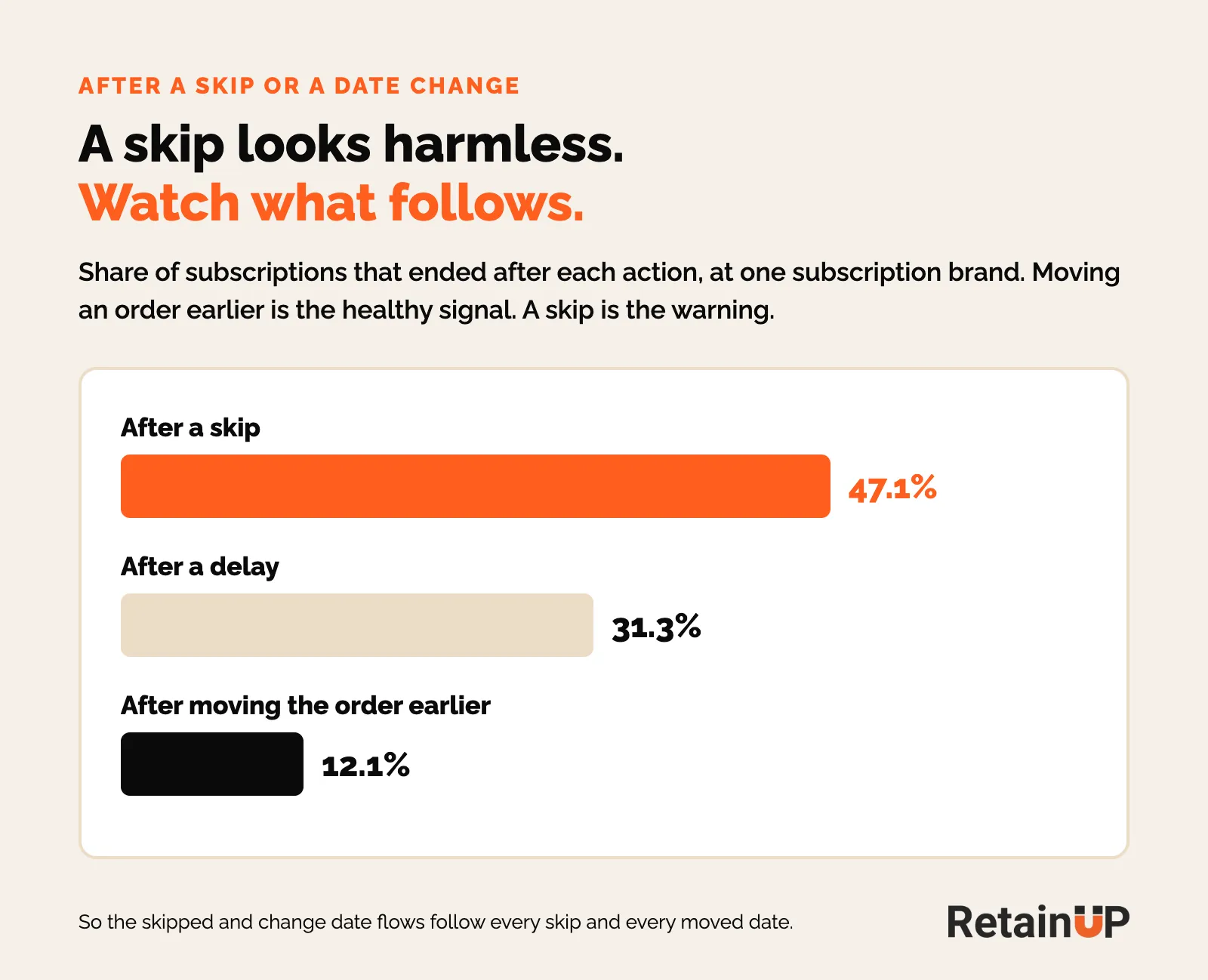
A skip looks harmless. Watch what follows. At one brand, 47.1% of subscribers ended after a skip, against 12.1% of those who moved their order earlier. At another, 77.0% did nothing for two months after a skip.
So confirm the new date, offer a slower frequency if stock is piling up, nudge them to ship sooner, and remind them before the moved date. Two skips in 90 days is a frequency problem. The flow should say so.
Change date
Same shape. A delay ended 31.3% of subscriptions at that first brand. Another brand sent no email at all when a subscriber moved a date. Confirm the date, offer to move it earlier, remind before it.
Zaymo puts skip, delay and swap inside the email.
Flow 8: Cancellation
The cancel confirmation tries to bring the subscriber back, or at least learn why they left. It sometimes comes too late. But we have seen real results, and it sets up the next conversation, so the brand does not look like a sore loser.
Capture the reason first. The website is best, in the app, but email works too. Then follow up by email, split by that reason. The reason does the work.
- Too much product: a skip or a smaller size.
- Money: a temporary discount or a prepaid plan.
- Not seeing results: education and testimonials.
Use the same offers the cancel flow showed. When the email and the app disagree, the subscriber notices. Personalized save paths like these deflect up to 32% of cancellations.
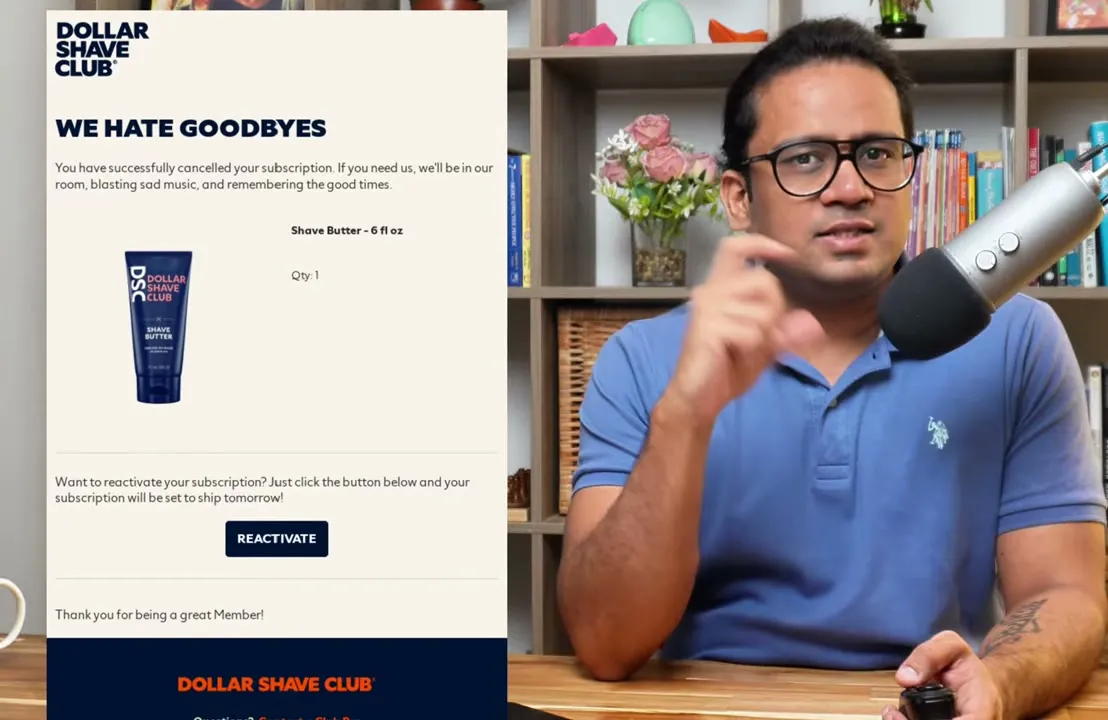
A cancel series we audited had a 46.9% open rate and a 0.39% conversion. Read and ignored. So the flow is worth having, but the save happens in the app.
That is where Klaviyo churn prevention sits. Klaviyo sends the reminder, the skip and date change follow-ups and this series. The app’s cancel flow does the saving.
Flow 9: Winback
A cancellation does not mean the person is gone for good. We start 30 days after cancel and run up to 90 days. The trigger has to be the cancel event, not Placed Order. Several messages beat one.
- A “we miss you” email that restates the benefits.
- Smaller packs or prepaid bundles, with deals for longer commitments.
- New product drops and testimonials.
- A limited-time offer.

Winbacks reactivate 12 to 18% of churned subscribers. But the volume is small. If 1,500 subscribers cancel in a month, even 12% back is 180 people. For a small brand, fix take rate and the cancel flow first, and build subscription winback last. At go-live, send once to past cancels too, because the flow only catches new ones.
Payment recovery, the flow next to the nine
These subscribers never decided to leave. Their card failed. Most brands ignore them. Send a failed payment email with a one-click update button, backed by an SMS. We rebuilt SunMed’s dunning flow on Skio with seven touches and 10% off at the last one. Recovery went from 52.1% to 77.6%. The build is in the card update flow, and retry timing in failed payment recovery.

Setup rules for all nine flows
Flows break in the setup more often than in the copy.
Smart Sending off on subscription flows
Klaviyo’s Smart Sending skips anyone who got an email recently. On subscription and order-triggered flows that is a bug. At SunMed a loyalty points email fired a minute after every order, so the order-triggered flow reached under 3% of the people who qualified. Turn it off. Keep UTM tracking on.
One owner per message
Two flows firing for one event means two emails about one skip. Keep one message per person per week around the reminder. One brand had 83 live automations. We cap it at about 20 and pause any flow with no revenue in 30 days. Keep subscribers out of loyalty discount flows and sale campaigns too, or a cheaper code teaches them to cancel.
Exits and splits
Every message after a delay needs a cancel exit. Paused needs a resume exit too. And read every split against the field the app really fills. At one brand, the gift branches in the reminder checked a field Loop never sets, so they never sent. A branch with zero sends is a bug until proven otherwise.
Portal links and transactional flags
Put the portal link, with magic link login, in every order, shipping and renewal email. No password needed. And keep offer blocks out of any email marked transactional in Klaviyo. Transactional is for the billing fact. Offers go in marketing emails.
Test every flow with real events before go-live
A test profile renders the happy path. Real events show the fields that are missing. So we check each flow at go-live and again two weeks later:
- No draft step inside a live flow.
- Every email rendered with two recent real trigger events: the name fills, no raw tags, no “None”, and every button holds that customer’s own link.
- Every discount code in an email works on the live site, and every gift is in stock.
- One-click links clicked only on a test subscription. On a real event, a click places an order.
How to check the flows still send each month
Most flows get built once and never looked at again. They break quietly. Nobody notices. One brand’s flow share of revenue went from 34.2% to 0% in a month, and another had a refill reminder that sent normally in July and nothing at all in August.
- Pull two reports. A flow report for each flow, and a message report for each email and SMS inside it.
- Run sanity checks. A live message with zero sends in the last 7 days is broken. Compare sends to trigger events. A sudden drop usually means a trigger, a filter or a split has changed.
- Compare to a benchmark. Use your own last quarter. Fix the message that falls furthest below it.
- Then add. If the last message in a flow still brings in more than 10% of its revenue, add another step after it. Build new flows once the live ones pass.
Which flow to build first
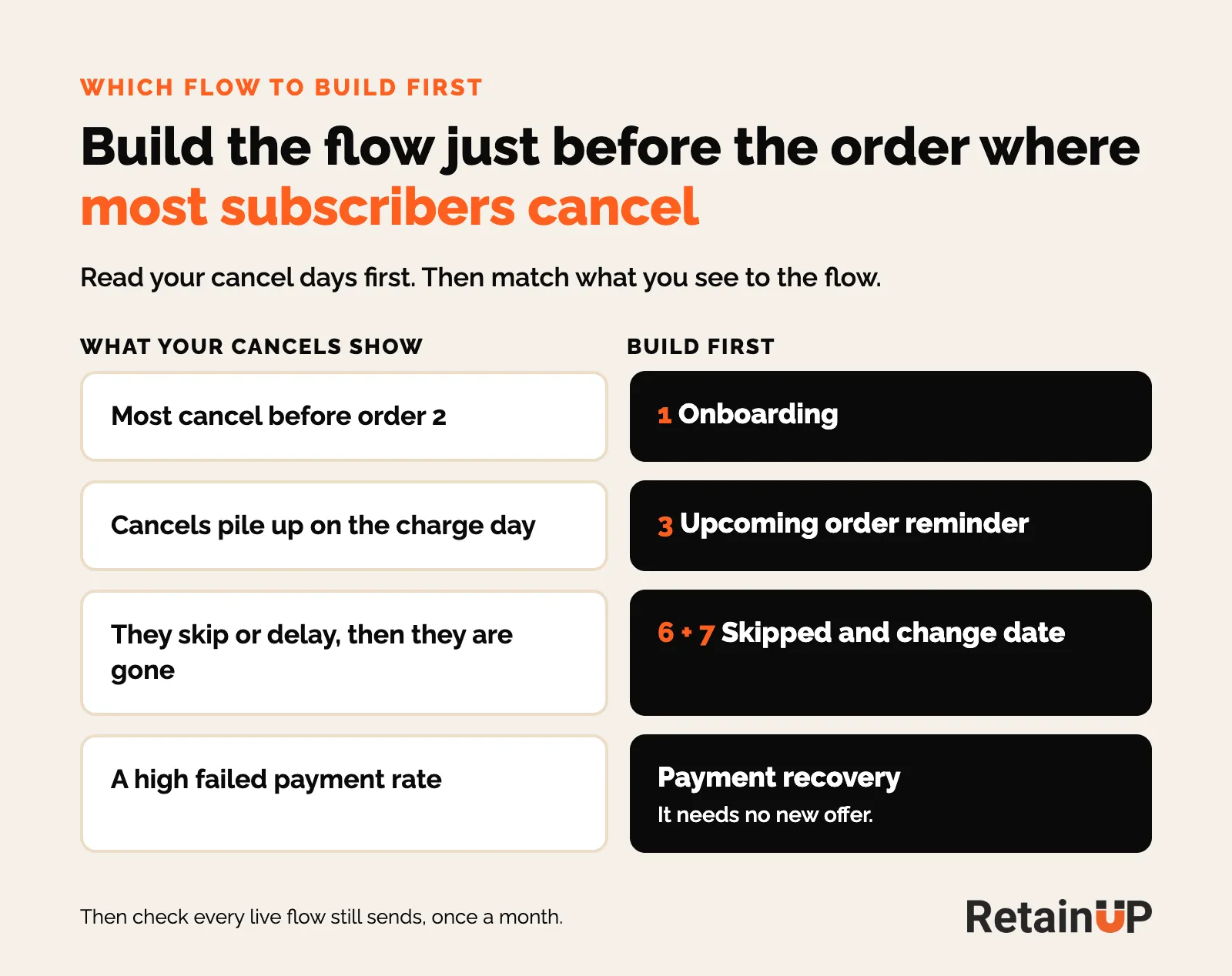
Build first the flow that sits just before the order where most of your subscribers cancel. Cancel-day spikes show you where that is. Loop puts 68% of churn in the first three orders, so for most brands that means onboarding and the reminder.
We have used these across 80+ subscription brands. They helped Boka and FreshCap cut churn by up to 60% and keep subscribers 3x longer. The number to watch is order 3 retention.
If you want all nine built for you, the Subscription LTV Maximizer™ builds them with the offer, widget, cancel flow, portal, payment recovery and pause and skip in Recharge, Skio, Stay AI or Loop, plus email and SMS, live in 30 days, for $5,000. Not sure? The free subscription audit checks 48 points and sends your top 3 leaks in 24 hours.
FAQ
What email flows does a subscription brand need?
Nine: onboarding, nurture, upcoming order reminder, renewal, paused, skipped, change date, cancellation and winback. Most brands run two. The skip and date change follow-ups are the ones we find missing most often. Those two follow the subscribers most likely to leave next.
Which Klaviyo subscription flow should I set up first?
The one just before the order where most of your subscribers cancel. If they leave before order 2, build onboarding. If cancels pile up on the charge day, build the upcoming order reminder. If failed payments are high, start with payment recovery. It needs no new offer.
Should Smart Sending be on for subscription flows?
No. Turn it off on every subscription and order-triggered flow, and keep UTM tracking on. Smart Sending skips people who got any email recently, so a loyalty email sent a minute earlier can block the reminder. We have seen an order-triggered flow reach under 3% of the people who qualified.
How do I know if a Klaviyo flow stopped sending?
Compare monthly sends to the trigger events coming in. A live message with zero sends in the last 7 days is broken. A sudden drop usually means the trigger metric stopped logging, a filter changed, a split points at an old message ID, or a draft sits inside the live flow.
How does the Recharge Klaviyo integration work for subscription flows?
Recharge sends each subscription and order action into Klaviyo as a metric, such as a new subscription, an upcoming charge or a cancel, and any of them can trigger a flow. Keep Recharge’s own email on until the Klaviyo one is sending, then switch the Recharge notification off. Switch it off first and the gap shows up as surprise charges.
One email a week on subscription retention: the numbers, the strategy, and what to fix first.

Rahi Jain
Rahi Jain is a subscription LTV specialist who helps $1M to $10M DTC brands reduce subscription churn and maximize LTV on Recharge, Skio, Stay AI and Loop.
More about Rahi