Key takeaways
- If 1,500 subscribers cancel in a month, winning back 2 to 5% of them is only 30 to 75 subscribers.
- A 120-day winback postcard returned 8.2x ROAS, and a 180-day one 6.9x (PostPilot data via Lunar Solar Group).
- One brand moved its lapsed-buyer winback from day 90 to day 45 and got 22% more reorders, with the same offer and message.
This is one part of the subscription churn guide, which walks the whole topic in order.
Subscription winback is a waste of time for most brands.
I built those flows for years, and it never worked out for me.
I mean subscribers who cancelled. Winning back one-time buyers who lapsed is a different job, and it does pay. So this page covers both.
Why subscription winback comes last
The volume is too small
Say 1,500 people cancel in a month. Getting even 2 to 5% of them back is hard, and that’s 30 to 75 subscribers.
They’re very hard to bring back
They cancelled days ago. They know you. And a small brand with one product has nothing new to show them.
You’ve already made your best offer
They saw the skip, the pause and the discount on the cancel page, and said no to all three. The winback email offers the same thing a week later.
So do the work in this order. Take rate first, because that’s where a small brand gains the most. Then the cancel flow. Winback comes last, and it starts to make sense around $50 million and above.
There is one number on the other side. Recurly’s 2026 State of Subscriptions says nearly 1 in 4 new subscriptions comes from a previously cancelled customer. That is across all subscriptions, streaming included. So it says keep the door open. It says nothing about a $5 million supplement brand.
A failed payment is not a winback. Those subscribers never chose to leave, and they belong in failed payment recovery: retries, a card update link, no offer.
The window: 60 to 120 days after the cancel
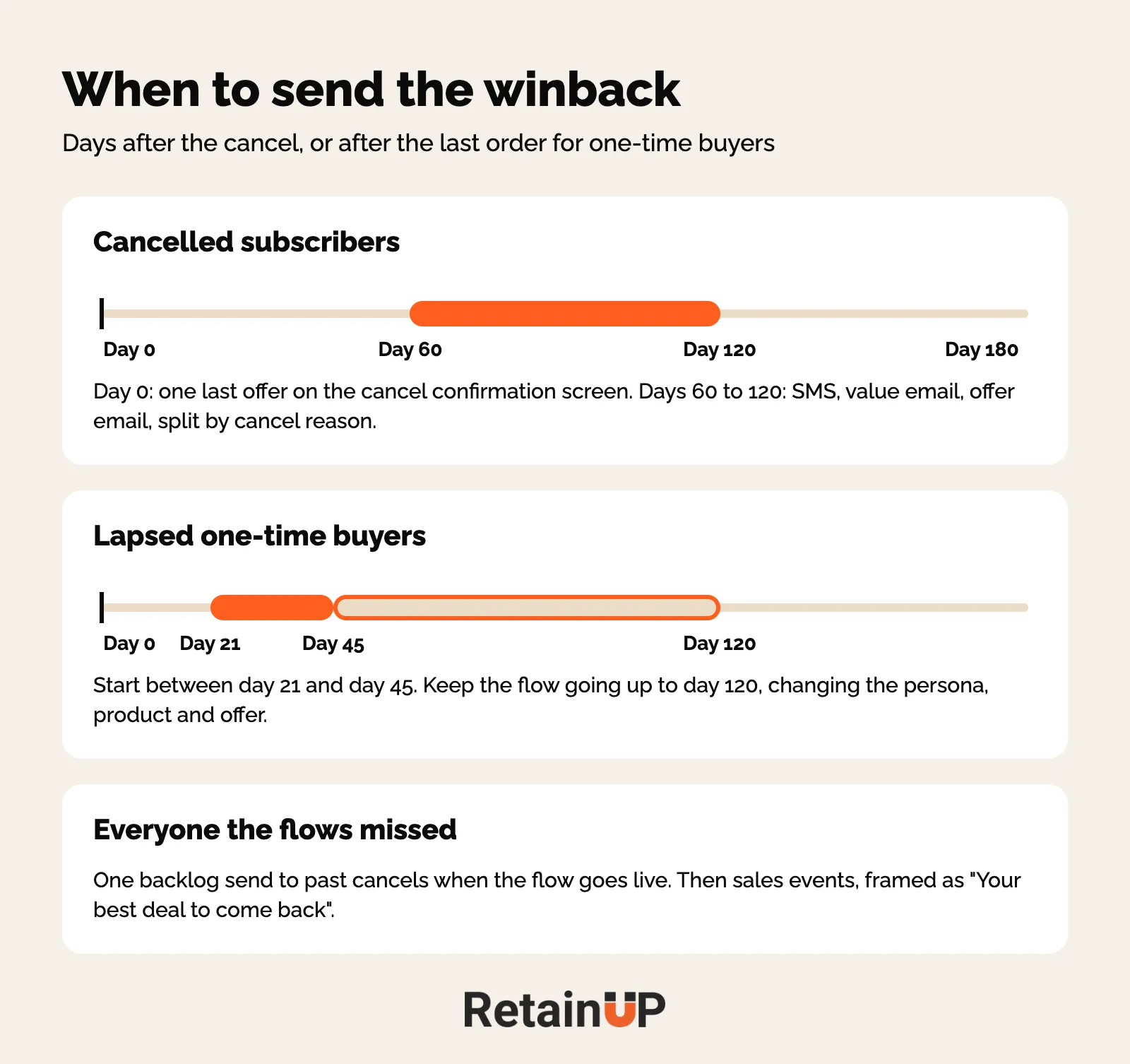
Start the winback 60 to 120 days after the cancel, depending on how long your product lasts. Earlier is better. And after 120 days most subscribers have found something else, or stopped thinking about you.
The very first winback moment sits inside the cancel flow, on the confirmation screen. Thank them and show one last offer, ideally with a founder video. That screen has its own page in cancel offers that work.
Thomas Lalas puts the early window bluntly. If somebody cancels in the first 30 or 90 days, the share you reactivate is extremely low, and if they don’t come back, you’ve likely lost them for good. His line: “If you’re waiting to get somebody back after they’ve cancelled, you already lost the game.”
So the email flow is for the rest. Tenured subscribers who left for a reason you can answer.
The 3-touch winback sequence
A subscription winback needs three touches, in this order:
- SMS. Short, conversational, no offer. The goal is attention, not the order.
- Email 1, value. No discount yet. What’s new, bestsellers, reviews. Remind them why they liked you.
- Email 2, offer. Clear and time-bound. Store credit, a gift or a discount.
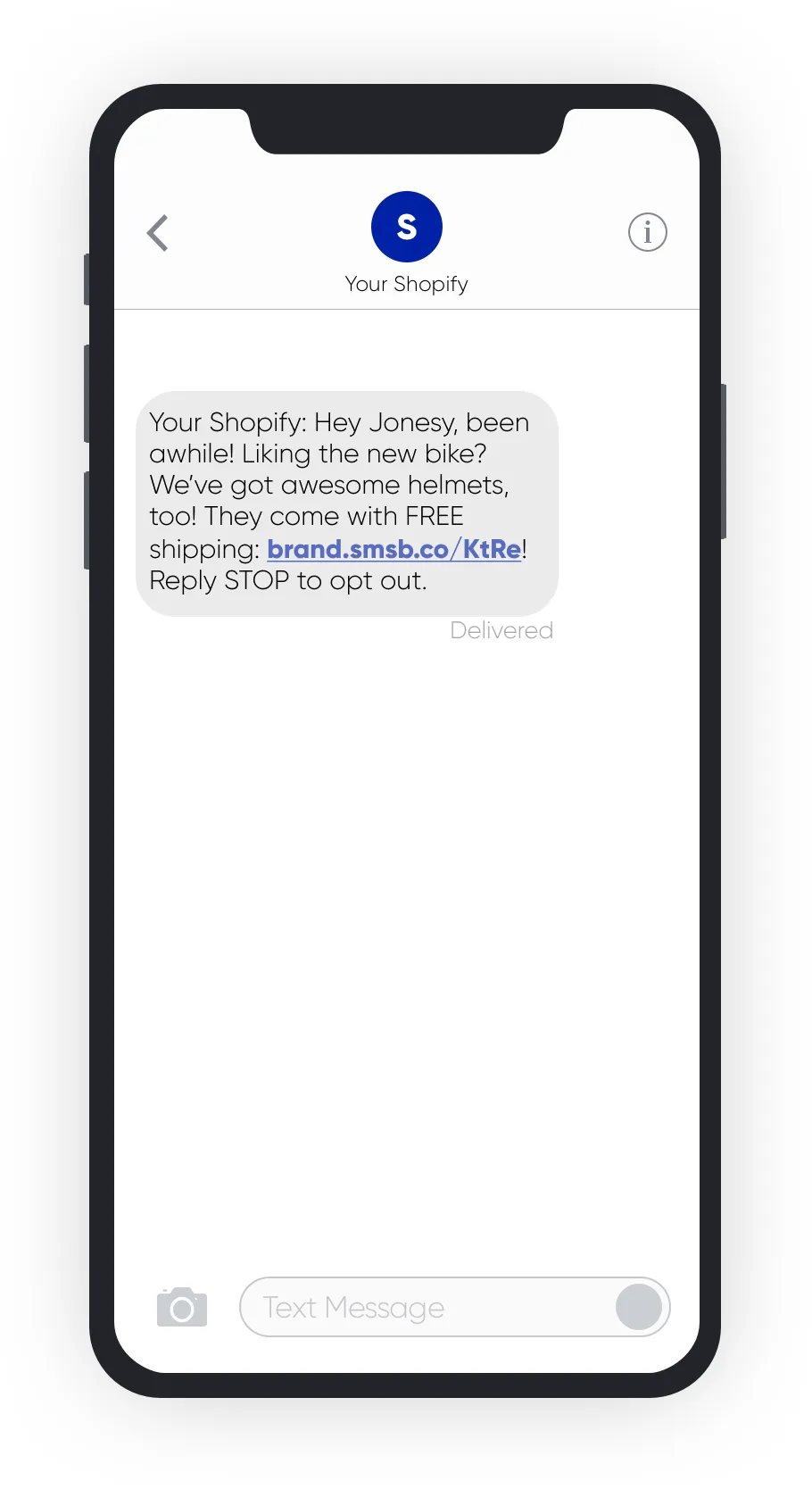
Auto-exit the sequence the moment they click, reply or buy. Every time. Because over-messaging kills reactivation. And take out anyone who resubscribed on their own before the first send.
For the value email, try a plain letter from the founder or a support person. A personal check-in. Customers have seen “We miss you” from every brand, so mix it up. For founder-driven DTC brands, text-based messages perform best. For marketplaces, a warm “We miss you” can still work.

Send the click to a reorder page
Send every winback click to a reorder page with their previous products already loaded. Not the homepage. No browsing, no searching. They still want the product, so make the reorder one click. Zaymo goes one step further, with a reactivate button inside the email.
Split the winback by cancel reason
Most winback campaigns treat every churned subscriber the same. A generic “we miss you” email, a flat discount, sent 90 days too late. But the subscriber already told you why they left in the exit survey. Use it. The full map is in cancel reasons and the fix for each.
| Cancel reason | Winback offer |
|---|---|
| Too much product | “Let’s slow down”: a longer frequency, with skip and pause as the main buttons |
| Too expensive | A limited-time discount on the first box back |
| Didn’t love it | A flavour or variant they haven’t tried |
| Confusing experience | One-click portal access, guided |
| Just taking a break | Re-entry messages around major sales events |
If they said “not seeing results”, tell them what to expect at week 4. If they said “too expensive”, show the daily cost. Lead with the answer to their reason, and keep the offer for later. And if you fixed the thing they left over, a new flavour or a smaller pack, say so in the first email. That is news to them.
The offer: store credit and gifts over percent off
“$15 back if you return in 7 days” beats “15% off”. It feels like taking back something they already earned. So put an end date on it and you get urgency without cheapening the product.
Gifts work too. Same reason. A 20 to 40% discount on reactivation sets their price for every order after it. A gift doesn’t touch the price. And it doesn’t need to be big: a sample, a limited edition, something matched to what they bought. Deliver it with a link that drops the gift into the cart on click. No code.
The offer floor
Never offer a cancelled subscriber less than the best offer they have already seen. If they got 10% off at order 2, showing them 5% in a winback is an insult. Our default is 20% for a regular subscriber and 30% for a VIP who reached order 6, plus something personal like a founder note. How we split those tiers is in segmenting subscribers by value.
Commitment offers
Lalas again: give VIPs and long-time subscribers a strong discount tied to a 3 or 6 month commitment. A no-commitment offer converts higher. The commitment offer makes more profit over time. Skio has a payment-plan feature for this, where they pay monthly but can’t cancel for the term.
When they do come back, give them 14 days of VIP status: free shipping, early access, bonus points. And once they reorder, send a give $10, get $10 referral offer.
Send the backlog at go-live
A new winback flow only catches new cancels. Everyone who cancelled before the flow went live never enters it.
So when we switch a winback flow on, we also send one reactivation campaign to past cancels, split by cancel reason the same way. Recharge puts the pool at 7 lapsed subscribers for every active one, across its brands. So run it once, then let the flow take over.
Where to build it: your subscription app
Every main app now has its own winback. So check what yours does before you build the whole thing in Klaviyo.
| App | What its winback does |
|---|---|
| Recharge | Win Backs: a landing page with the offer, resubscribe without logging in, sent from Recharge or a Klaviyo flow on the cancel event |
| Skio | Winbacks: waits 1 hour to 90 days, routes by cancel reason or the offers they already saw in the cancel flow, then a landing page. One live winback per store |
| Loop | Winback campaign: a personal link opens the portal with a one-click reactivate, gift or discount applied. Links stop when the campaign ends |
| Zaymo | A reactivate button inside the email itself, on top of Recharge, Skio or Loop |
Skio routing by the offers they saw is the useful part. It keeps you above the offer floor without building it by hand. Settings for each app are in the Recharge, Skio and Loop setup guides.
Sales events as a way back in
Subscribers who said “just taking a break” are waiting for a reason. Use BFCM campaigns for winback, for cancelled subscribers and lapsed one-time buyers, and frame it as “Your best deal to come back”, not “Please return.” Keep active subscribers out of those sends, because the same sale is what makes them cancel. The full plan is in BFCM for subscription brands.
Direct mail for VIP winback
Direct mail is the safety net for high-value subscribers who unsubscribed from email and SMS. And it can be a printed piece with a custom coupon code, sometimes handwritten.

The numbers hold up when you target it. A 120-day winback postcard returned 8.2x ROAS and a 180-day one 6.9x, in PostPilot data shared by Lunar Solar Group in its 2025 Subscription Tech Playbook. Tools like PostPilot and HeyPolar run it at scale, at around $0.50 a piece with delivery. An email costs $0.0001 and an SMS $0.01, so send mail to the VIP segment only, never the whole cancel list.
Serial churners: when not to chase
There’s a type of subscriber who doesn’t churn. They cancel on purpose.
- Sign up at full price.
- Use the product for 3 to 6 months.
- Click cancel, take 30% off for 3 months.
- Repeat every quarter.
On a $29 subscription your model expects $348 a year. They pay $294. That is 15% gone to people who never meant to leave. Just like cart abandonment coupons trained people to abandon carts, cancel offers trained people to cancel.
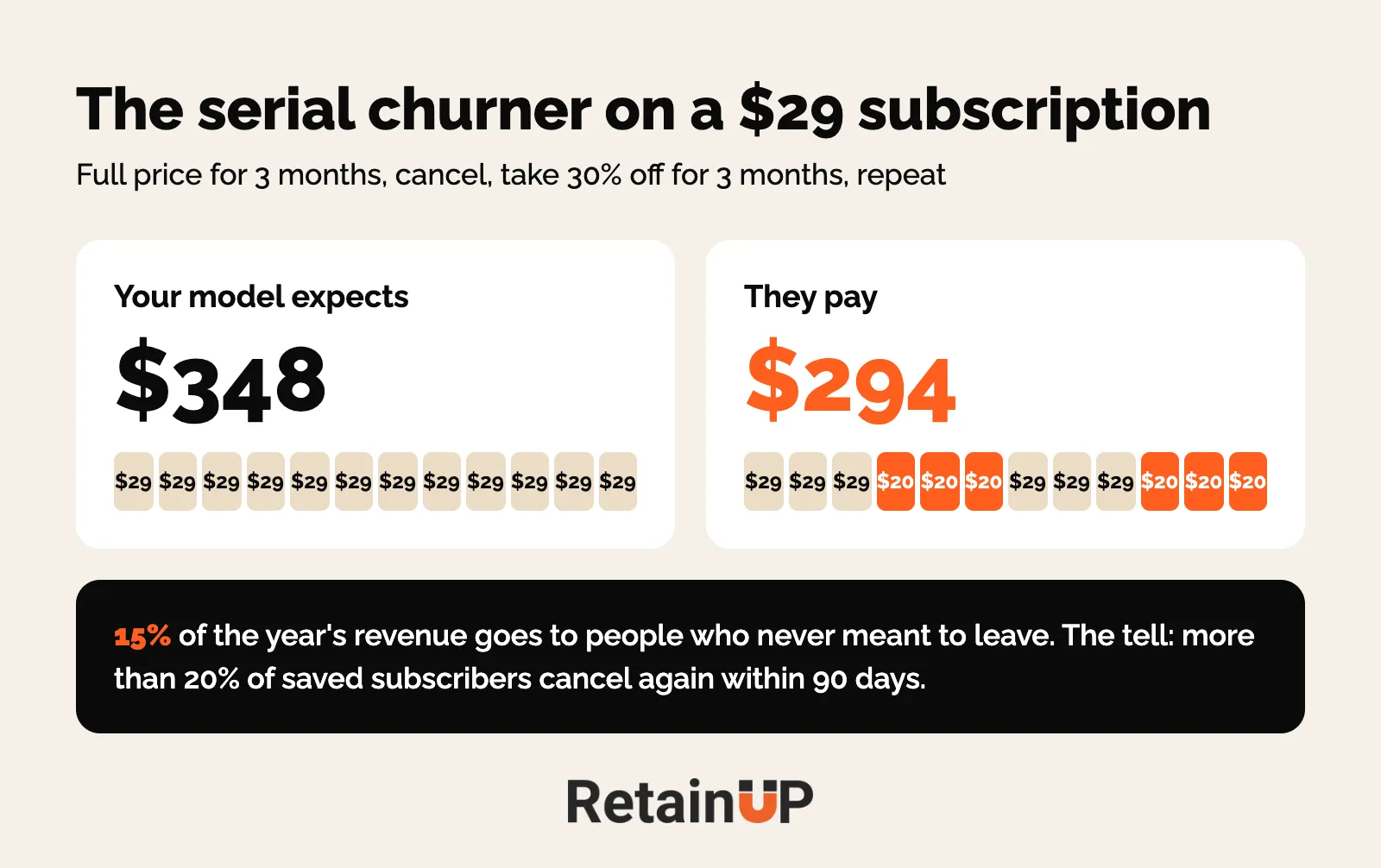
The tell is in your saved subscribers. How many cancel again within 90 days? If it is more than 20%, you have a pricing negotiation problem, not a retention one.
So first-time cancellers get the offer. Repeat cancellers get no offer, just a clean goodbye. Coupon hunters, trial cyclers and refund abusers come off the winback list entirely. Your offers should reward hesitation, not train negotiation.
Lapsed one-time buyers: where winback does pay
Up to 70% of first-time buyers never come back for some brands. Winback is the fix there, and most brands run it badly. Turning them into subscribers is its own job, covered in turning one-time buyers into subscribers. These are the five winback mistakes I see most.

1. Waiting too long
Many brands send the first winback at 60, 90 or even 120 days. Too late. No one needs 90 days to decide. One brand sent everything after day 90. We moved it to day 45 for a month and changed nothing else. Reorders rose 22%. Same offer. Same message.
So here’s the test. Whatever you think your time frame is, shorten it and compare the results.
Top brands trigger winback between day 21 and day 45. If you already message well between day 30 and 45, set it for day 60.
2. Robotic messaging
Always name the product they bought, and remind them of their progress. For a supplement, don’t stop your fitness journey. For skincare, don’t reset your routine. Nobody wants to reset their progress.
3. One email called a flow
A single email gets 40 to 50% opens at best, and 3 to 5% clicks.

We recommend at least nine emails over two months, and for 8 and 9 figure brands we run 15+ across 120 days. Omnisend data says 45% of lapsed customers respond only after three or more touches. And change the persona, the product, the offer and the timing.
4. No link to what they bought
Build messages on four angles: same problem, same product; same problem, different product; different problem, same product; different problem, different product. Most CPG brands make half their revenue from two or three hero products, so build around those. Find the most common second purchase after the hero product and make that the offer, not a generic bestseller list.

5. Wrong channel
Many people unsubscribe from marketing email and still buy your product. So reach them with SMS and retargeting ads too. If they are in your loyalty program, the SMS can name the points they hold and what those points buy. SMS gets read in minutes.

Split the list before you write
Split lapsed buyers by their last open or click. Active is the last 6 months. Passive is 6 to 9 months, inactive 9 to 12, and dormant is no open or click in a year. Passive gets a winback series of 3 emails, inactive a reactivation series of 3, and dormant a 2-email re-permission series. If dormant buyers still don’t respond, take them off the list.

How to measure a winback
For lapsed buyers, count how many order again after each send. The repeat purchase rate after re-engagement is the number.
For cancelled subscribers, follow them past the first order back. Churned’s 2026 benchmark report has reactivated subscribers at 90.2% still active after 30 days, 76.9% after 60 and 66% after 90. That is one dataset across categories, so use it as a rough check on your own cohort.
And hold some people out. Attribuly suggests a 10 to 20% holdout that gets nothing. Some cancelled subscribers come back on their own, and the holdout shows how many. Without it the flow takes credit for them.
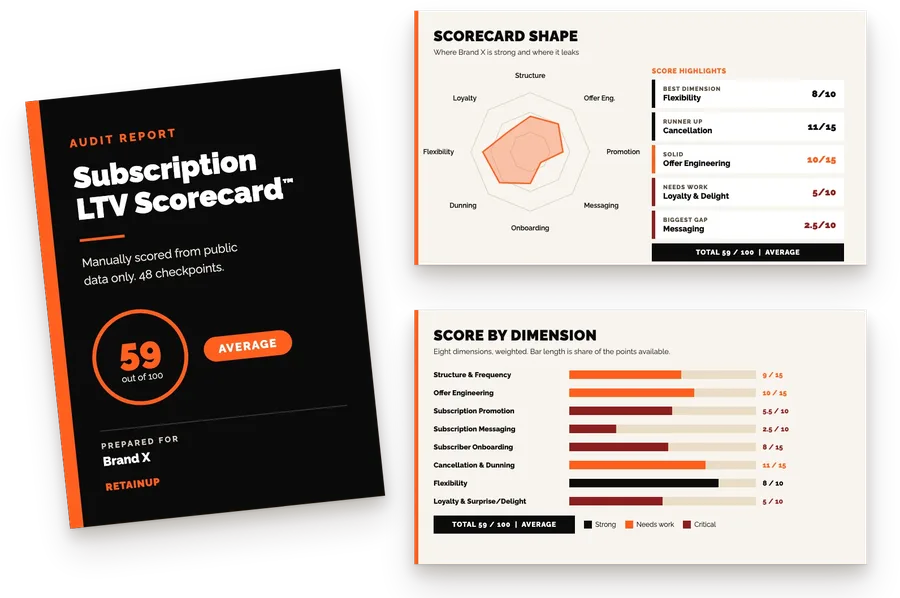
The order of take rate, cancel flow and winback changes as you grow, so it needs checking more than once. Subscription LTV Optimizer™ checks your store, subscription app and Klaviyo every month for brands with 5,000+ active subscribers, and ships the fixes for $3,000 a month.
FAQ
Is it worth sending winback emails to cancelled subscribers?
For most subscription brands, winback for cancelled subscribers is the last thing worth building. If 1,500 people cancel in a month, getting 2 to 5% back is only 30 to 75 subscribers, and they already turned down the skip, pause and discount on the cancel page. Fix take rate and the cancel flow first. Subscription winback starts to make sense around $50 million and above.
When should a subscription winback flow start?
Start it 60 to 120 days after the cancel, depending on how long your product lasts, and earlier is better. After 120 days most subscribers have found something else. The first winback moment comes even earlier, on the cancel confirmation screen. For lapsed one-time buyers the window is shorter: day 21 to day 45.
What is a winback campaign, and how is it different from a winback flow?
A winback flow is automated. It starts when someone cancels, or when a one-time buyer goes quiet, and sends on their timing. A winback campaign is a one-off send to a whole group: past cancels at go-live, or lapsed buyers and cancelled subscribers around BFCM. You need both. The flow only catches new cancels, and the campaign reaches everyone who left before it existed.
Should I give a discount to win back a subscriber?
Give one only at or above the best offer they have already seen, and prefer store credit or a gift. “$15 back if you return in 7 days” beats “15% off”, and a gift leaves the price alone. Skip the offer entirely for repeat cancellers, coupon hunters and trial cyclers, because they cancel again.
How many emails should a winback flow have?
For cancelled subscribers, three touches is the core: an SMS with no offer, a value email, then a time-bound offer email. For lapsed one-time buyers, run at least nine emails over two months, and 8 and 9 figure brands can run 15+ across 120 days.
One email a week on subscription retention: the numbers, the strategy, and what to fix first.

Rahi Jain
Rahi Jain is a subscription LTV specialist who helps $1M to $10M DTC brands reduce subscription churn and maximize LTV on Recharge, Skio, Stay AI and Loop.
More about Rahi